Where Face Oil Goes in Your Routine: Order, Explained
Here is our short answer: for most people, face oil is the last step of the evening routine. Cleanse, then anything water-based, then a few drops of oil on top. Everything else in this post is the reasoning, the exceptions, and the morning version.
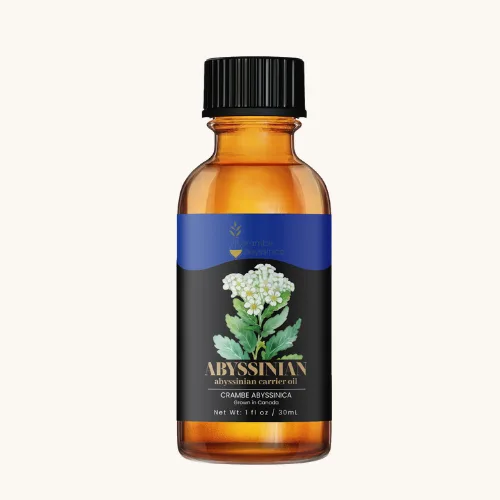
Abyssinian Oil
Cold-pressed Abyssinian oil, in sizes from 0.5 oz to bulk.
From $11.99
Shop Abyssinian Oil →The rule of thumb: thin to thick
A common rule among skin-care guides is to layer products from thinnest to thickest. Cleveland Clinic states it directly, and it makes sense: a thin watery product can only soak in if nothing is sitting on top of it. Oil is at the thick end of that scale and holds no water of its own, so the reasoning goes that it goes on after the watery steps, as a finishing layer. That is our position too. We would put the oil after any water-based serum and, for most people, after moisturizer.
A note on where sources differ
The American Academy of Dermatology's order is simple: cleanse, apply any treatment, then moisturizer and/or sunscreen, then makeup. It does not mention face oils at all, which is a useful reminder that the basics matter more than the extras. Cleveland Clinic suggests that if you use a face oil, you apply it just before moisturizer. So there is more than one reasonable answer. We prefer the oil last on top because it keeps the lighter layers uncovered while they absorb, but if your moisturizer is rich and you like the oil underneath, nobody will check.
An evening that takes two minutes
- Wash with a gentle cleanser and lukewarm water, and pat dry.
- If you use a water-based serum or treatment, apply it now.
- Apply your moisturizer.
- Press two or three drops of Abyssinian oil over the top.
That is the whole routine. The AAD itself warns that using too many products may irritate skin, so we would resist adding steps. Give each new product a few weeks on its own before the next one joins, so you always know which one you are looking at.
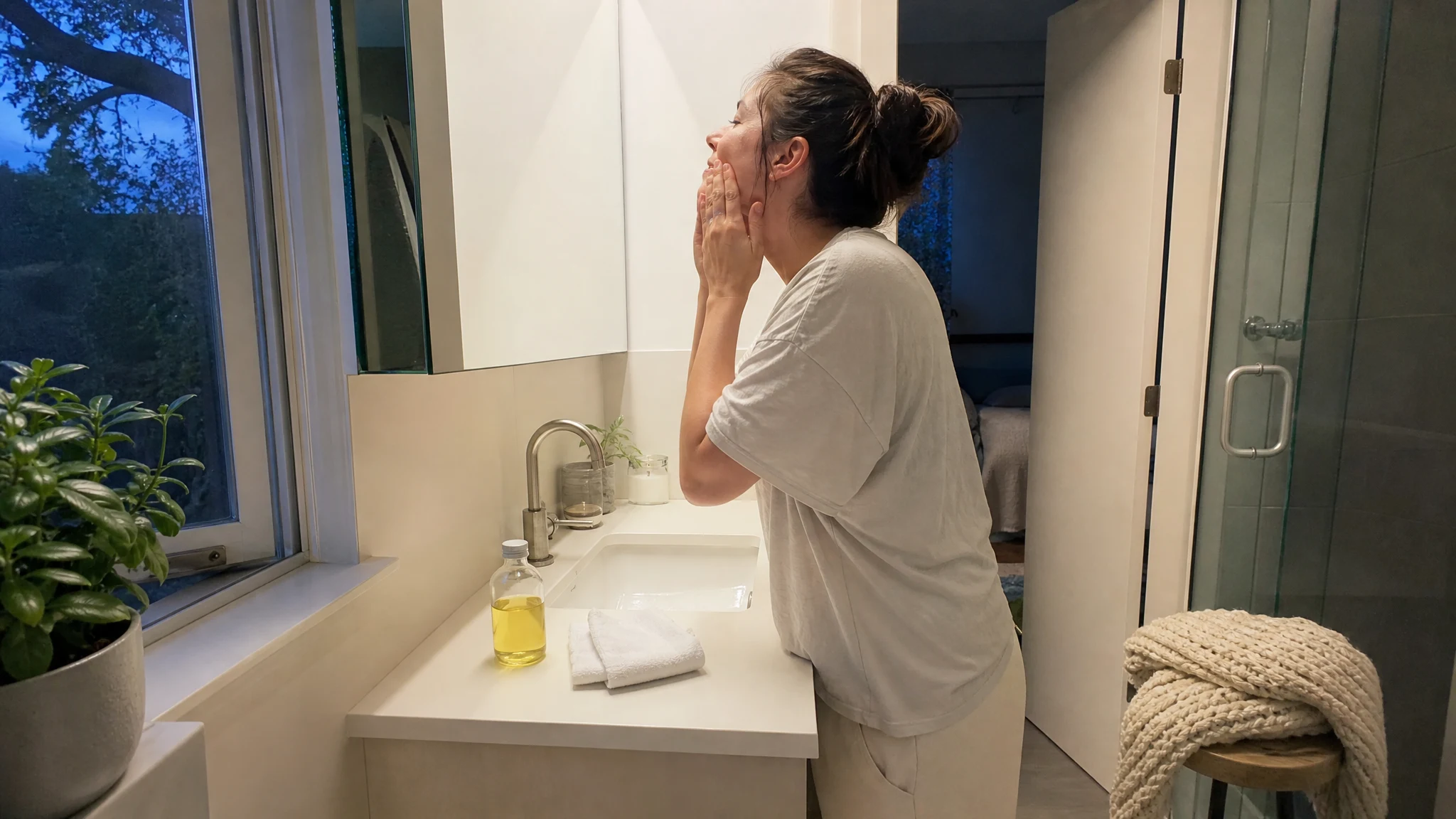
It also helps to wait a minute between layers. Let your skin settle after the cleanser and after the moisturizer, then add the oil. Pressing the drops in with flat palms, rather than rubbing, spreads them evenly and keeps the layer thin. If your skin still feels slick the next morning, use one drop fewer the following night.
The morning is different
In the morning, the order ends with sunscreen, and a face oil is not a sunscreen. It does not replace one and does not make sunscreen unnecessary. If you want oil in the morning, use one drop mixed into your moisturizer or a single drop pressed in before sunscreen. Many people simply keep the oil for nighttime, which is also where we would start.
When mixing is easier
There are days when layering is a nuisance. If you are tired, or your skin feels dry, stirring a drop or two of oil into a dab of moisturizer in your palm saves a step and gives you the same finishing slip. It is also a good way to try the oil for the first time, with the cream you already know. See our face serum post for ratios built from published guidance.
Before any of it
Patch test first: a quarter-sized spot on the underside of your arm, twice a day for seven to ten days, per the AAD, and avoid eye contact. If you break out easily or have a skin condition, ask a dermatologist where an oil fits. The details of how much and when live in our face-care walkthrough, the cleansing step is in our oil cleansing post, and for dry winter skin, this one.
A good routine is one you will actually keep doing. Short, calm, and in the same order every night.
Abyssinian Oil
Cold-pressed Abyssinian oil, from a small bottle to bulk sizes.
From $11.99
Shop Abyssinian Oil →Sources & Further Reading
- Should I apply my skin care products in a certain order? (American Academy of Dermatology)
- How To Order Your Skin Care Routine (Cleveland Clinic)
- How to test skin care products (American Academy of Dermatology)