Abyssinian Oil and Acne-Prone Skin: What to Know
If you have acne-prone skin, you have probably been told both that oils are your enemy and that the right oil is your secret weapon. We will not tell you either. Here is what we can say honestly: what dermatologists advise about oils and breakouts, what we do and do not know about Abyssinian oil, and when your skin deserves a professional rather than a bottle.
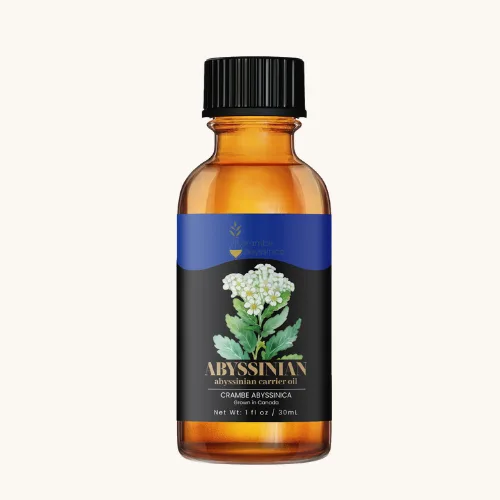
Abyssinian Oil
Cold-pressed Abyssinian oil, in sizes from 0.5 oz to bulk.
From $11.99
Shop Abyssinian Oil →What we can and cannot say
We know of no published studies of Abyssinian (crambe) oil on acne, so there is nothing to cite and we make no claim that it treats, prevents or clears breakouts. We sell a cosmetic oil that is light, golden, cold-pressed and mildly nutty in aroma, and we describe it as lightweight and non-greasy. That describes how it feels. It does not tell you what it will do for blemishes, and anyone who says otherwise is going beyond the evidence.
What dermatology guidance does say
The American Academy of Dermatology (AAD) is practical on this. It notes that some makeup, along with many skin and hair care products, contain oil or other ingredients that can cause acne breakouts, and it suggests choosing products labelled oil-free, non-comedogenic or "won't clog pores". It also points out that dry skin can prompt extra oil production, which is why it recommends a moisturizer suited to acne-prone skin rather than none at all.
Those labels are worth understanding rather than trusting blindly. The FDA does not keep a list of approved or accepted claims for cosmetics and requires only that labelling be truthful and not misleading. We explain why a number on a comedogenic chart is shaky as well in our post on whether Abyssinian oil is comedogenic. Put plainly, if you are acne-prone, an oil is a choice to make carefully, and the AAD's own advice leans toward products labelled for the job.
If you want to try it anyway
Plenty of people with breakout-prone skin are curious, and that is a reasonable thing to be. The careful way:
- Patch test first. The AAD's method for a new product is a small amount on the inner forearm, twice a day for four to five days. Stop if the skin stings, burns or tingles.
- Change one thing at a time. If you start a new oil during a week you also changed cleansers, you will not know which did what.
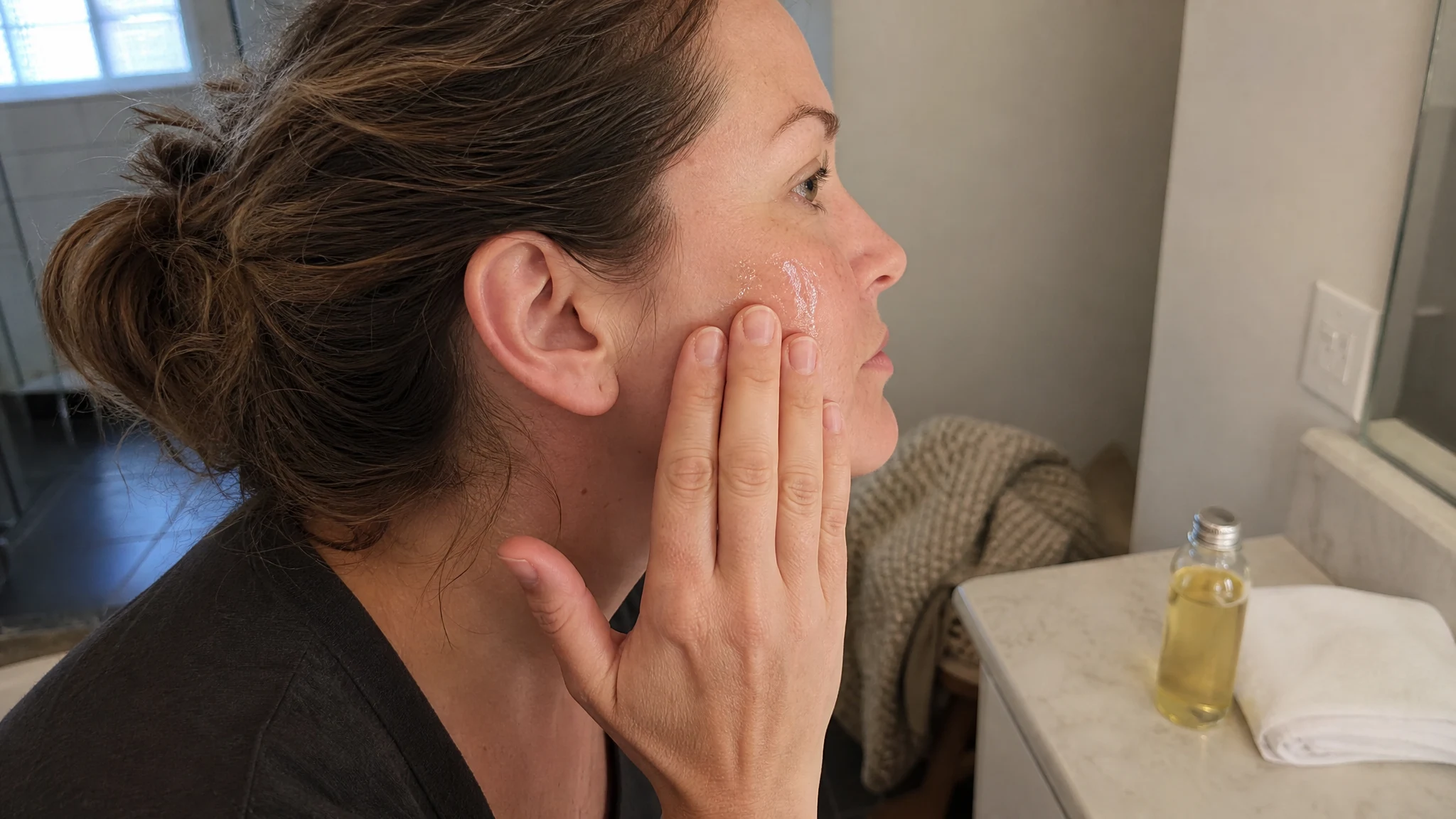
- Use a few drops, not a lot, and watch your skin over a couple of weeks.
- If it seems to be making your skin worse, stop. The AAD advises asking a dermatologist when a moisturizer seems likely to make acne worse.
Hands off the spots themselves: the AAD advises against popping or squeezing, which can push what is inside deeper and add to the pain and inflammation.
When it is time for a professional
Deep or painful acne needs a dermatologist, according to the AAD, and so does acne that persists after you have given gentle skincare a fair run. We sell a cosmetic oil, and it is not a substitute for that conversation. A dermatologist can look at your skin and build a plan, which may include a moisturizer, and that is worth far more than any oil we could recommend.
If you want to read around, our posts on oily skin and how to use the oil for face care cover everyday use, and our safety guide goes through patch testing and reactions in more detail.
Breakout-prone skin deserves patience and good advice more than another bottle, and we would rather you get the first before the second.
Abyssinian Oil
Cold-pressed Abyssinian oil, from a small bottle to bulk sizes.
From $11.99
Shop Abyssinian Oil →Sources & Further Reading
- American Academy of Dermatology. "Moisturizer: Why you may need it if you have acne." aad.org
- American Academy of Dermatology. "10 skin care habits that can worsen acne." aad.org
- American Academy of Dermatology. "How to maximize results from anti-aging skin care products" (inner forearm test). aad.org
- U.S. Food and Drug Administration. "Cosmetics Labeling Claims." fda.gov