Abyssinian Oil for Oily Skin: A Go-Slow Way to Try It
If your skin looks shiny by lunchtime, the idea of putting oil on it can feel like pouring water on a boat. Yet plenty of people with oily-feeling skin keep a light oil in their evening routine and like it. We want to explain why, be honest about where the dermatology advice points, and offer a careful way to try Abyssinian oil if you are curious.
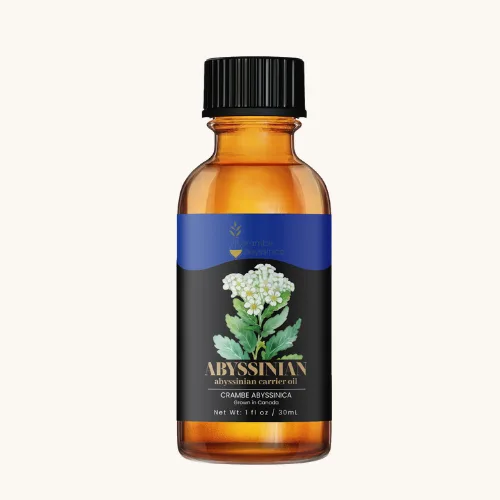
Abyssinian Oil
Cold-pressed Abyssinian oil, in sizes from 0.5 oz to bulk.
From $11.99
Shop Abyssinian Oil →What the dermatologists say first
The American Academy of Dermatology's page on oily skin recommends cleansers, moisturizers and makeup labelled "oil free" and "noncomedogenic," and says oily skin still needs moisturizer after cleansing. It also advises against oil-based cleansers, which it says can irritate. That is sound mainstream guidance and we would not argue with it. So this post is for the curious reader who would like to try a face oil anyway, and it is a go-slow plan, not a prescription. If your priority is the AAD's list, an oil-free moisturizer is the straight answer.
Why people still reach for oil
Skin that feels oily is not the same as skin that feels comfortable. Skin can look shiny on the forehead and still feel tight on the cheeks after washing, and a face washed and then left bare can feel stripped. The AAD's own framing is about balance: oily skin is meant to be balanced with moisture, not scrubbed bare. A few drops of a light oil is one way people add softness without reaching for a heavy cream. We describe our oil as lightweight and non-greasy, and as a cosmetic oil it moisturizes and leaves skin feeling soft and smooth.
What lightweight really means
Lightweight is a feel word. It describes how fast an oil spreads, how much slip it has, and whether it leaves a film. The fatty acid make-up of an oil and its viscosity both shape that feel; published analyses of crambe oil in general report that erucic acid, a long-chain omega-9 fatty acid, makes up roughly half to sixty percent of it. We offer that as background and not as a promise about your skin, because the only test that counts is how it feels on you. "Light" can mean you cannot feel it after ten minutes, or it can mean it never looks shiny. Those are different things, and your skin decides which one you get.
A cautious try-it plan
- Patch test first. Per the AAD, a quarter-sized spot on the underside of your arm, twice a day for seven to ten days, using your usual amount.
- Evening only. Shine matters less at night, and your skin has hours to settle before anyone sees it.
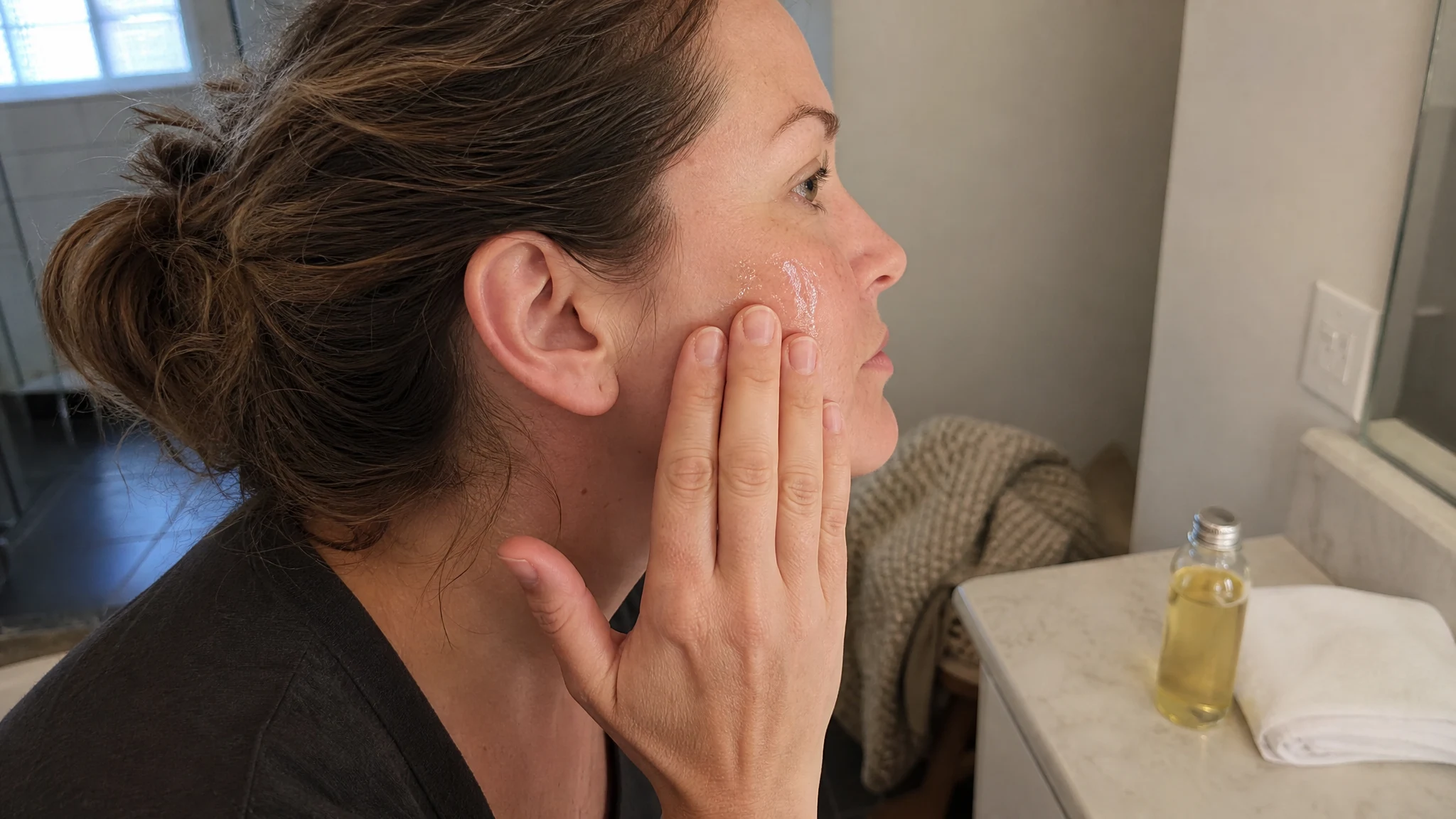
- Two drops, no more. Press them onto slightly damp skin after cleansing. Add a third drop only if your skin plainly asks for it.
- Once or twice a week for the first fortnight, then see how you feel.
- Stop if it does not suit you. If your skin looks or feels worse, leave it. Nothing is lost.
Avoid the eye area, and keep it away from your eyes. Skin and hair vary from person to person, so our usual advice stands: patch test before first use and check with a professional if you have specific concerns.
Reading the results
After a few weeks, ask yourself three plain questions. Does your skin feel comfortable by morning? Do you look forward to the step, or tolerate it? Has anything started to feel worse? If the answers are yes, no, and no, you have a keeper. If your skin feels greasy, drop to a single drop or skip a night. A light oil is meant to be barely there, and your evening should be the same.
When to ask someone else
If you break out easily, a dermatologist can tell you much more about your own skin than any article. We sell a cosmetic oil, and that conversation is outside what an oil can do. Our posts on the comedogenic question and acne-prone skin give you background to bring along. For a full walkthrough of using it, see our face-care guide, and if your skin leans dry in colder months, this one.
Oily-feeling skin and a light oil can get along, but only on your skin's terms. Go slowly, listen, and keep an oil-free moisturizer on the shelf as the easy alternative.
Abyssinian Oil
Cold-pressed Abyssinian oil, from a small bottle to bulk sizes.
From $11.99
Shop Abyssinian Oil →Sources & Further Reading
- How to control oily skin (American Academy of Dermatology)
- How to test skin care products (American Academy of Dermatology)
- Crambe (Purdue University NewCROP)