Is Abyssinian Oil Comedogenic? Why the Scale Can't Say
Ask whether an oil is comedogenic and you will usually be handed a number from 0 to 5, as if every oil were born with a score. For Abyssinian oil there is no such number in any source we can honestly point you to. That is less of a gap than it sounds, because the number was never going to settle the question.
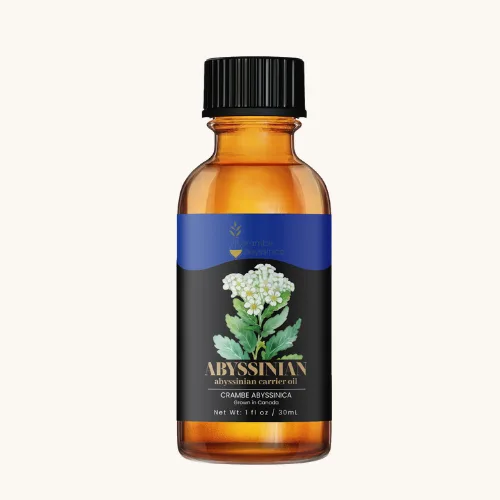
Abyssinian Oil
Cold-pressed Abyssinian oil, in sizes from 0.5 oz to bulk.
From $11.99
Shop Abyssinian Oil →Where the 0 to 5 charts come from
Most of the comedogenic charts that circulate online descend from the rabbit ear test, where a material is applied to a rabbit's ear and the skin is checked for plugged follicles. In 1982 S. B. Frank reviewed that method and pointed to "the many problems in performance of the test method, the absence of correlation with experience in the human, and, consequently, the serious limitations of the conclusions that can reasonably be drawn." A rabbit ear is not your cheek, a lab application is not your Tuesday routine, and a single digit cannot carry all of that. So when a chart gives an oil a 2 or a 4, treat it as a rough rumour about the oil rather than a verdict.
What the safety reviewers did and did not look at
The most authoritative look at crambe oil in cosmetics is the Cosmetic Ingredient Review (CIR), an expert panel that assessed 244 plant-derived fatty acid oils and, in a 2017 publication, concluded they are safe as used in cosmetics. Crambe abyssinica seed oil is on that list. The data summarized for it cover skin irritation, sensitization and eye irritation. They do not include a comedogenic rating, so we will not invent one. What the CIR conclusion does tell you is scope: it speaks to the ingredient as used in cosmetics generally, not to your skin or to a particular bottle.
What actually decides how an oil behaves on your face
Think of the oil as one ingredient in a whole routine. These matter more than any chart:
- Amount. A few drops pressed in is a very different experience from a palmful.
- Your skin. Two people can use the same oil and have opposite experiences.
- Everything else on your face. The American Academy of Dermatology notes that some makeup, along with many skin and hair care products, contain oil or other ingredients that can cause acne breakouts, so a new oil is rarely the only variable.
- How you cleanse. Whatever you put on in the morning has to come off at night.
You may also see "non-comedogenic" on a label and assume it is a guarantee. The FDA does not keep a list of approved or accepted claims for cosmetics, only that labeling must be truthful and not misleading, so we read that phrase as the maker's description rather than as a tested promise. We do not use it for our oil and we are not going to claim that Abyssinian oil will leave your pores alone.
What "light" does and does not tell you
We describe our Abyssinian oil as lightweight and non-greasy, and that is a statement about feel: how it spreads, how quickly the slick fades, whether your pillowcase notices. It is a useful thing to know because a light oil is easier to use sparingly, and using sparingly is the sensible way to begin with any new oil. It says nothing, one way or the other, about pores.
A sensible way to try it
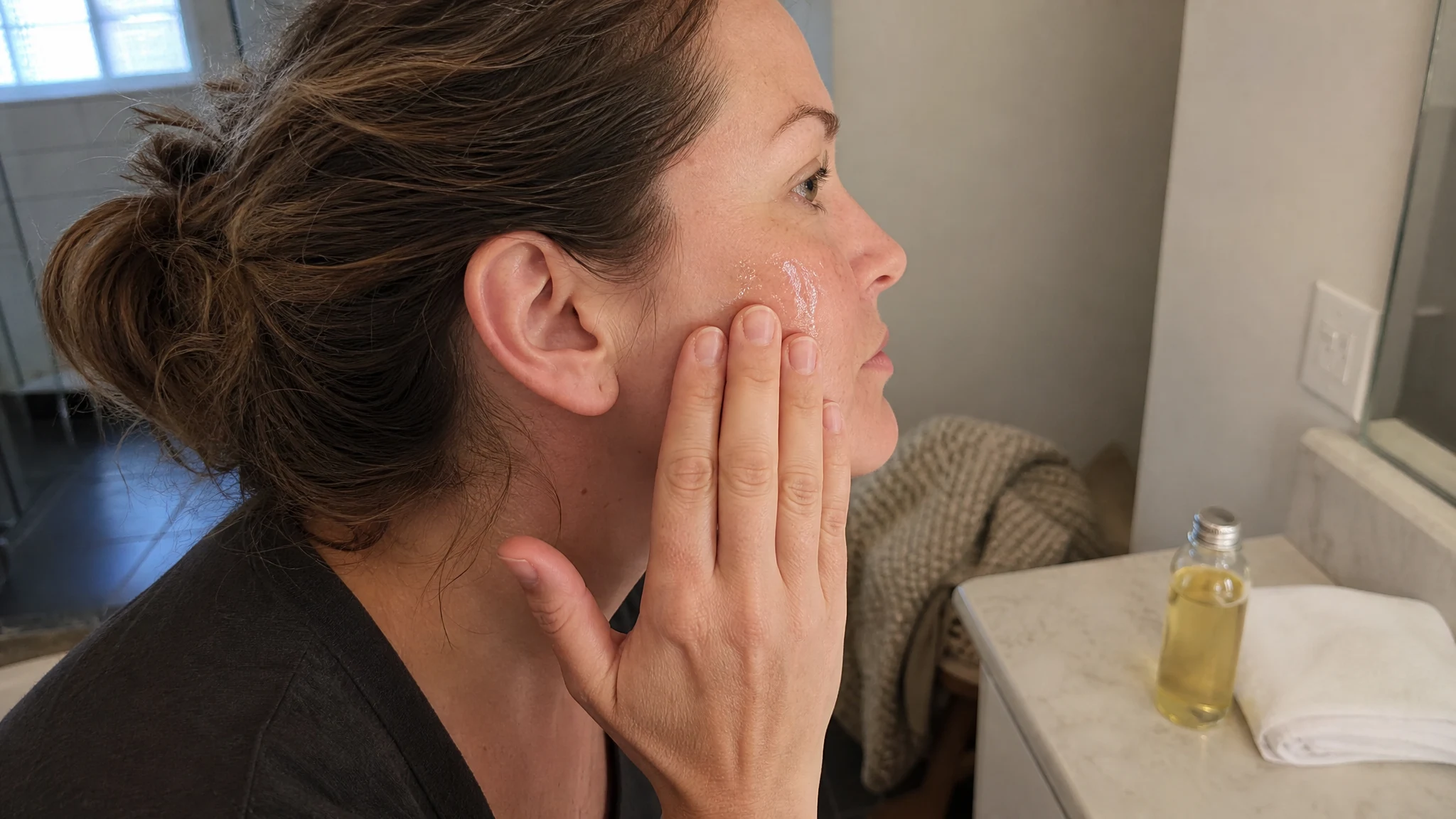
Start with the usual patch test: the American Academy of Dermatology suggests putting a small amount on your inner forearm twice a day for four to five days and stopping if anything stings, burns or tingles. If your forearm is calm, begin on your face with a few drops rather than a full routine change, introduce nothing else new at the same time, and give it a couple of weeks before drawing conclusions. If your skin looks worse, stop and let it settle.
And if breakouts are what you are really trying to understand, a dermatologist can look at your actual skin, which no chart can. The AAD is plain that deep or painful acne needs a dermatologist, and that is true whatever oil is on your shelf. We go through that fuller picture in our post on Abyssinian oil and acne-prone skin, and in our post on oily skin. If you are weighing it against other oils, our carrier oil comparison helps, and our introduction to the oil covers the basics.
A number on a chart is a starting rumour; your own skin, watched calmly for a couple of weeks, is the better source.
Abyssinian Oil
Cold-pressed Abyssinian oil, from a small bottle to bulk sizes.
From $11.99
Shop Abyssinian Oil →Sources & Further Reading
- Burnett CL, et al. "Safety Assessment of Plant-Derived Fatty Acid Oils." International Journal of Toxicology, 2017. PubMed
- Frank SB. "Is the rabbit ear model, in its present state, prophetic of acnegenicity?" 1982. PubMed
- American Academy of Dermatology. "10 skin care habits that can worsen acne." aad.org
- American Academy of Dermatology. "How to maximize results from anti-aging skin care products" (inner forearm test). aad.org
- U.S. Food and Drug Administration. "Cosmetics Labeling Claims." fda.gov