Essential Oil Dilution with Abyssinian Oil, Worked Out
Blending an essential oil into a carrier oil comes down to one sum, and once you see it, it stays with you. The part that trips people up is the unit: recipes talk in drops, droppers are not all the same size, and a drop of one oil is not a drop of another. Percent and millilitres are the reliable way, so that is where this post starts.
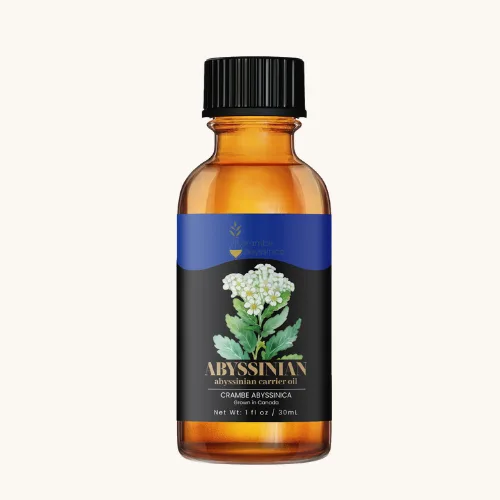
Abyssinian Oil
Cold-pressed Abyssinian oil, in sizes from 0.5 oz to bulk.
From $11.99
Shop Abyssinian Oil →The one formula
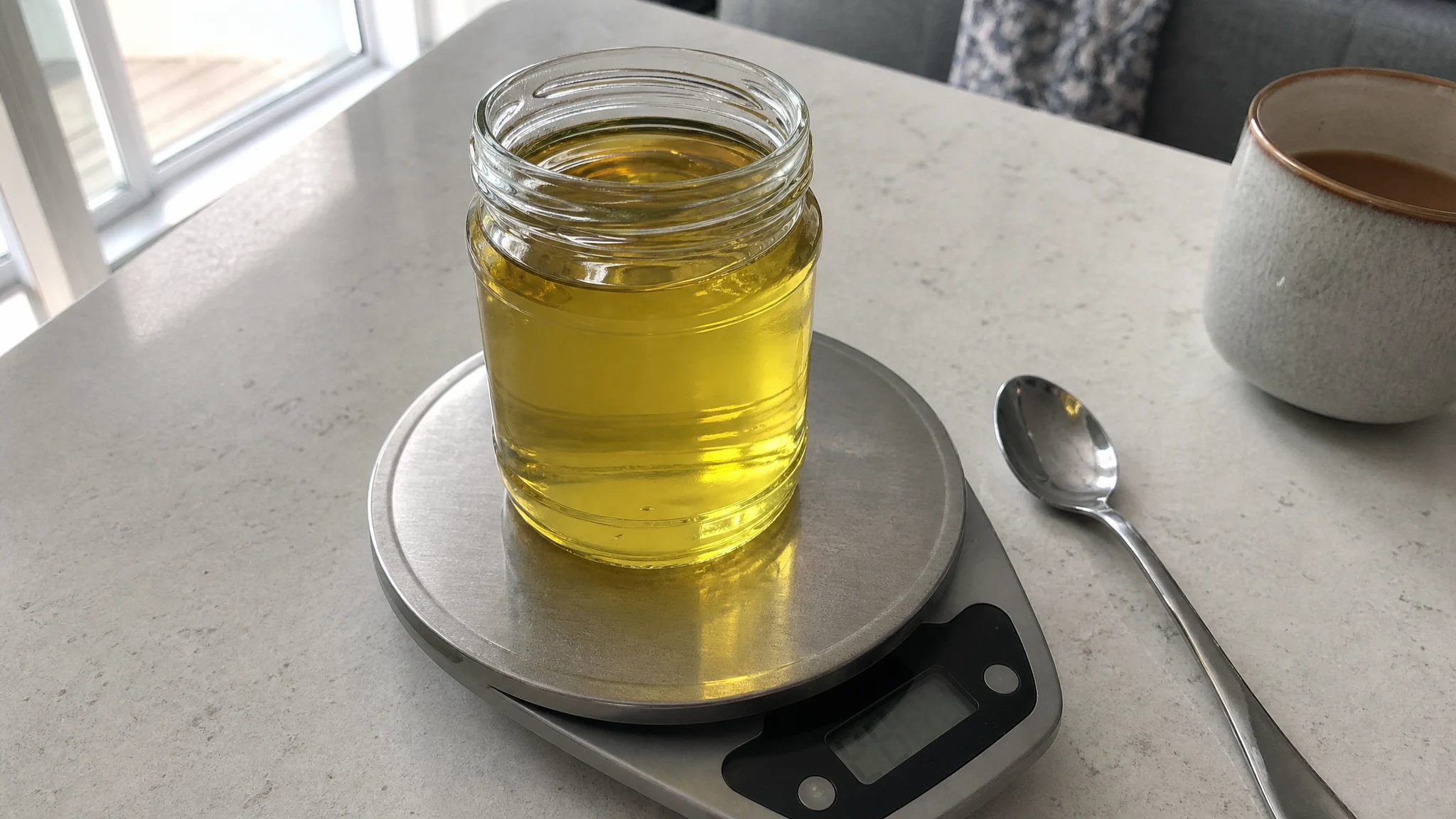
Millilitres of essential oil = total ml of the blend x percentage / 100. Say you want a 1 percent blend in a 30 ml bottle (a little over 1 fl oz, which is 29.57 ml): 30 x 1 / 100 = 0.3 ml of essential oil, and the rest carrier. Use volume for both oils, or weight for both, and not a mixture. To translate into drops, we use the common convention of about 20 drops to the millilitre, but your dropper may differ, and we would never rely on it for anything beyond a rough guide.
The chart
| Bottle | 0.5% | 1% | 2% |
|---|---|---|---|
| 10 ml | 0.05 ml (1 drop) | 0.1 ml (2 drops) | 0.2 ml (4 drops) |
| 30 ml (1 fl oz) | 0.15 ml (3 drops) | 0.3 ml (6 drops) | 0.6 ml (12 drops) |
| 60 ml | 0.3 ml (6 drops) | 0.6 ml (12 drops) | 1.2 ml (24 drops) |
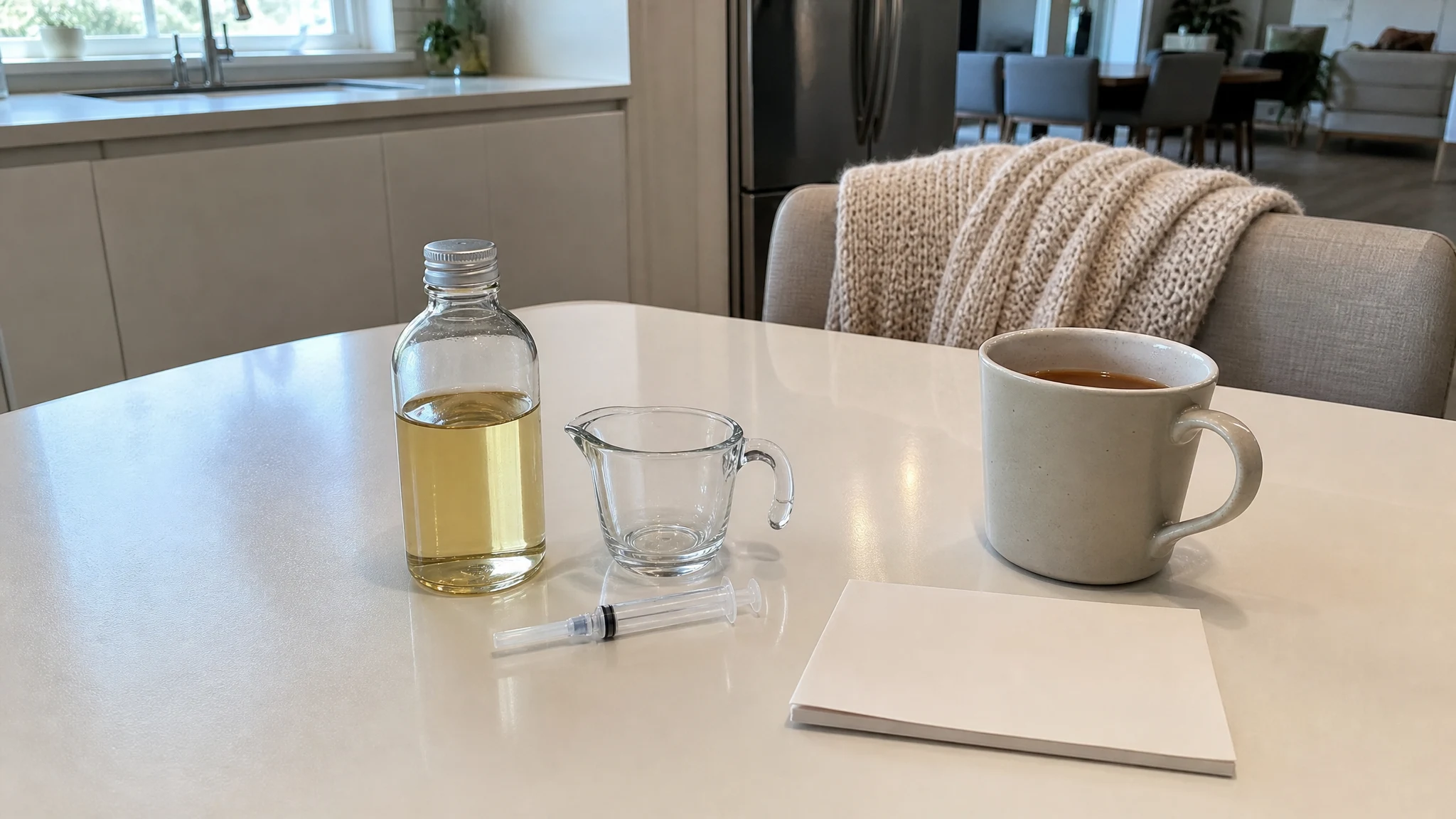
Every figure is exact arithmetic at 20 drops per ml. In practice a small plastic syringe from a pharmacy or a craft supply shop measures 0.05 or 0.15 ml much more reliably than counting drops. We sell the carrier, not the essential oil or the bottles, so those come from there too. Pick a plain screw-cap glass bottle and fill it with Abyssinian oil to the line, leaving room for the essential oil.
Which percentage for what
The Tisserand Institute gives a useful set of ranges: 0.2 to 1 percent for sensitive or impaired skin, 0.5 to 1.2 percent for facial cosmetics, and 1 to 3 percent for body oils and lotions. It also gives a rule of thumb we like: start low and increase only if needed. So the 0.5 and 1 percent columns cover the face, a beard (see our beard oil recipe), and most hair uses, while 2 percent is a body-oil strength. Our hair serum recipe uses the lower end. Most scented oils are lovely at the bottom of the range, and often the plain oil needs no scent at all.
Two things to know before you open a bottle
Some essential oils have their own limits. Expressed citrus oils such as lemon are phototoxic, meaning they can react with sunlight on the skin, and Tisserand notes that the IFRA limit for lemon oil, set to avoid phototoxicity, is 2 percent. Check the specific oil's limit, and when in doubt, check with an aromatherapist or professional.
Pregnancy, children and pets sit outside what a simple chart can answer. Tisserand advises anyone who is pregnant, or who has epilepsy or asthma, to seek advice from a doctor or suitable practitioner before using essential oils, and to keep them out of the reach of young children. The ASPCA says cats are especially sensitive to essential oils and does not recommend using them where pets have access unless they are supervised or a veterinarian approves. For any of these, a certified aromatherapist, doctor or veterinarian is the right person to ask. Everyone else should patch test, keep blends away from the eyes, and remember that skin and hair vary from person to person.
The nice part of all this is that the sum is small and you only do it once. Write the ratio on the bottle's tag, and you can make the same blend next time without thinking. More beauty recipes are in our DIY recipe roundup, and a rosemary-scented hair oil is covered in its own post.
Abyssinian Oil
Cold-pressed Abyssinian oil, from a small bottle to bulk sizes.
From $11.99
Shop Abyssinian Oil →Sources & Further Reading
- Dilution for essential oils (Tisserand Institute)
- How to Use Essential Oils Safely (Tisserand Institute)
- Pet Poisons: Be Mindful of these Household Products and Cleaning Agents (ASPCA)