A Lightweight Beard Oil Recipe with Abyssinian Oil
Beard oil has a reputation as a fancy product, but the idea is simple: a carrier oil to soften and tame, and a drop or two of scent if you like. The part worth getting right is the arithmetic, because that is what keeps the scent pleasant instead of overwhelming. Here is a lightweight version built on Abyssinian oil.
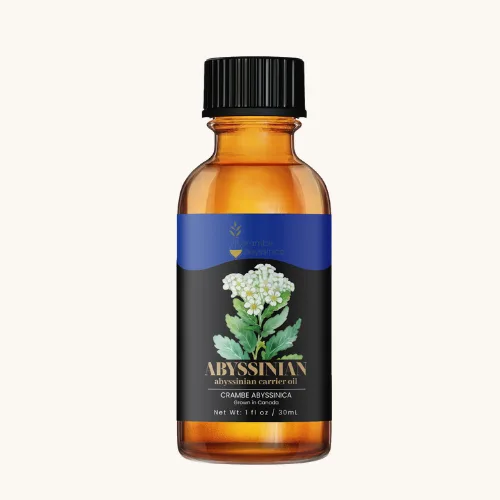
Abyssinian Oil
Cold-pressed Abyssinian oil, in sizes from 0.5 oz to bulk.
From $11.99
Shop Abyssinian Oil →Why a light carrier suits a beard
A beard is a lot of hair sitting right on top of skin, so the oil has to be comfortable in both places. Our Abyssinian oil is light, golden and non-greasy in feel, with a mild nutty aroma that is easy to live with. Worked through the beard, it leaves it feeling soft and smooth-looking and helps flyaway hairs lie neater. It moisturises the skin underneath too. We make no claims about growth, thickness or fullness, and no oil needs to.
If your hair is fine, it is worth reading our note on fine hair, since the same lightness applies, and the hair overview covers the oil more broadly.
The recipe is a percentage
Skip the plain oil if you like: it is already a fine beard oil on its own. If you want scent, the Tisserand Institute gives 0.5 to 1.2 percent as the range for facial cosmetics, and its rule of thumb is to start low and increase only if needed. A beard sits on the face, so we would stay at or below 1 percent, and since a beard oil is for daily use, lower is perfectly nice. Here is what that means for a 30 ml bottle (about 1 fl oz), using the common convention of 20 drops per millilitre:
| Scent strength | Essential oil | In drops (about) |
|---|---|---|
| 0.5% | 0.15 ml | 3 drops |
| 1% | 0.30 ml | 6 drops |
The formula is millilitres of essential oil = bottle size in ml times percentage divided by 100. For 30 ml at 1 percent, that is 30 x 1 / 100 = 0.3 ml. Droppers vary, so millilitres and percent are the reliable measures. A small plastic syringe from a pharmacy or craft supply shop measures 0.3 ml far better than counting drops. We do not sell essential oils or bottles, so pick up both there, and choose a plain screw-cap glass bottle.
For the full chart across other bottle sizes, see our dilution reference.
Scent, or none at all
Choosing a scent is the personal part. Woody, citrusy and herbal oils are the usual beard-oil territory, and the nutty note of Abyssinian oil sits quietly underneath whichever you pick. One practical thought: scent you can barely notice in the bottle often seems stronger on a warm face, so begin at 0.5 percent and let a week of wearing it tell you whether to go up. A beard oil you forget about is usually the right strength.
Making and using it
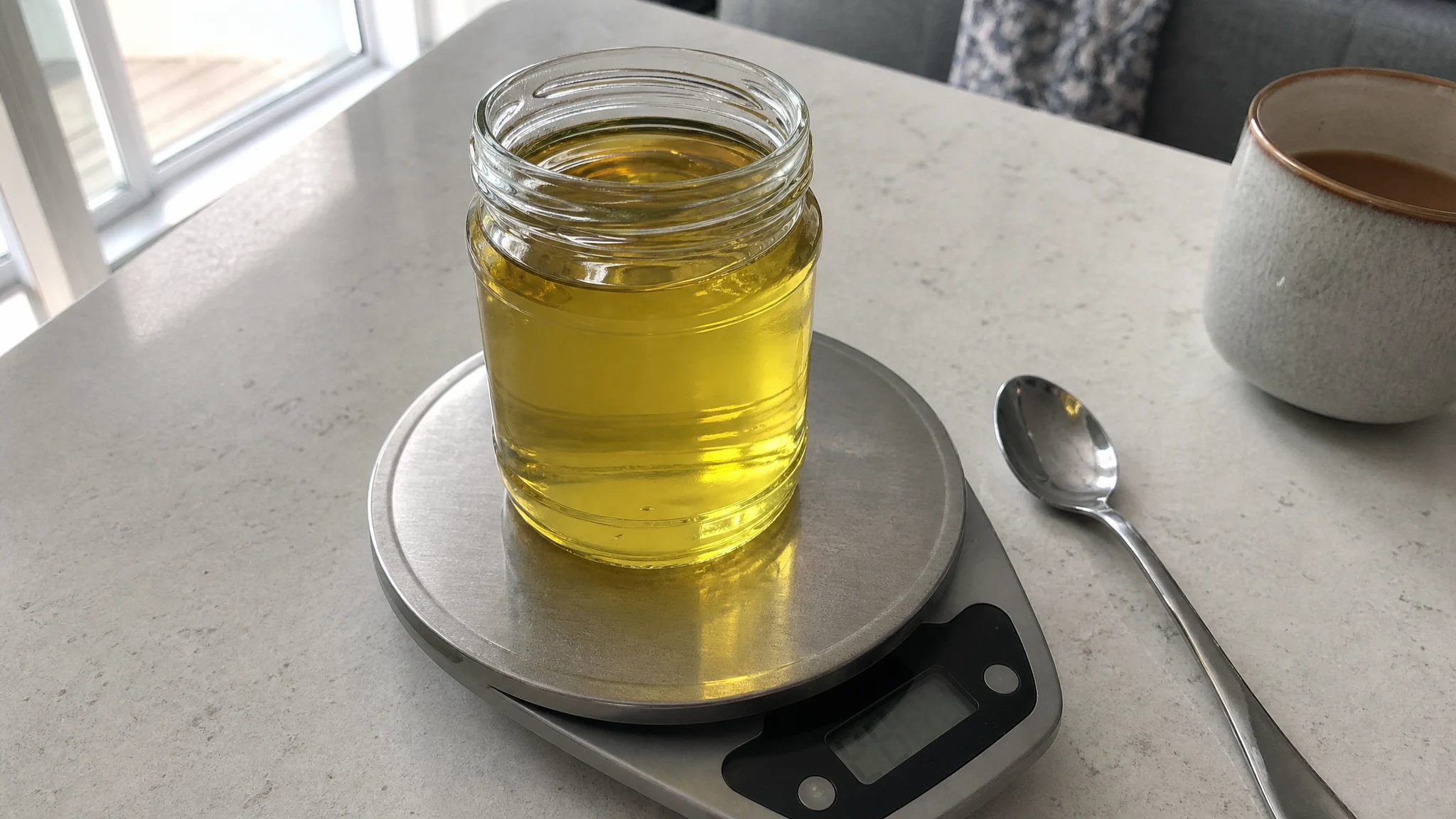
- Pour about 29 ml of Abyssinian oil into a clean, dry 30 ml bottle.
- Add the measured essential oil to bring it to 30 ml, cap, and swirl gently.
- Patch test first: a small amount on the inner forearm, then wait before using it on your face. Skin and hair vary from person to person, so check with a professional if you have specific concerns.
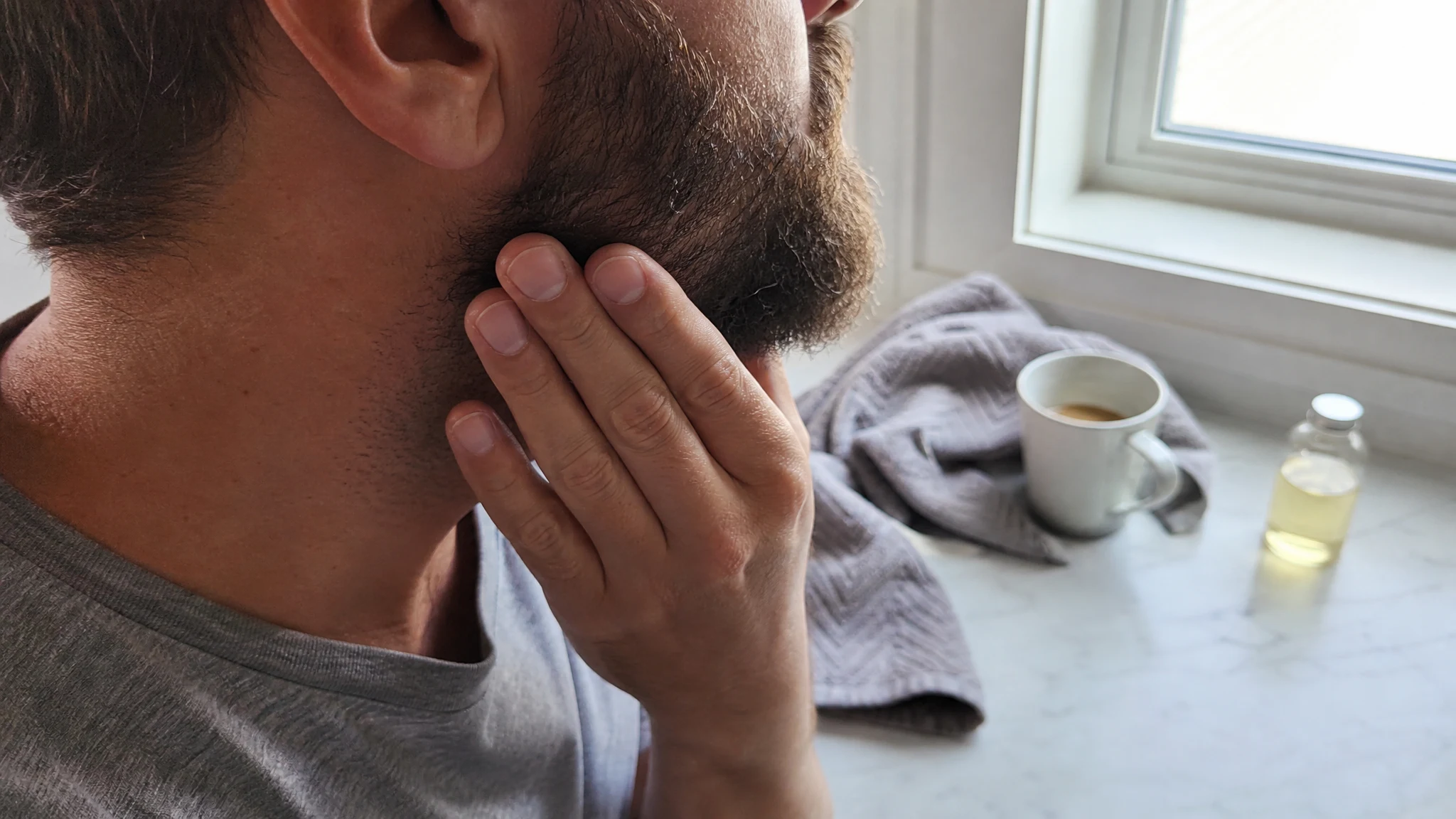
- Warm two or three drops between your palms and work them through the beard from the skin outward, keeping it away from your eyes.
Use essential oils that are sold for skin and check each one's own limits, since some, like expressed citrus oils, have lower limits because they react to sunlight. The same goes for pregnancy, children and pets, covered in the dilution post. Store the bottle somewhere cool and out of direct sun. As for how much to use, two or three drops is plenty for a short beard and four or five for a longer one; apply to a slightly damp beard after washing if you like, since it spreads more easily, and comb through to finish.
Making your own is half the fun: you decide on the scent, the strength, and whether to scent it at all. Our other recipes follow the same plain method.
Abyssinian Oil
Cold-pressed Abyssinian oil, from a small bottle to bulk sizes.
From $11.99
Shop Abyssinian Oil →