Hair Porosity and Oil: How Much Is Enough?
Somewhere on the internet there is a glass of water with a single hair floating in it, and a confident verdict about your entire routine. It is a fun experiment, and it is also a little too tidy. Porosity is a real idea worth understanding, because it can help you decide how much oil your hair actually wants.
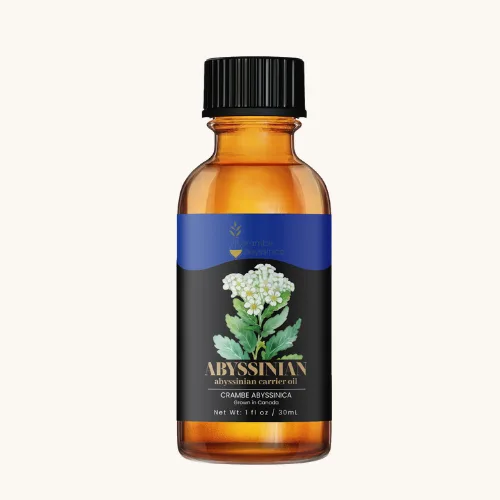
Abyssinian Oil
Cold-pressed Abyssinian oil, in sizes from 0.5 oz to bulk.
From $11.99
Shop Abyssinian Oil →What porosity describes
Each strand is wrapped in overlapping scales called the cuticle. Porosity is a shorthand for how readily water and other substances get through that outer layer into the fibre. Cosmetic scientists describe it in just those terms, and they note that heat and bleaching are believed to increase it. In the lab it is measured by how water behaves when it touches a tress (the contact angle), which is a long way from a drinking glass.
So hair with a tightly closed cuticle, often called low porosity, tends to resist water at first, then hold on to it. Hair with a more disturbed cuticle, high porosity, takes water in fast and lets it go fast. Most of us sit somewhere between, and different sections of one head can differ: ends have lived through more brushing, sun and styling than roots.
A better test than the glass
We could not find peer-reviewed support for the float test as a measurement, and it is easy to see why it wobbles: a strand coated in product or sitting on the surface tension of the water tells you about the strand's surface that day. Treat it as a hint at best.
Your own routine gives better clues. On clean, damp hair, does water bead and sit before it soaks in, or does it vanish immediately? Does hair take a long time to dry, or is it dry in minutes? Does conditioner seem to disappear or sit on top? Those are observations, not a diagnosis, and they will point in a direction rather than hand you a label.
Lighter touch, or more sealing?
What follows is reasoning rather than a proven rule. Oil is mostly a finishing and smoothing tool: a thin film on the surface that adds slip and shine, which the research on hair oils describes as a film effect that reduces friction. How much film you want depends on the hair.
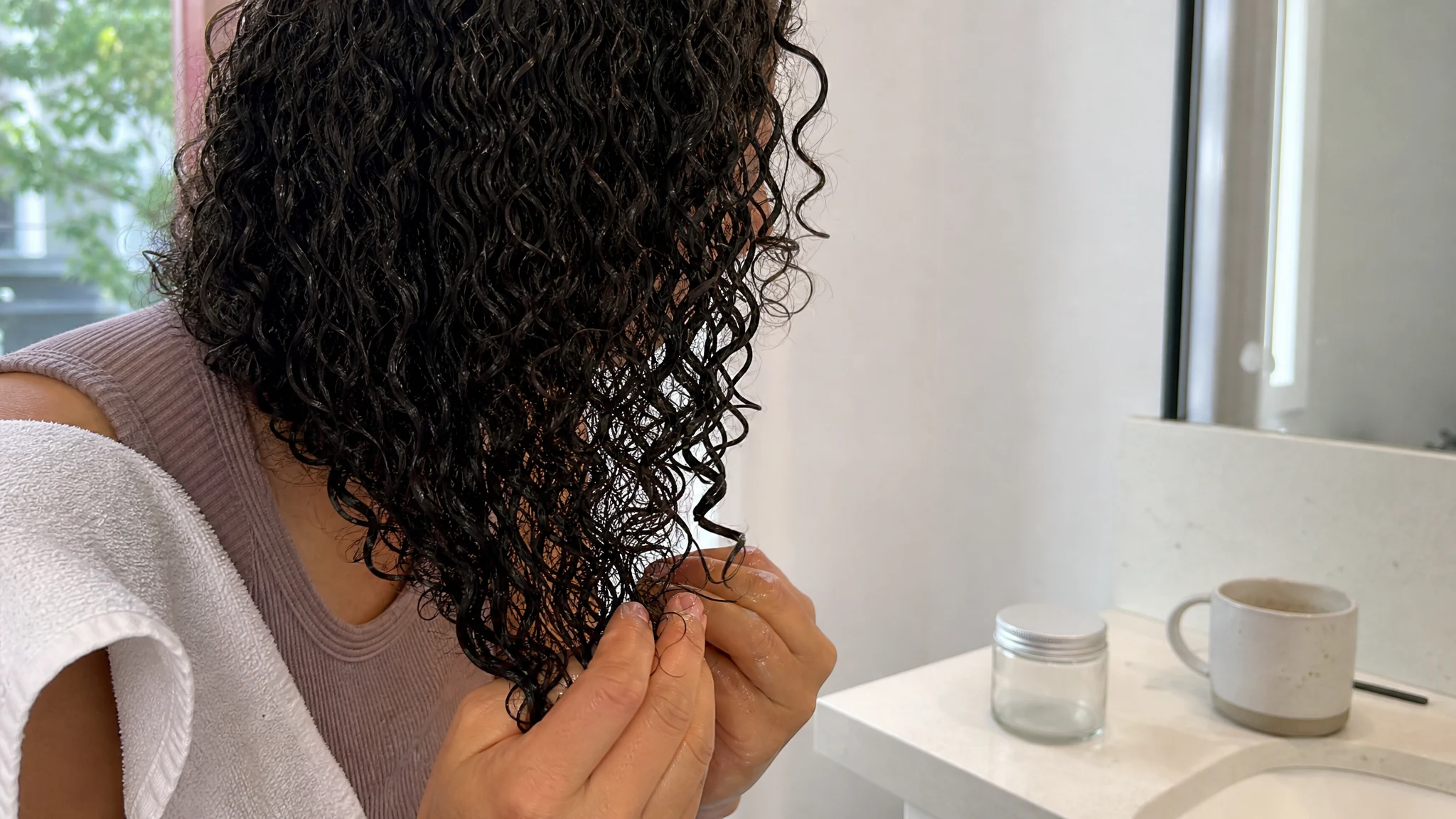
- Lower porosity. The cuticle is already doing its job, so extra oil is more likely to sit on top and make hair look flat or weighed down. Think one or two drops, warmed between your palms, smoothed over damp hair from the mid-lengths down. A little warmth, such as a warm towel for a few minutes, can suit hair that resists products.
- Higher porosity. Hair that dries fast and feels rough often likes a more generous finish. Work a few drops through the ends first, then the lengths, and top up on dry hair when it needs it. The oil acts as a smoothing coat over a cuticle that is not lying flat on its own.
Our Abyssinian oil is a light golden, lightweight, non-greasy oil with a mild nutty aroma, which makes it easy to scale up or down. You can start with a single drop on fine or low porosity hair and build in tiny steps, and you can be more liberal on dry ends. The same logic carries into the posts on fine hair and curly hair, where porosity and hair type often overlap.
Porosity moves around
Here is the part the quizzes leave out: your porosity is not fixed. Colouring, bleaching, hot tools, chlorine, sun and even a humid week can all shift how your hair behaves, so the answer you got last spring may not hold this winter. If hair that used to feel easy suddenly drinks up everything, that is useful information, and it is a reason to adjust the amount, not to hunt for a different category.
If you want to try a hot oil session as part of a weekly routine, our hot oil treatment guide walks through it, and the overview of Abyssinian oil for hair shows where this all fits. You can also meet the oil itself on our product page.
The nicest way to learn your hair is to pay attention for a few washes: what it does with water, how it dries, how it feels by evening. Oil is a small adjustment, and small adjustments are easy to get right.
Abyssinian Oil
Cold-pressed Abyssinian oil, from a small bottle to bulk sizes.
From $11.99
Shop Abyssinian Oil →Sources & Further Reading
- Methods adapted to evaluate products for textured hair: Shine, curl shrinkage, flexibility and consumer-perceived hair porosity (International Journal of Cosmetic Science, 2026)
- Hair cosmetics: an overview (International Journal of Trichology, 2015)