Abyssinian Oil for Frizzy Hair: Less Is More
Frizz shows up on the muggiest mornings, exactly when you have done everything right. The cause is not mysterious, and neither is the part an oil can play. Once you know what hair is doing in humid air, a few drops of a light finishing oil make a lot of sense.
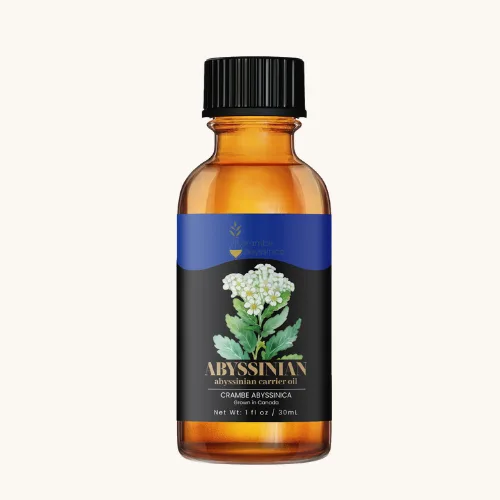
Abyssinian Oil
Cold-pressed Abyssinian oil, in sizes from 0.5 oz to bulk.
From $11.99
Shop Abyssinian Oil →Hair drinks the air
Hair is porous, and it takes up water from its surroundings. When it absorbs water, each strand swells slightly. On a humid day every strand swells in its own direction, the surface scales lift, and the strands stop lying together neatly. That fuzzy halo is the result.
Hair has a natural defense. Its outer surface carries a thin, fatty layer that keeps it water-repellent. Washing, brushing, colour and weather wear that layer away over time, and a hair-science review notes that this turns the surface from water-repelling to more water-attracting, which adds to tangling and frizz. The same review lists smoothing the fiber surface and reducing friction among the jobs of a good conditioning product.
What an oil can and cannot do
A light oil gives the surface a thin, slippery coat. Strands glide past each other instead of snagging, the lengths look smoother, and the shine returns. That is a real, visible effect, but it is cosmetic and temporary: it lasts until your next wash. We would never promise that an oil stops frizz for good, and neither should anyone else.
It also helps to know that oil does not add moisture. It is a finishing layer. If hair is thirsty, water and a conditioner come first and the oil goes on top.
Damp or dry? Both work, differently
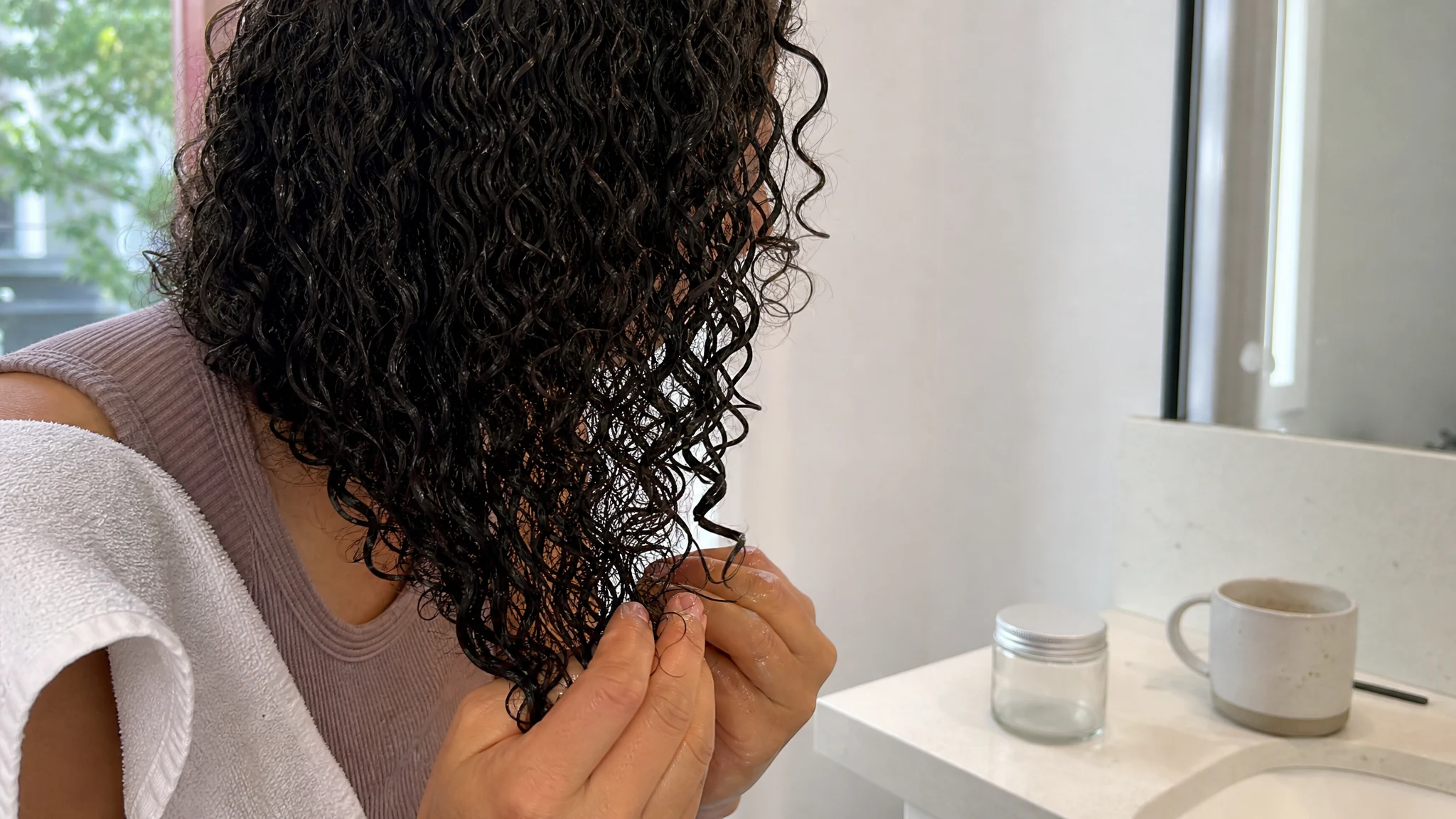
On damp hair, after you have towel-dried gently, a drop or two smoothed through the lengths goes on before styling and helps hair feel less tangled while you work. This version suits the days you plan to air-dry.
On dry hair, it is a touch-up. Warm half a drop between your palms, pat them lightly over the surface and the ends, and you can tame flyaways in a few seconds. If your hair has gone puffy by lunchtime, this is the quickest fix.
Either way the rule is the same: warm it between your palms first, apply from the ends upward, and stop earlier than you think you need to. Frizz is the one problem where more oil tends to backfire, because heavy hair that is still frizzy just looks dirty as well.
Start with a few drops
Two drops is plenty for chin-length hair, three or four for hair past the shoulders. A small bottle is all you need to find your number, which is why we suggest the 0.5 oz or 1 oz size to try. Every size comes from the same oil, so nothing changes when you scale up.
When an oil is not enough
Very rough, very porous hair, the kind that drinks up everything you put on it, often wants a leave-in cream or conditioner first. Think of the cream as the layer that gives the hair something to hold and the oil as the finish. Our notes on hair porosity explain how to tell which camp you are in.
If you are using Abyssinian oil as a lighter alternative to the silicone serums that so many frizz products rely on, this comparison goes deeper. And if you would rather mix your own blend, the DIY serum post shows how the arithmetic works. For general guidance on how the oil behaves across hair types, start at the hair overview, and for tighter patterns see the curly hair guide.
A small habit helps more than any product: gentle towel drying, a wide-tooth comb and no rough brushing while hair is wet. Skin and hair vary from person to person, so patch test before first use and avoid eye contact.
Frizz will never be fully beaten, only handled well, and a couple of drops, a gentle hand and a patient morning go a long way toward doing that.
Abyssinian Oil
Cold-pressed Abyssinian oil, from a small bottle to bulk sizes.
From $11.99
Shop Abyssinian Oil →