Abyssinian Oil in Balms, Sticks and Oil Serums
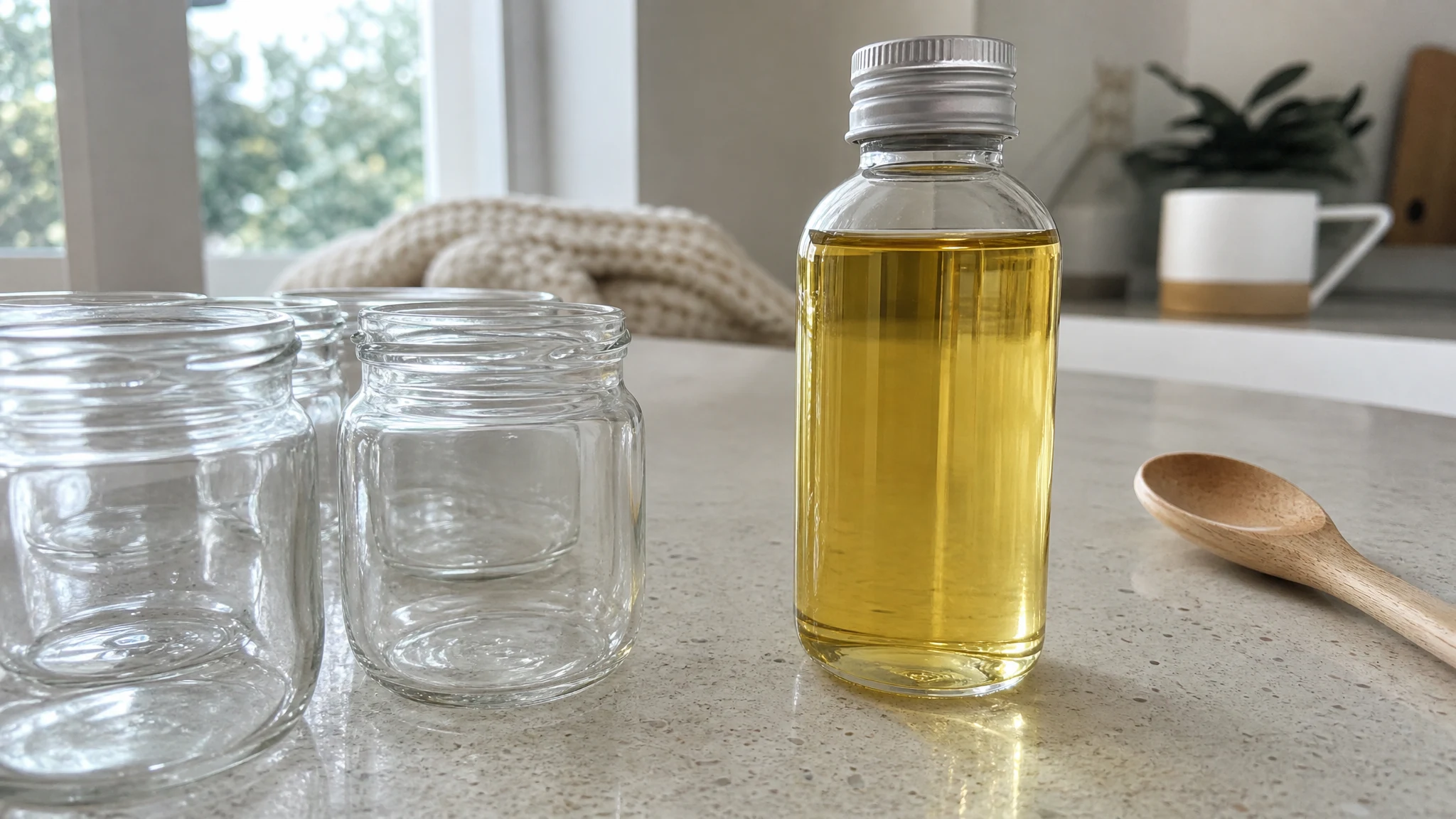
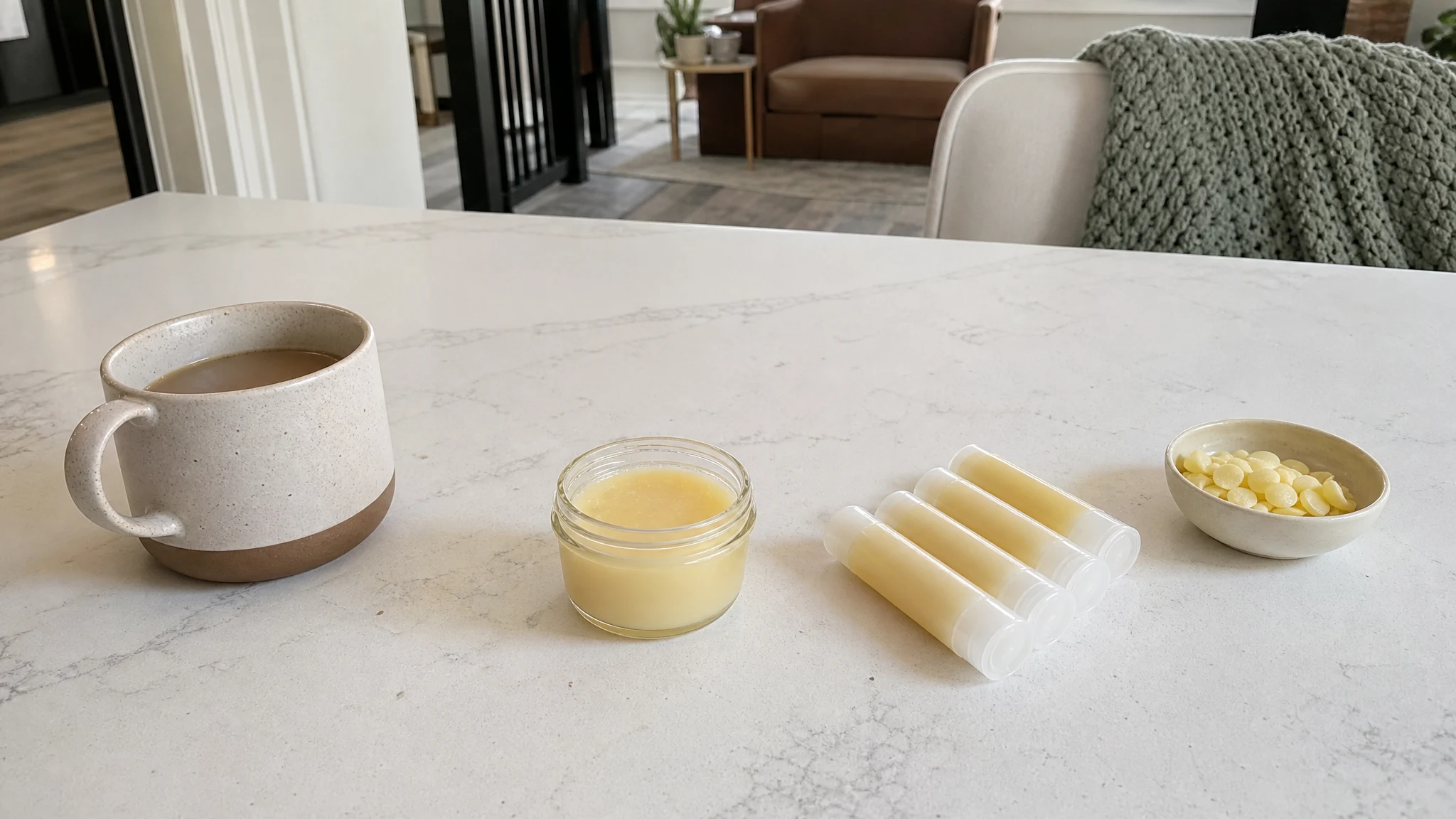
A lip balm is a simple idea: a liquid oil held in place by a lattice of wax. Change how much wax you use and the same oil becomes a soft pot balm, a firm tube or a rigid stick. Abyssinian oil is a light, golden, non-greasy oil, which makes it a pleasant liquid half of that partnership.
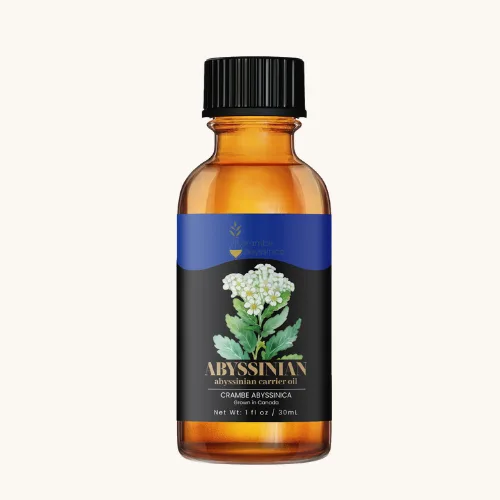
Abyssinian Oil
Cold-pressed Abyssinian oil, in sizes from 0.5 oz to bulk.
From $11.99
Shop Abyssinian Oil →Wax sets the firmness, so start there
The clearest published evidence we found comes from a lipstick study that varied beeswax from about 12 to 33 percent across a set of formulas. More beeswax made the sticks harder, and beeswax content tracked melting point far more strongly than the choice of oil did. Melting points across the set ran from 51 to 69 degrees C. The authors' optimised formula came out at 57.67 percent oils, 19.58 percent beeswax and 22.75 percent cocoa butter, melting at 59.1 degrees C.
A lipstick carries pigment, so a clear balm does not copy it exactly. But it hands you the logic. Think in grams of wax per 100 grams of finished product, and move it in small steps.
A starting grid
Here is that published balance rounded into an arithmetic starting point for 100 g of balm, with the oil share being Abyssinian oil.
| Part | Grams per 100 g | What it does |
|---|---|---|
| Abyssinian oil | 58 | Glide and slip |
| Beeswax | 20 | Firmness and melting point |
| Butter, such as cocoa butter | 22 | Body and a creamier feel |
These are numbers to adjust, not a tested recipe. For a softer balm, trim the wax by a gram or two at a time. For a firmer stick, add a gram or two. Remake the batch each time and let it cool fully before judging. A 100 g batch fills roughly twenty tubes of 4.25 g, which is plenty to compare variations.
What butters change
In the same study the highest spreadability came from the formula with the least beeswax and the most cocoa butter, and the authors credit the butter for it. In practice that means butters are your texture dial: they trade some firmness for cushion. Because we sell only the oil, you would pick up the wax and butters from a craft supply shop, and check the supplier's own notes on melting points before you scale.
Oil serums are a different sum
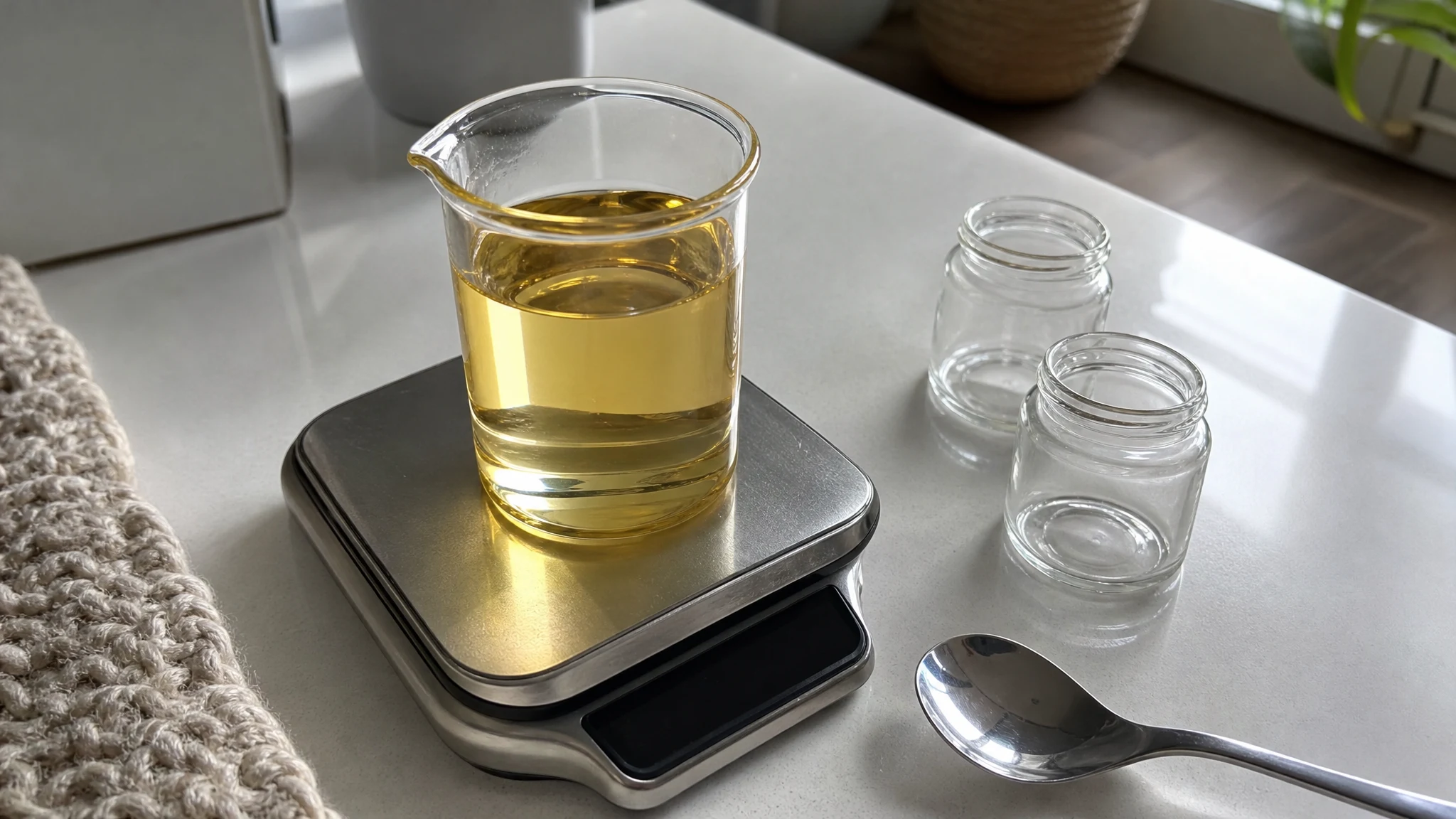
With no wax, a serum is a blend, and the maths is just percentages. Decide what share of the blend Abyssinian oil should be, then multiply: grams of oil equals batch weight times that percentage. For a 30 g bottle at a 40 percent share, that is 12 g of Abyssinian oil and 18 g of whatever you are blending it with. Lighter oils thin the feel; heavier oils add cushion. Our usage rates post is the place to pick your percentage, and the face serum post works through a blend in more detail.
Heat, antioxidants and packaging
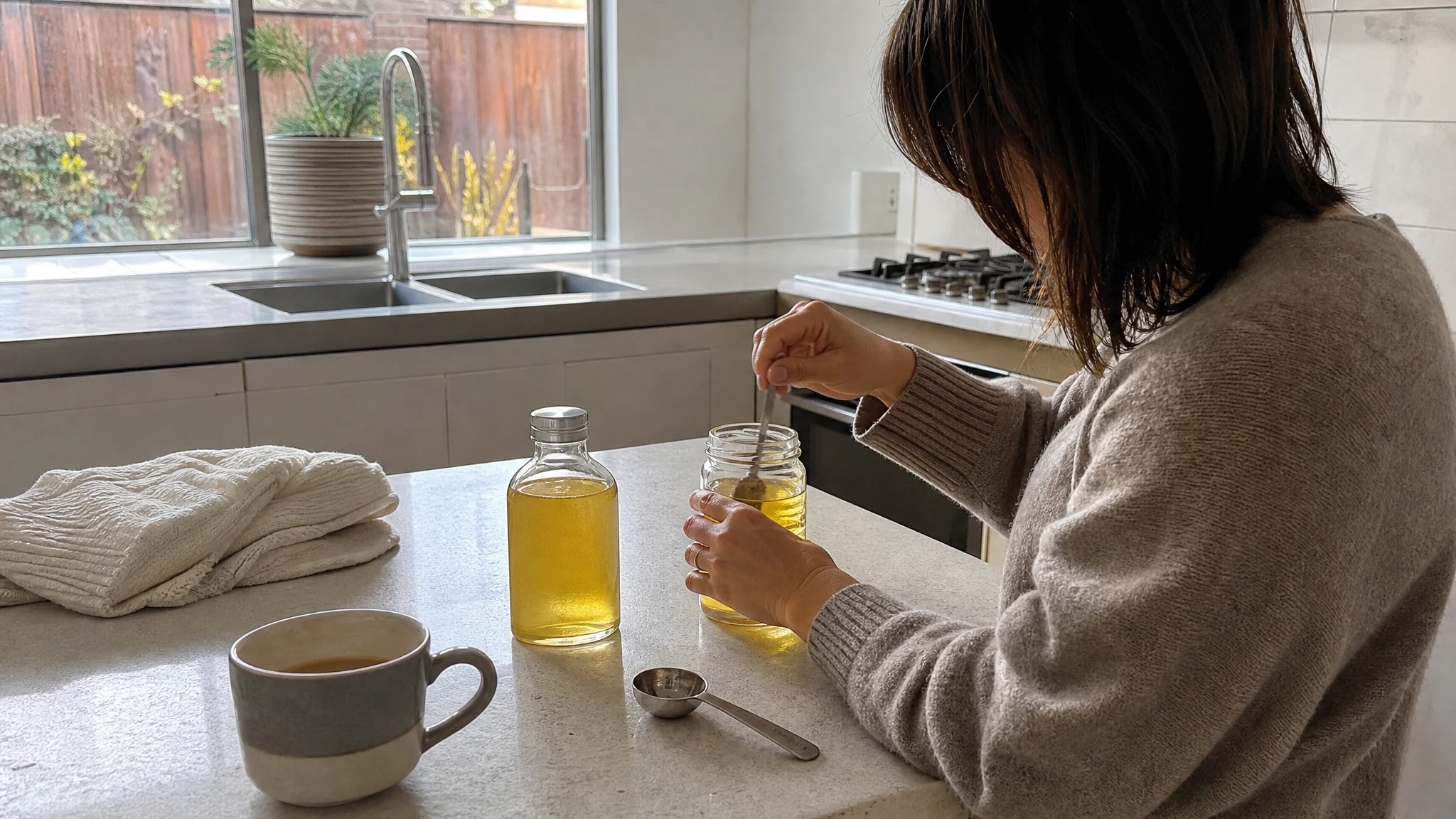
Anhydrous simply means no water, so there is no water phase to preserve, but oils still oxidise, and heat speeds that up. Melt the wax and butter gently, bring everything just to liquid, stir in the oil and pour. Many makers add a tocopherol antioxidant at this stage; ask your supplier for a range and confirm it in a trial batch. Our post on oxidative stability explains how to check it.
For packaging, a tube suits a firm balm because you never touch the product, a tin or jar suits a soft one, and a serum wants a tightly capped bottle with a small opening so little air sits above the oil. Fill containers as full as the product allows.
For a full recipe walk-through, see the lip balm post, and for the wider picture of where an oil like this belongs in a formula, start with the formulation guide. Our Abyssinian oil comes in sizes from 0.5 oz up, so a test batch of any of these only needs a small bottle (details here).
Balms reward the patient: small changes, careful notes and a good night's cooling. Treat the grid above as a first draft and let your own results write the final version.
Abyssinian Oil
Cold-pressed Abyssinian oil, from a small bottle to bulk sizes.
From $11.99
Shop Abyssinian Oil →Sources & Further Reading
- Evaluation of Beeswax Influence on Physical Properties of Lipstick Using Instrumental and Sensory Methods, Evidence-Based Complementary and Alternative Medicine, 2016.