Abyssinian Oil in Cosmetic Formulas: A Maker's Walk-Through
A formulator's first question about a new oil is rarely "what does it do?" It is "where does it fit in what I already make?" Abyssinian oil has a short, clear answer: it is a light, golden, mild-smelling oil with a long-chain, mostly monounsaturated fatty acid profile, and it earns a place wherever a formula wants glide and a clean finish without a heavy, greasy feel.
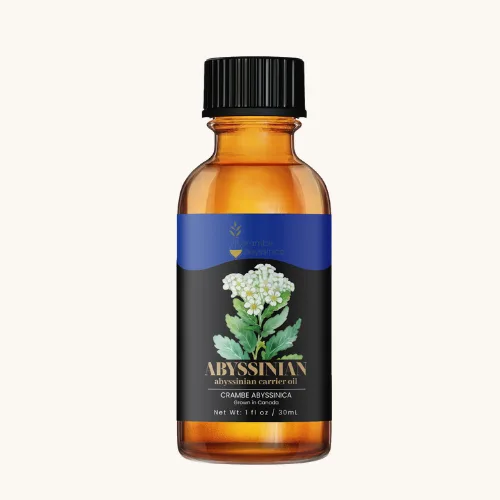
Abyssinian Oil
Cold-pressed Abyssinian oil, in sizes from 0.5 oz to bulk.
From $11.99
Shop Abyssinian Oil →What kind of oil this is
Published datasheets for crambe oil describe it as clear to pale yellow, low in viscosity and slippery on the skin. The fatty acid ranges they print are dominated by erucic acid (one datasheet lists 50 to 65%) with oleic acid and linoleic acid making up most of the rest. That long, mostly monounsaturated chain is what gives the oil its silky glide. Our own oil is cold-pressed, light and golden with a mild, nutty aroma, high in unsaturated omega-9 and omega-6 fatty acids, and it is vegan friendly. For the detail behind those fatty acids, see our fatty acid profile post.
Those general datasheet numbers describe crambe oil as a category. Individual lots and processing routes differ, which is exactly why you test it in your own base.
Where it tends to earn its place
Leave-in serums and finishing oils. A low-viscosity oil spreads thinly, so a small amount covers a lot of surface. One supplier monograph describes a few drops giving an instantly glossy appearance before the oil is absorbed and leaves a matte finish. That is a useful profile for a hair serum or a facial oil that should not sit shiny on the skin.
Anhydrous balms and oil blends. With no water in the system, there is no emulsion to disturb. The oil simply sits in the oil phase beside butters and waxes and softens their drag. Our anhydrous formulas post goes through that format properly.
The oil phase of an emulsion. In a lotion or cream you are choosing how much of the oil phase should be a light, fast-spreading oil versus a richer one. Abyssinian oil is a natural candidate for the lighter share. Starting percentages are in our usage rates post.
Hair care. Slip, gloss and a light feel are what brands often reach for silicones to deliver. We look at how an oil compares in our silicone-free formulation post.
What to test in your own base
A supplier's description can only tell you so much. Four things are worth checking on your own bench before you commit to a larger purchase:
- Spread and feel. Rub it out on skin or a hair swatch at your intended level. Does it vanish in a minute or linger?
- Compatibility. Watch how it sits with your emulsifier, thickener and fragrance. Separation or a change in viscosity shows up in days, not hours.
- Stability. Keep samples at room temperature and somewhere warmer, and compare them against a control. Our oxidative stability post explains what to look for.
- Odour. The aroma is mild and nutty, but your base and fragrance can change how it reads.
Paperwork before price
Ask any supplier to document where their oil comes from, and decide which documents you need for your own labels and files before you place an order. We explain how to read a certificate in our certificate of analysis post, and what to ask in our sourcing questions post. Tell us which documents you need before you order.
A note on claims
Cosmetic claims about a finished product are your responsibility as the brand. Words like moisturizes, softens and smooths are cosmetic language; claims that touch on treating a condition belong in a different regulatory category, which we cover separately. For skin sensitivity questions about your particular formula, a patch test and a conversation with a qualified safety assessor are the right steps.
Tell us what you make
We sell Abyssinian oil in sizes from 0.5 oz to 400 lb, and every size is the same oil bottled from the same lots, so a small size is a fair preview of what arrives in volume. If you are building a line, we also offer private label, filled and capped in-house on an automated line, and we will help with custom formulations where we can. Tell us what you make and what you are trying to achieve at our wholesale page, or browse the oil itself.
The best ingredient decisions are the boring ones: a small trial, a clear comparison against what you use now, and a decision made on your own results.
Abyssinian Oil
Cold-pressed Abyssinian oil, from a small bottle to bulk sizes.
From $11.99
Shop Abyssinian Oil →Sources & Further Reading
- ABYSSINIAN SEED OIL Also known as Crambe Seed Oil (Natural Sourcing product literature)
- Abyssinian (Crambe) Seed Oil (Botanical Formulations oil monograph)