Castor Oil and Abyssinian Oil: A Blend by the Numbers
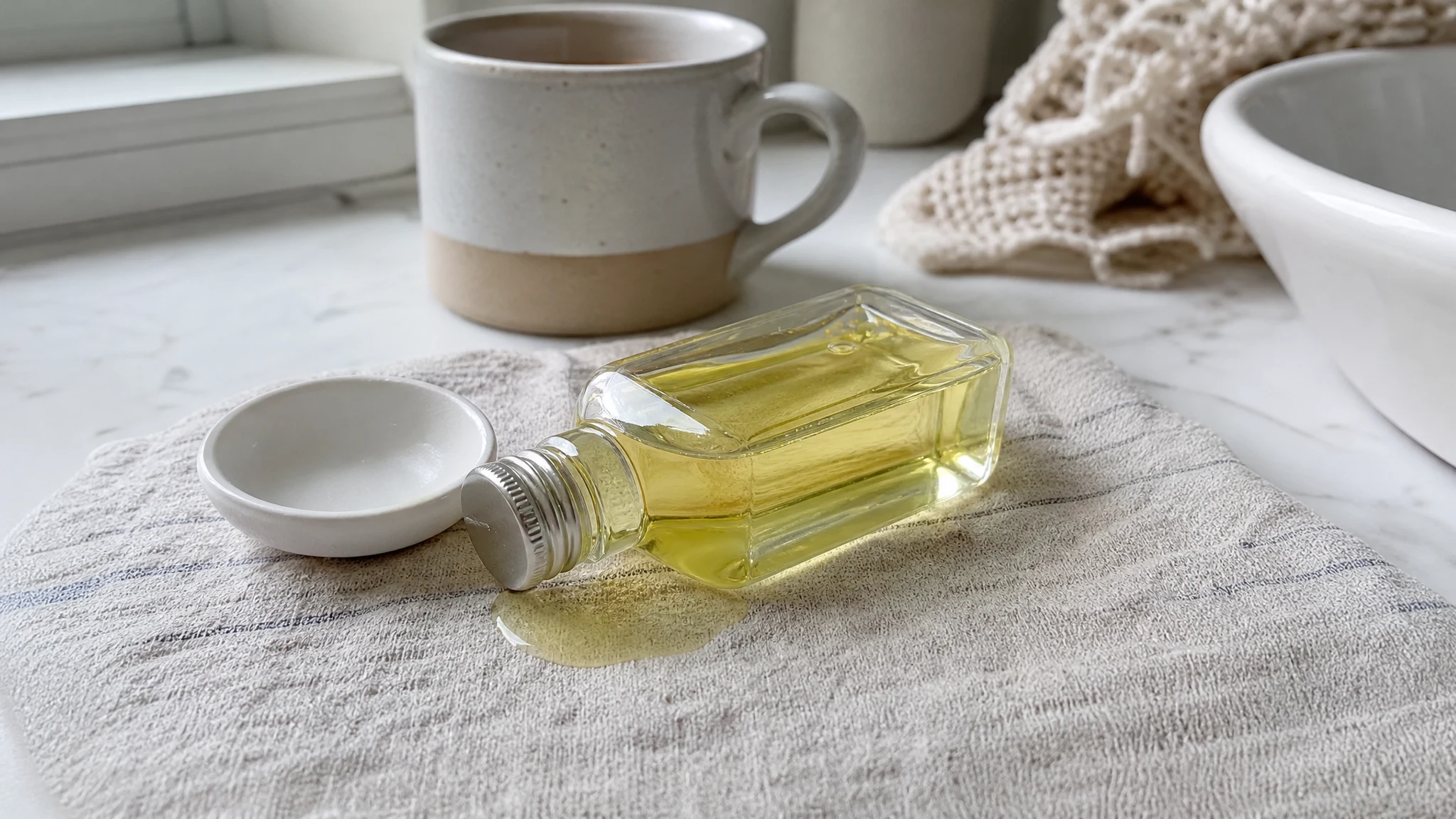
Anyone who has tipped castor oil from a bottle knows how it behaves: it moves like slow syrup, clings to the lip of the bottle, and takes patience to spread. That character is exactly why people blend it. Mix it with a light oil and you keep castor in the recipe while making it far easier to handle.
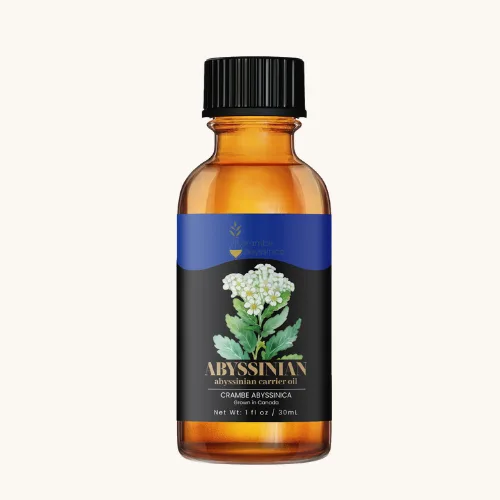
Abyssinian Oil
Cold-pressed Abyssinian oil, in sizes from 0.5 oz to bulk.
From $11.99
Shop Abyssinian Oil →Why castor oil pours like honey
Castor oil is unlike nearly every other plant oil because of one fatty acid. A 2021 review in Food Science and Technology reports that ricinoleic acid makes up about 75 to 90 percent of the oil, and that its structure carries a hydroxyl group on the twelfth carbon. That extra group is the reason castor is unusually viscous, dense and slow to flow. The same review gives a density of 961 kilograms per cubic metre at 28 degrees C, so a millilitre of castor weighs a little under a gram.
The published viscosity numbers are honestly all over the place. The review quotes 9.3 to 10 in one study at 25 degrees C and 1.86 at 30 degrees C in another, in units it does not reconcile. We would rather say that than quote a figure that looks precise. What every source agrees on is the direction: castor is among the most viscous of the common plant oils, and a lighter oil lowers the viscosity of any blend you make with it.
What a light oil does to the mix
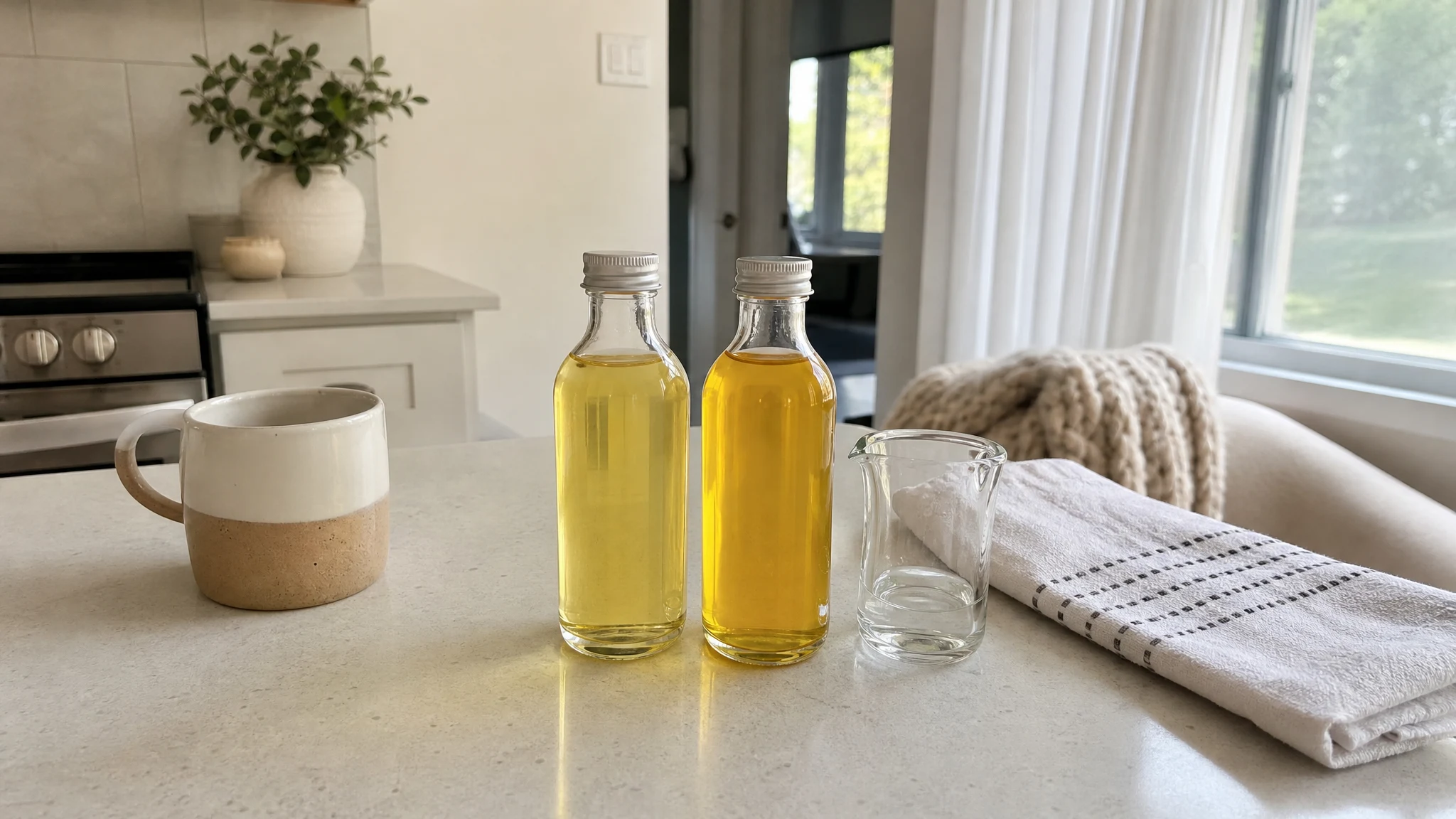
Abyssinian oil is a lightweight, golden oil that pours freely. Mix the two and the blend lands somewhere in between, but not at the midpoint. Viscosity does not average the way weights do, so a small share of free-flowing oil changes a thick oil more than you might expect. That is our reasoning from how fluids mix rather than a measurement of our own blends, so treat the ratios below as starting points and adjust by feel.
Four ratios, worked out in millilitres
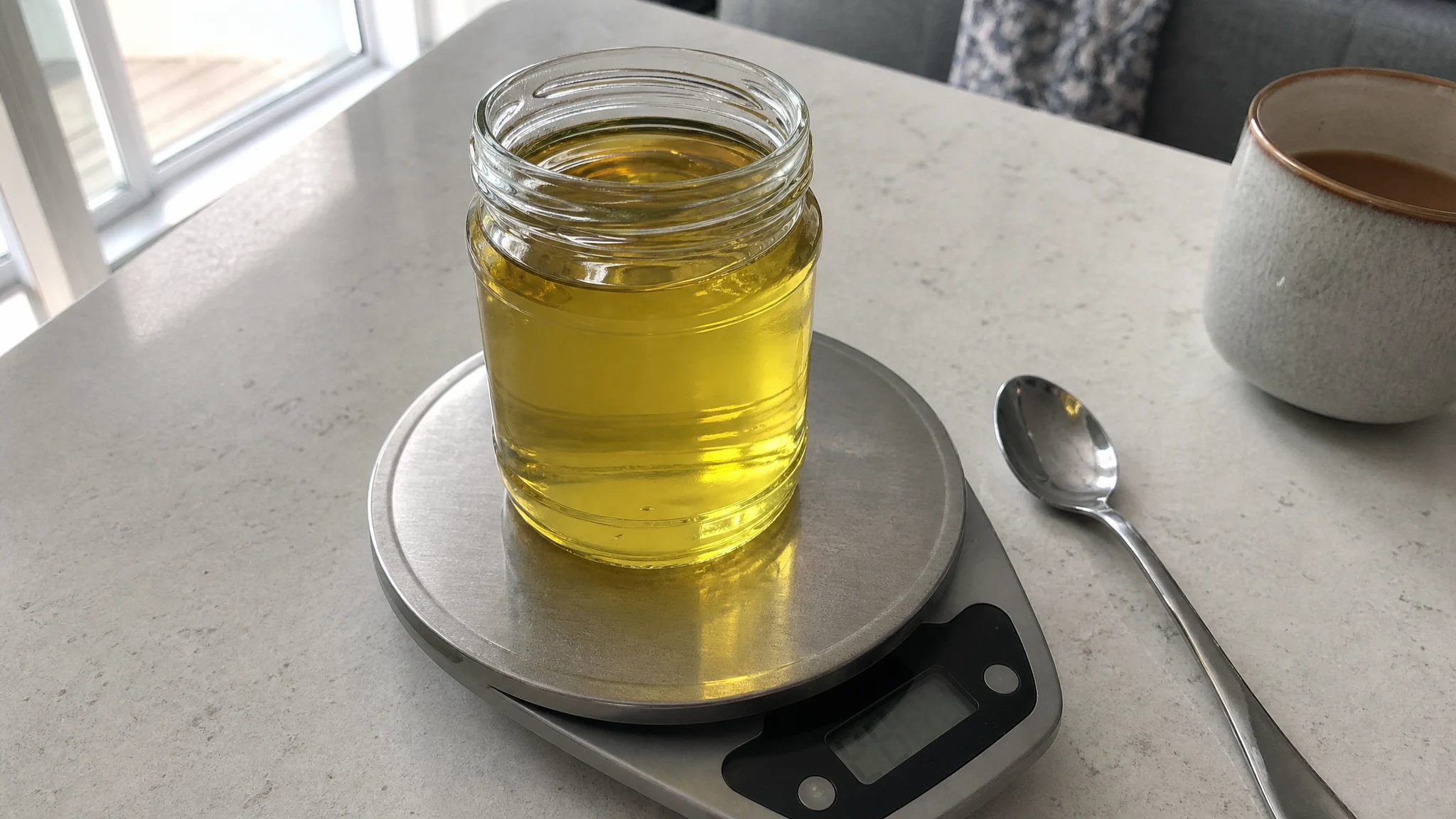
Measure by volume with a small measuring jar. For a 30 ml bottle (about 1 fl oz):
| Castor : Abyssinian | Castor | Abyssinian | Castor in fl oz |
|---|---|---|---|
| 1 : 9 (10%) | 3 ml | 27 ml | 0.10 |
| 1 : 4 (20%) | 6 ml | 24 ml | 0.20 |
| 3 : 7 (30%) | 9 ml | 21 ml | 0.30 |
| 1 : 1 (50%) | 15 ml | 15 ml | 0.51 |
Our pick for a first batch is 1 : 4. It is still noticeably viscous, which is what a castor oil blend is for, but it pours from a bottle with a plain screw cap and spreads in a thin film. The 1 : 9 blend reads as a light oil with a touch of body, while 1 : 1 is the traditional heavy hand, best poured from a wide-mouthed jar. Scale any of these up by multiplying: a 100 ml batch at 1 : 4 is 20 ml castor and 80 ml Abyssinian.
Shake or stir for a minute until the two are the same colour and the streaks disappear. They blend readily with no heat needed.
Leave-on or rinse-off
Where you use the blend is mostly a question of ratio. A lighter blend, around 1 : 9 or 1 : 4, works as a finishing oil for hands, elbows and dry patches of skin: a few drops warmed between the palms and pressed on. A heavier blend suits something you wash away, such as a pre-shampoo oiling session of the kind described in our hair oiling guide, since the lighter oil in the mix makes the whole thing easier to massage in and rinse out than castor alone. A warm, damp towel around the head or a cleanser afterwards removes it.
We make no promises about what castor oil does beyond conditioning and softening. It is a cosmetic oil, and this blend is for feel.
A patch test and a clear head
Patch test before first use, avoid eye contact, and check with a professional if you have specific concerns. Castor is one of the oils people most often meet in a pharmacy, and the pharmacist is a good person to ask if you are unsure. We do not sell castor oil; a pharmacy, grocery store or craft supply shop does.
Is castor even the right partner?
Not always. If you want a very light feel, you may prefer Abyssinian oil by itself. Our carrier oil comparison shows where each oil sits, and the DIY hub explains how to scale and label any blend. If you are thinking of adding fragrance, read the rosemary blend math first, and keep every one of these mixes water-free.
Two oils, one ratio and a measuring jar. That is all a blend is, and it is a pleasant way to learn how oils behave.
Abyssinian Oil
Cold-pressed Abyssinian oil, from a small bottle to bulk sizes.
From $11.99
Shop Abyssinian Oil →Sources & Further Reading
- Castor oil (Ricinus communis): a review on the chemical composition and physicochemical properties (Food Science and Technology, 2021)