Abyssinian Oil vs Argan Oil: Which Finish Suits You?
Argan oil is the one most people already know, which makes it the natural yardstick for anything new. So the honest question about Abyssinian oil is simple: what do you get that argan does not, and what does argan do that we would never claim to match?
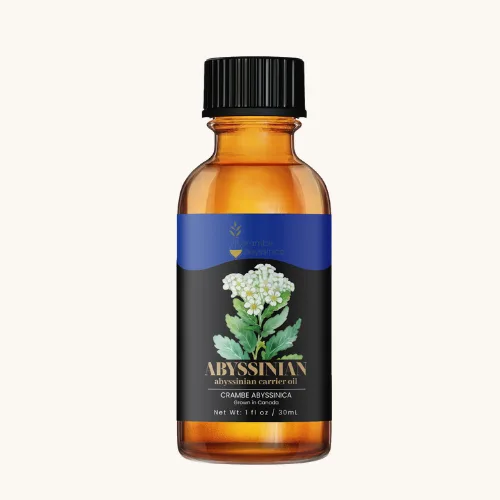
Abyssinian Oil
Cold-pressed Abyssinian oil, in sizes from 0.5 oz to bulk.
From $11.99
Shop Abyssinian Oil →Two different fat profiles
Argan is an oleic-and-linoleic oil. Published ranges put oleic acid at roughly 43 to 49 g per 100 g and linoleic acid at 29 to 37, with only about 19 g of saturated fat, plus tocopherols (vitamin E compounds) at 60 to 90 mg per 100 g. That is a balanced, medium-weight profile, and it is the reason argan has the familiar nutty richness.
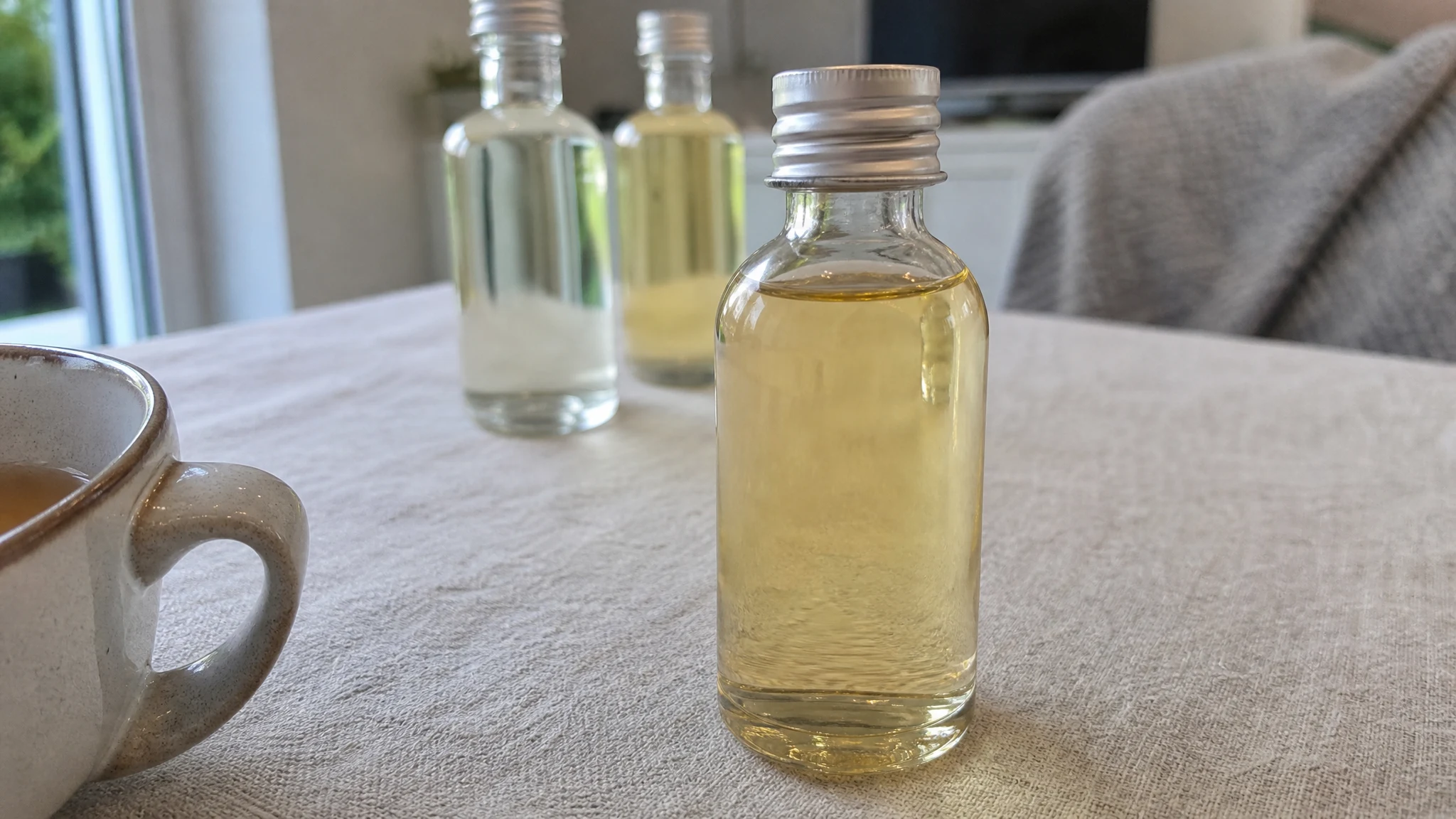
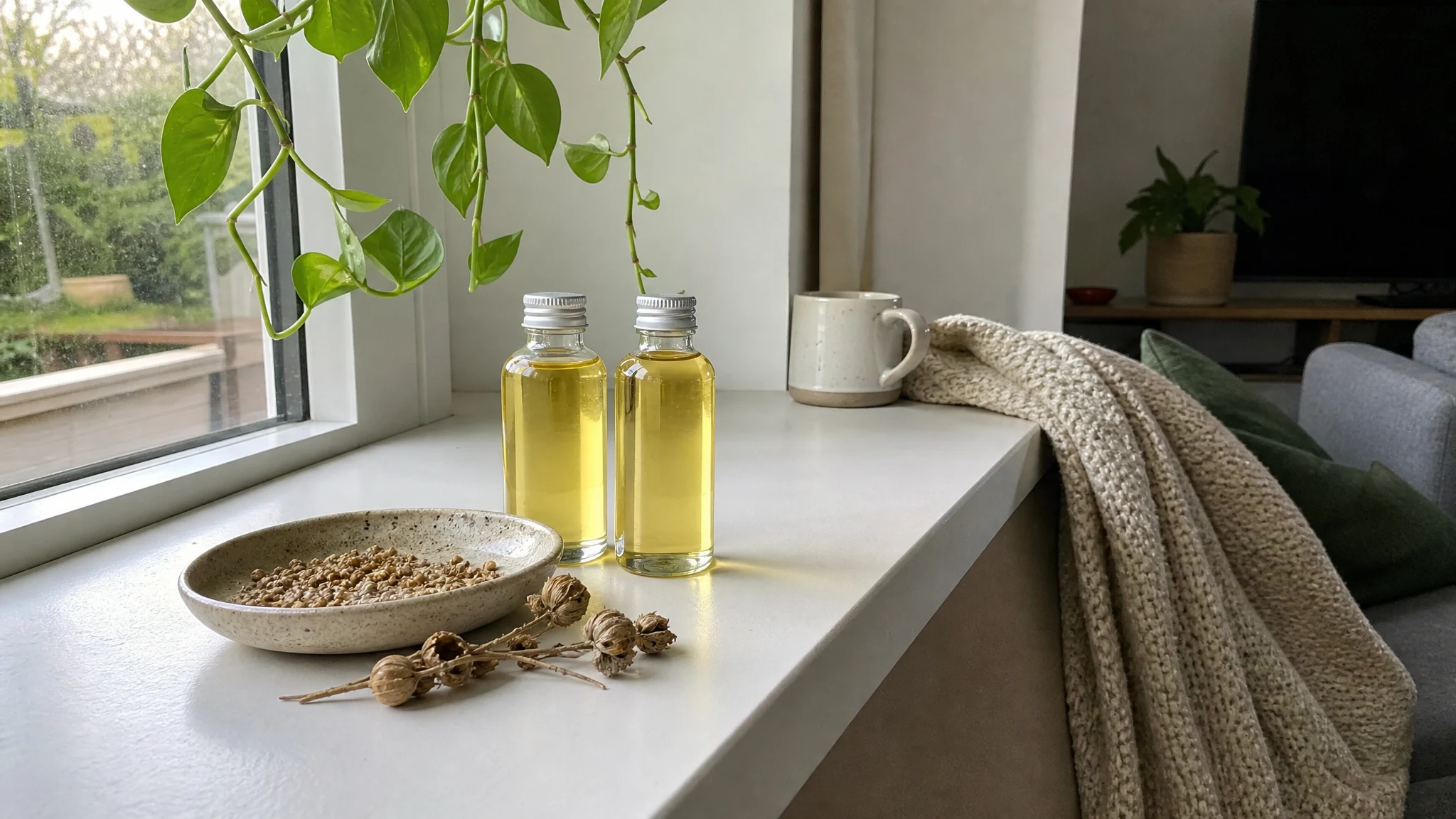
Abyssinian oil, pressed from Crambe abyssinica seeds, takes another path. In published analyses of crambe oil, more than 55% of the fatty acids are erucic acid, a very long chain with a single double bond. Those long chains are what we credit for a lightweight, non-greasy feel in our own oil, which is cold-pressed, light golden and mildly nutty.
Weight and finish
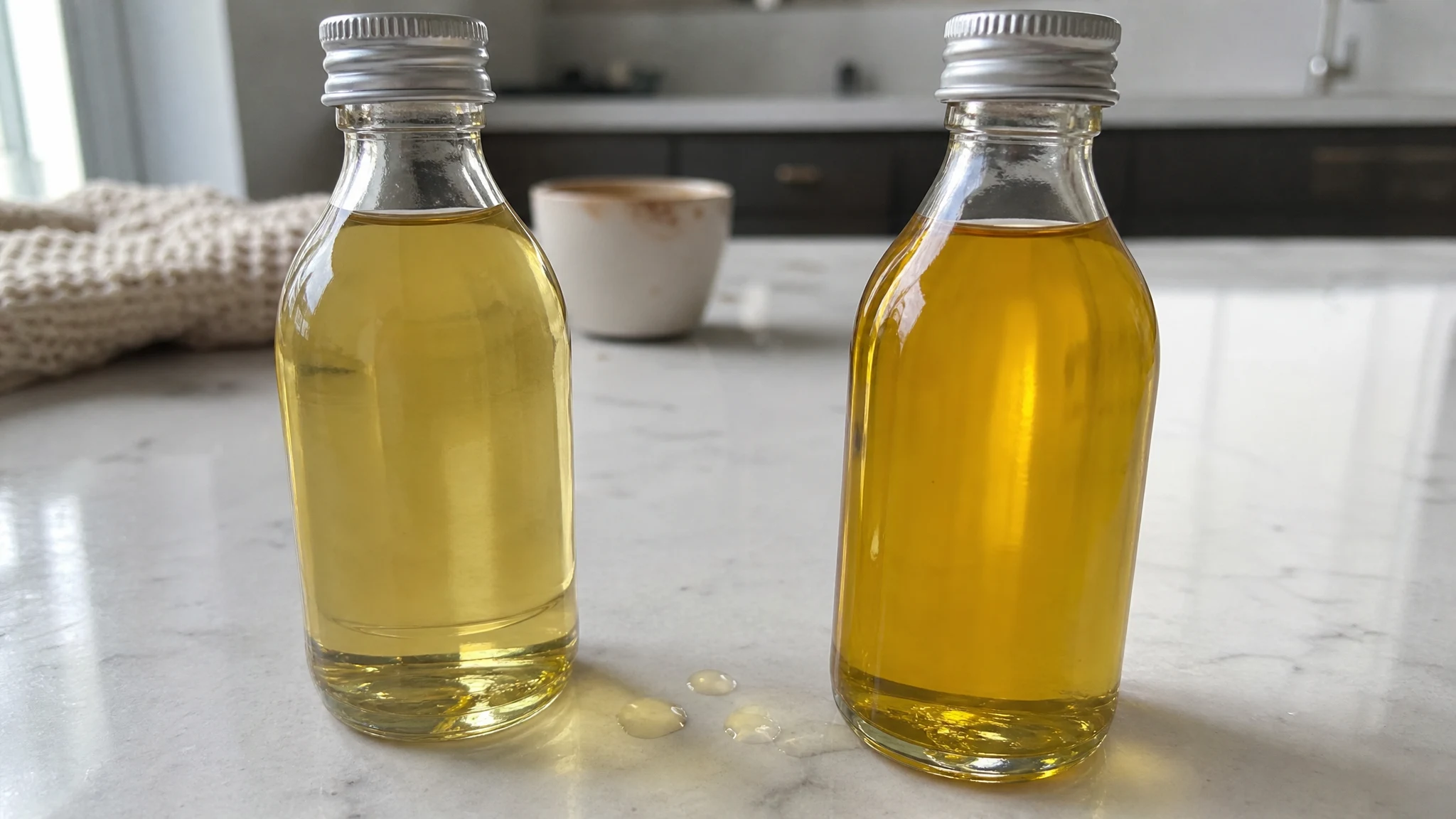
If you picture a scale, argan sits a step richer and Abyssinian a step lighter. That is a reasoned reading of the fat profiles rather than a lab result from our bottle. On hair, both are used as finishing oils for a smoother, shinier look. Argan's extra body suits hair that likes a little weight. Abyssinian oil suits people who worry a finishing oil will leave hair feeling coated, and it is a good fit for finer strands; our hair post covers how to apply it. On the face, the same logic holds: a light layer from Abyssinian oil, a slightly more cushioned one from argan.
What to know when you buy argan
Argan is made in limited quantities by Moroccan producers, and a review of its quality control notes that limited production, high price and strong demand make it a target for deliberate adulteration with cheaper vegetable oils. Researchers have therefore built a toolkit of analytical methods to authenticate it. One simple example: genuine argan oil contains only trace linolenic acid, under about 0.3 g per 100 g, so a higher figure points to another oil.
You do not need a lab to act on that. Buy argan from a seller who names its source and shows it on the paperwork, and treat an unusually low price as a reason to ask questions. We say the same about any oil, ours included: ask any supplier to document where their oil comes from. For Abyssinian oil, tell us which documents you need before you order.
Who should choose which
- Reach for argan if you love its nutty richness and want a little more weight on dry hair or body skin, and you are happy to source it carefully. You will find it at a craft supply shop or pharmacy.
- Reach for Abyssinian oil if you want a light, quick-feeling finish that will not weigh fine hair down, or you are building a lightweight face and hair routine.
- Use both if you like layers. A few drops of argan through the lengths and a trace of Abyssinian oil over the top makes sense on paper, because their weights differ enough to complement each other. Keep amounts small, and patch test any new oil first.
A word on price
In general terms, argan sits at the premium end of the carrier oil shelf, partly because of that limited supply. We do not publish a price comparison here, since checkout always shows the current one. Abyssinian oil comes in sizes from 0.5 oz up to bulk, and the bulk buying guide explains the larger ones.
For the wider picture, our carrier oil chart places argan next to eight others, and we compare Abyssinian oil with the other hair favourite in our coconut oil post. Either way, a good finishing oil is a small luxury, and it is worth choosing the one whose feel you will actually enjoy.
Abyssinian Oil
Cold-pressed Abyssinian oil, from a small bottle to bulk sizes.
From $11.99
Shop Abyssinian Oil →Sources & Further Reading
- A Comprehensive Review of Plant-Based Cosmetic Oils (Virgin Coconut Oil, Olive Oil, Argan Oil, and Jojoba Oil): Chemical and Biological Properties and Their Cosmeceutical Applications
- Quality Control and Authentication of Argan Oils: Application of Advanced Analytical Techniques
- Crambe hispanica Subsp. abyssinica Diacylglycerol Acyltransferase Specificities Towards Diacylglycerols and Acyl-CoA