Abyssinian Oil vs Coconut Oil for Hair: Different Jobs
Coconut oil is the hair oil with a paper trail. If you have heard that an oil can slip inside a strand rather than just coat it, the study behind that idea almost certainly involved coconut. It deserves the credit. It also means that comparing it with Abyssinian oil is less a contest than a question of which job you are hiring an oil to do.
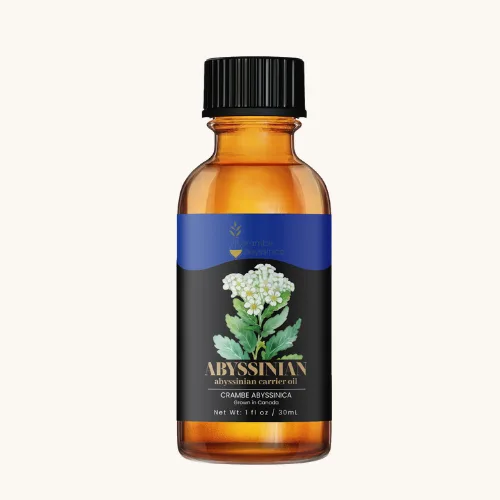
Abyssinian Oil
Cold-pressed Abyssinian oil, in sizes from 0.5 oz to bulk.
From $11.99
Shop Abyssinian Oil →What the coconut research actually tested
The study people usually mean is Rele and Mohile, published in 2003 in the Journal of Cosmetic Science. The researchers compared three oils, coconut, sunflower and mineral oil, on different hair types, both undamaged and damaged, using a structured experimental design. The measure they cared about was protein loss from the hair. Coconut oil was the only one of the three that reduced it, used either before or after washing, while sunflower and mineral oil did not.
The authors put the difference down to composition. Coconut oil is a triglyceride of lauric acid, a short, straight-chained fatty acid with an affinity for hair proteins, and they suggest that lets it penetrate the fibre, where bulkier, double-bonded sunflower oil and a hydrocarbon like mineral oil do not.
It is worth being precise about the limits of that. Abyssinian oil was not among the oils tested, so there is no comparable penetration data for it, and we will not pretend otherwise. The study also measured protein loss in a lab-style setup, which is a different thing from how a head of hair looks and feels on a given day.
Where Abyssinian oil fits instead
Abyssinian oil is a different kind of tool. It is built from long-chain fatty acids, with erucic acid at roughly 55 to 60 percent of crambe seed oil in the published literature (Purdue's crop profile), and those long chains are very different from coconut's short ones. Our reasoning is that a long, heavier-chained oil is more likely to sit on the surface of a strand than to travel into it, which is exactly what you want from a finishing oil: it adds shine and leaves hair feeling smooth and soft. Our Abyssinian oil is cold-pressed, light and golden, with a mild nutty aroma, and we describe it as lightweight and non-greasy.
That lightness matters because finishing is where most people overdo it. A coconut oil that is solid in a cool room is excellent for slow, generous pre-wash sessions but can look heavy if left in as a styling step, especially on fine hair. Our fine hair post goes into how to use a light oil without weighing a style down.
How we would use both
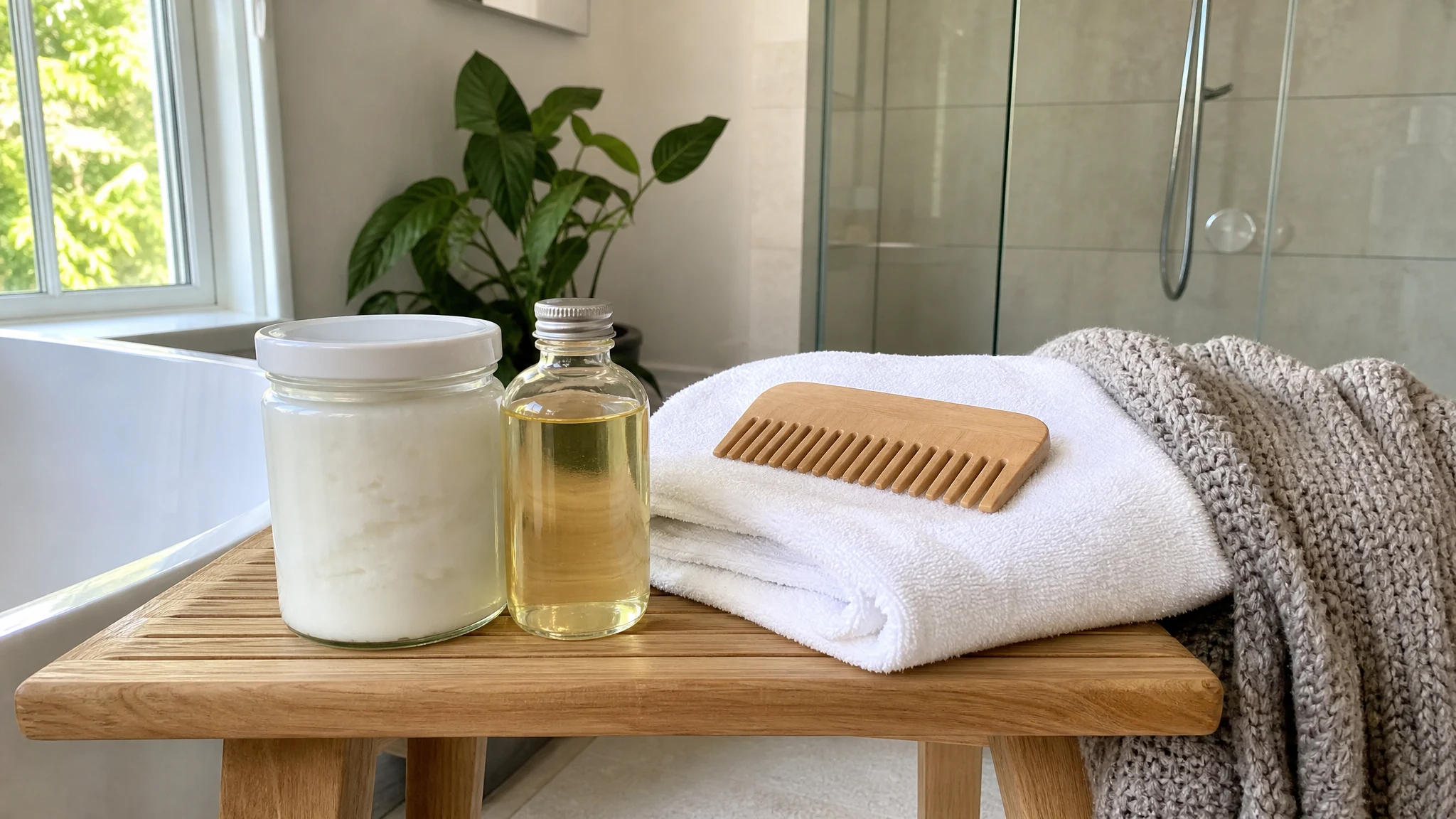
This is our recommendation, reasoned from the study above and from what we know about our oil, not from a head-to-head trial. Reach for coconut oil before washing, the use it was actually studied for. Then, on clean, damp or dry hair, use a few drops of Abyssinian oil for finish, warmed between the palms and kept to the lengths and ends.
If you only want one, pick by habit. Do you like a slow pre-wash ritual? Coconut. Do you want a quick smoothing touch before you leave the house? Abyssinian. Our hair oiling post covers the ritual side, and our hair overview sets out what Abyssinian oil is and is not for. For the wider picture, see our carrier oil comparison. We do not sell coconut oil, so you will find it at a grocery store or craft supply shop.
Scalp or skin that reacts to a new oil is a question for a dermatologist, and as with any new product, patch test first and keep oils away from your eyes. Otherwise, two oils with two jobs can happily share a shelf.
Abyssinian Oil
Cold-pressed Abyssinian oil, from a small bottle to bulk sizes.
From $11.99
Shop Abyssinian Oil →Sources & Further Reading
- Effect of mineral oil, sunflower oil, and coconut oil on prevention of hair damage (Rele and Mohile, Journal of Cosmetic Science, 2003)
- Crambe abyssinica Hochst. ex R.E.Fries (Purdue NewCROP)