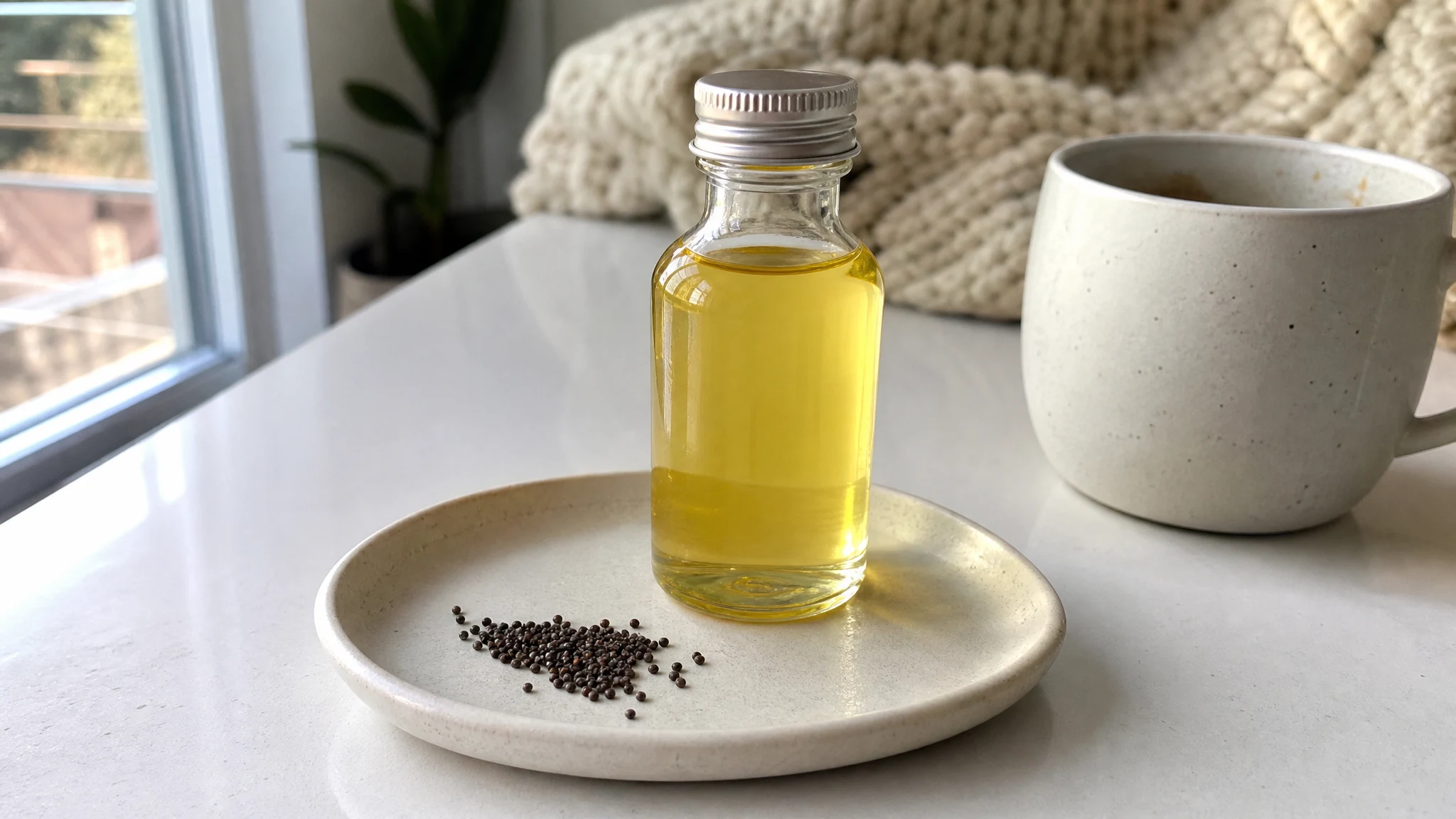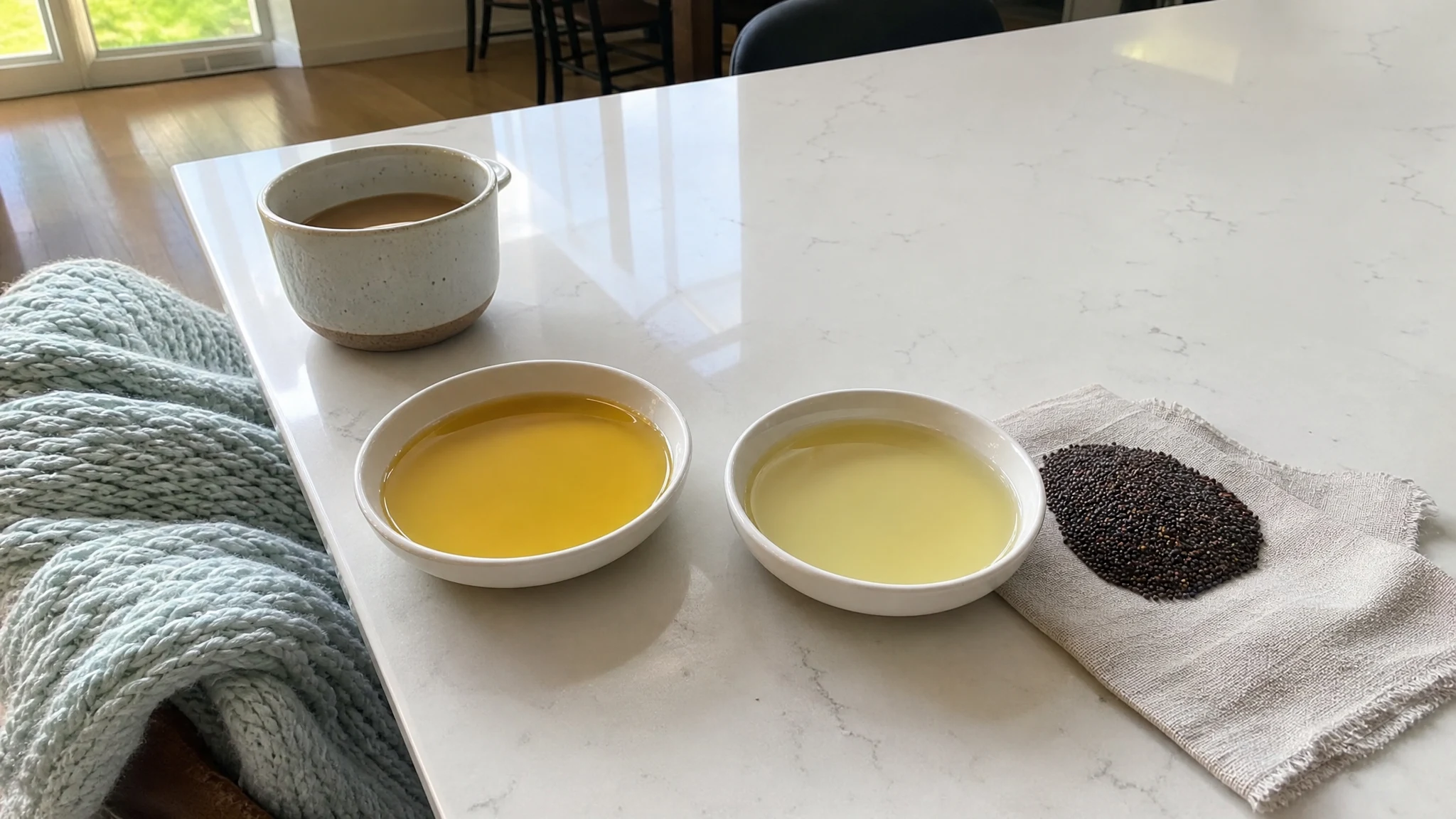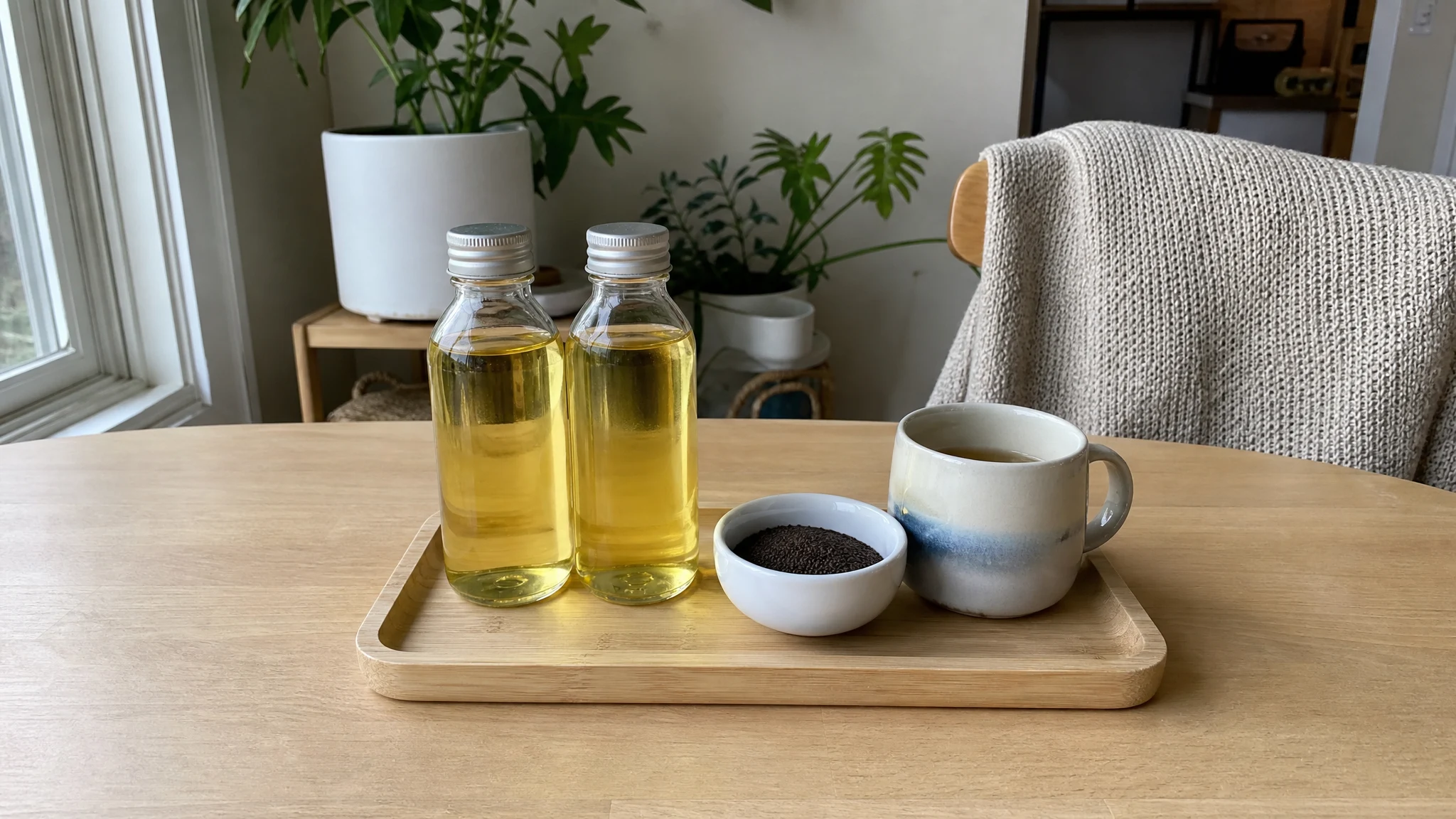
Abyssinian Oil vs Crambe Oil: Same Oil, Different Names
Pick up two bottles, one marked Abyssinian oil and one marked crambe oil, and you could be forgiven for thinking you have two different products. You do not. The difference is a naming habit, and once you know the pattern you can read almost any ingredient list with confidence.
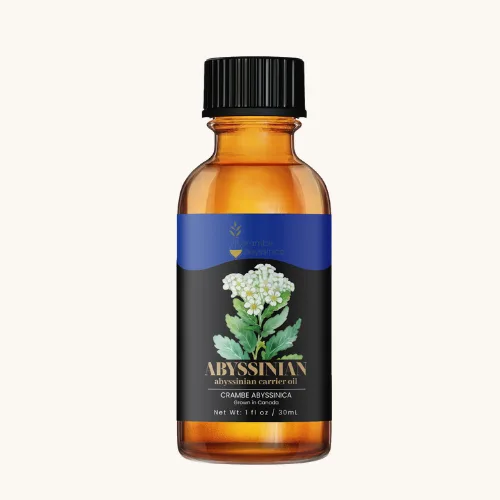
Abyssinian Oil
Cold-pressed Abyssinian oil, in sizes from 0.5 oz to bulk.
From $11.99
Shop Abyssinian Oil →Three names, one seed
All three names describe oil pressed from the seeds of one plant, Crambe abyssinica.
- Crambe oil is the plain-English name, taken from the plant's genus.
- Abyssinian oil is the trade and shop name. It comes from the species name, abyssinica, a nod to Abyssinia, the old name for Ethiopia. Sources differ on where the plant started: agricultural references say the Mediterranean area, and we describe it as native to Eastern Africa.
- Crambe Abyssinica Seed Oil is the formal ingredient name, the one that appears on a cosmetic ingredient list.
That last one follows INCI, the International Nomenclature of Cosmetic Ingredients, a shared naming system so that the same ingredient reads the same way on a bottle in any country. The European Commission's CosIng database lists it as the oil expressed from the seeds of Crambe abyssinica, in the plant family Brassicaceae, and gives it hair conditioning and skin conditioning roles.
The look-alikes are not the same thing
Here is where a careful reader earns their keep. CosIng also lists names that begin with the same words but describe different ingredients:
- Crambe Abyssinica Seed Oil Phytosterol Esters is a reaction product of the oil with plant sterols, listed for film-forming, conditioning and emulsifying roles. It is made from the oil, but it is not the plain oil.
- PEG-75 Crambe Abyssinica Seed Oil is a polyethylene glycol derivative of the oil, listed as a skin-conditioning emollient and an emulsifier. Again, a processed ingredient with its own job.
Formulators choose these for particular textures and for mixing oil into water-based products. Nothing is wrong with them. They simply are not what you want if you are looking for a single-ingredient oil to use as it comes.
How to read a label in ten seconds
Here is a practical rule, and it is our reasoning from how INCI works. If you want the plain oil, look for exactly Crambe Abyssinica Seed Oil with nothing added before or after it, and nothing else in the list. A bottle that sells Abyssinian oil as a single ingredient should read as that one line. If you see Phytosterol Esters, PEG-75 or a longer string of ingredients, you are looking at a blend or a modified ingredient, which may be perfectly good for its purpose but is a different purchase.
Two small cautions follow from that rule. A product that lists the oil and also a long run of other ingredients is a formula, and the oil is only one part of it. And a name that looks close but differs by a word, such as the esters or PEG versions above, is worth a second look before you buy, because the front of a bottle may say "crambe" while the list tells the real story.
Why the names split in the first place
Common names grow up around how a product is sold, so a shop calls it Abyssinian oil because the name is easier to remember and say, and a grower or ingredient buyer calls it crambe oil because that is the crop. INCI names exist to stop that drift at the point of sale. They do not rank one name above another. They simply make sure that a formulator in one country and a shopper in another can compare lists line by line.
Where this leaves you
Ours is the plain, single-oil version: cold-pressed Abyssinian oil, light golden, with a mild nutty aroma. If you are comparing it with something labelled crambe oil, the name alone is no reason to hesitate, and the ingredient list is where you check. You can see ours on the product page. For what the oil actually is and how it feels, start with what Abyssinian oil is. For what cold-pressed means, read cold-pressed vs refined Abyssinian oil. And if you are a buyer who needs paperwork, our guide to Abyssinian oil specifications and documents covers what to ask any supplier for.
Once you can read the name, the rest of the label usually tells you what you need to know.
Abyssinian Oil
Cold-pressed Abyssinian oil, from a small bottle to bulk sizes.
From $11.99
Shop Abyssinian Oil →Sources & Further Reading
- Crambe Abyssinica Seed Oil - Hair Conditioning | CosIng Checker
- Crambe Abyssinica Seed Oil Phytosterol Esters - Film Forming | CosIng Checker
- PEG-75 Crambe Abyssinica Seed Oil - Skin Conditioning | CosIng Checker