Cold-Pressed vs Refined Abyssinian Oil: What Changes
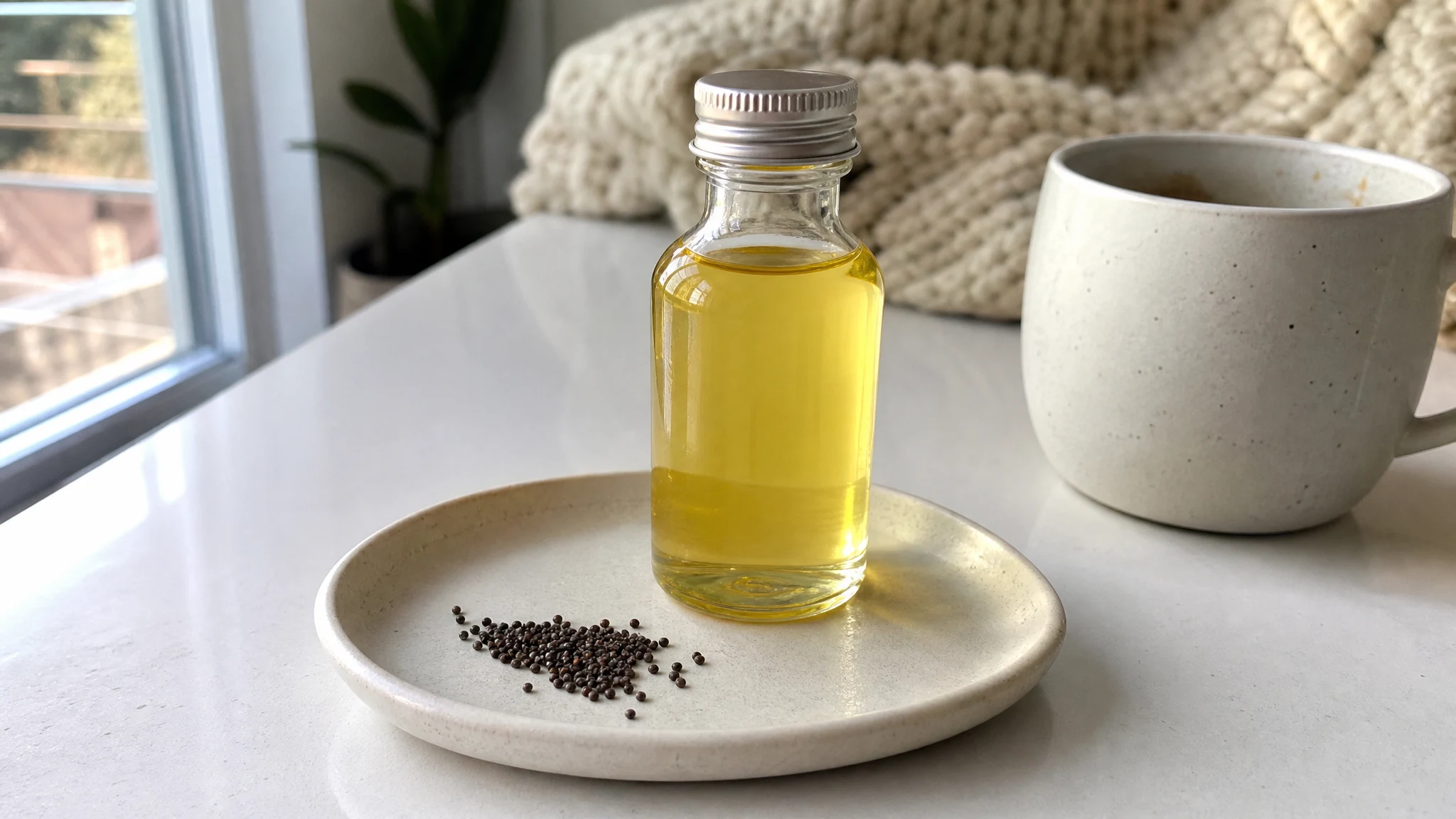
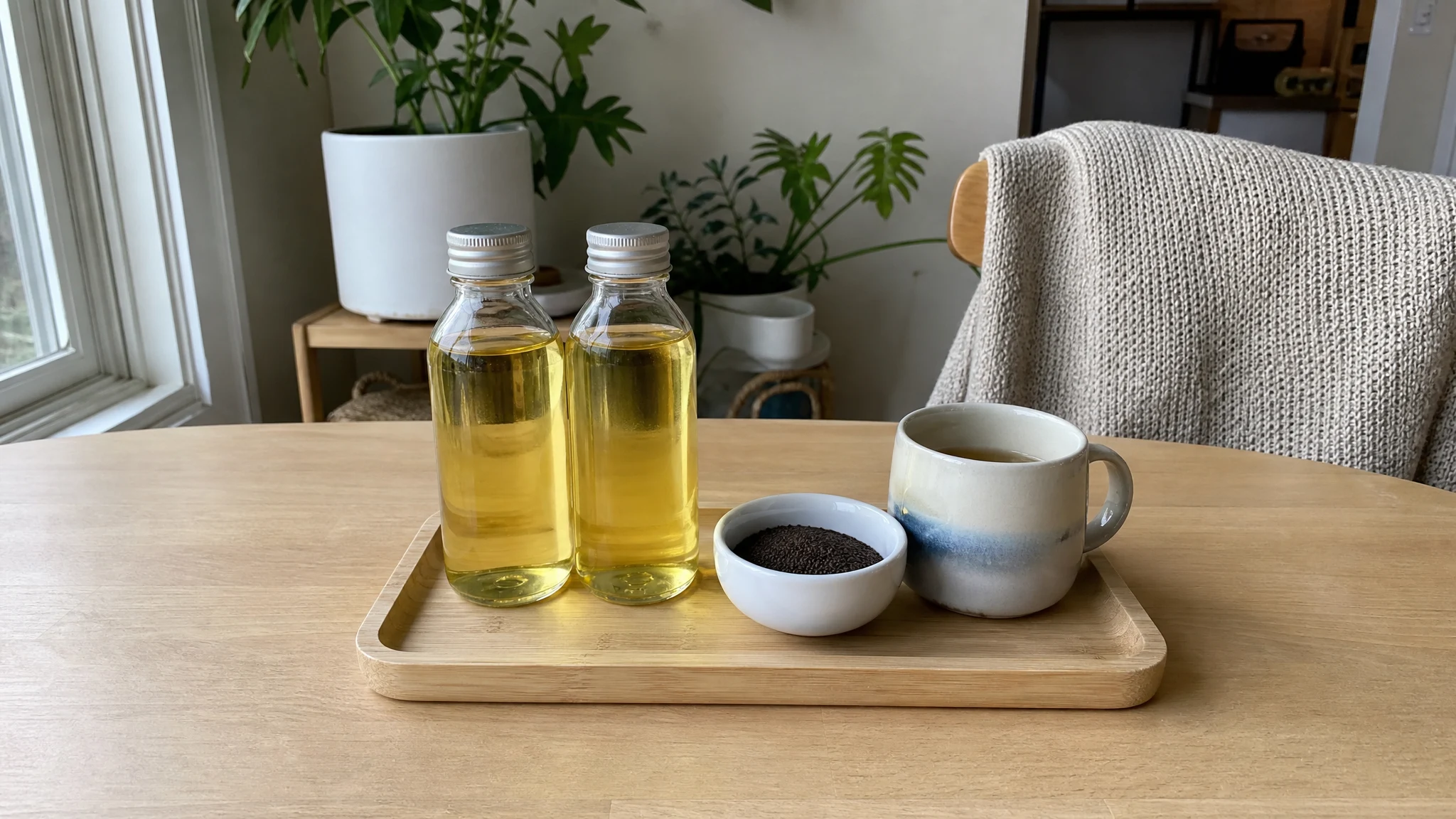
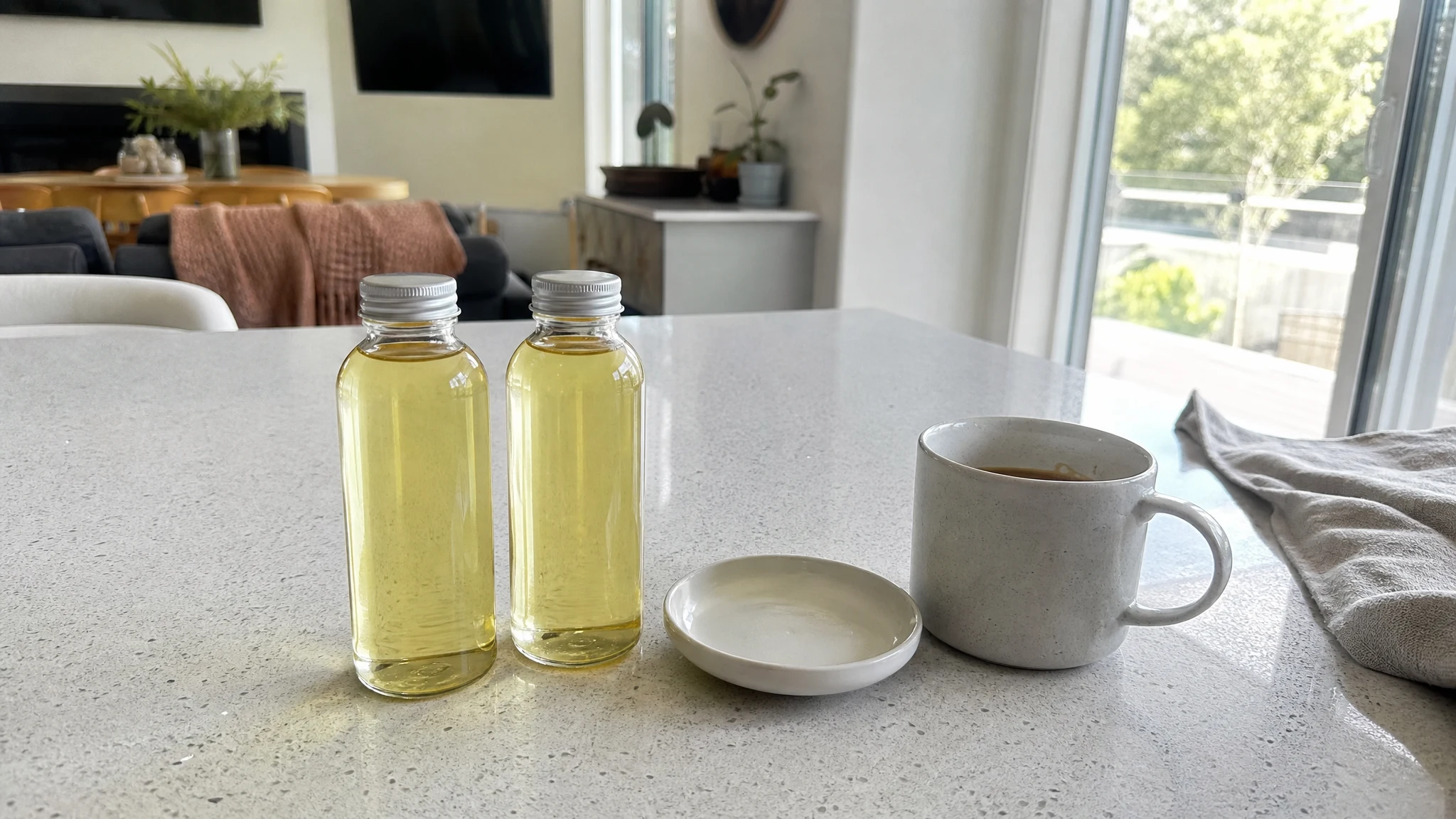
Our verdict first: cold-pressed is not a magic word, and refined is not a dirty one. They are two different routes from seed to bottle, and each leaves a different oil behind. We sell cold-pressed Abyssinian oil, light golden with a mild nutty aroma, and here is how we think about what that choice means for you.
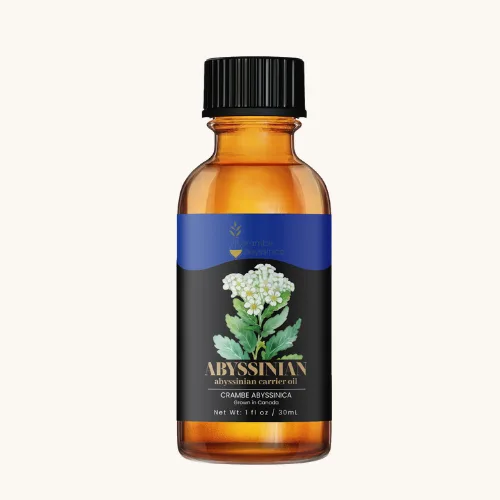
Abyssinian Oil
Cold-pressed Abyssinian oil, in sizes from 0.5 oz to bulk.
From $11.99
Shop Abyssinian Oil →Three ways to get oil out of a seed
Pressing squeezes the seeds mechanically, and cold-pressed generally means that is done without added heat, so what you get is oil and little else done to it. Solvent extraction washes the oil out of the seed with a solvent such as hexane, which is then removed. Refining is a separate set of steps applied to an oil after either method. The usual refining sequence is degumming, deacidification (also called neutralising), bleaching, deodorising and, for some oils, dewaxing. A refined oil is typically pale yellow or amber when freshly made, and cleaner in aroma than the pressed oil it came from.
What the processing actually changes
Here is our reasoning from how those steps work, since the processing choice shows up in four places.
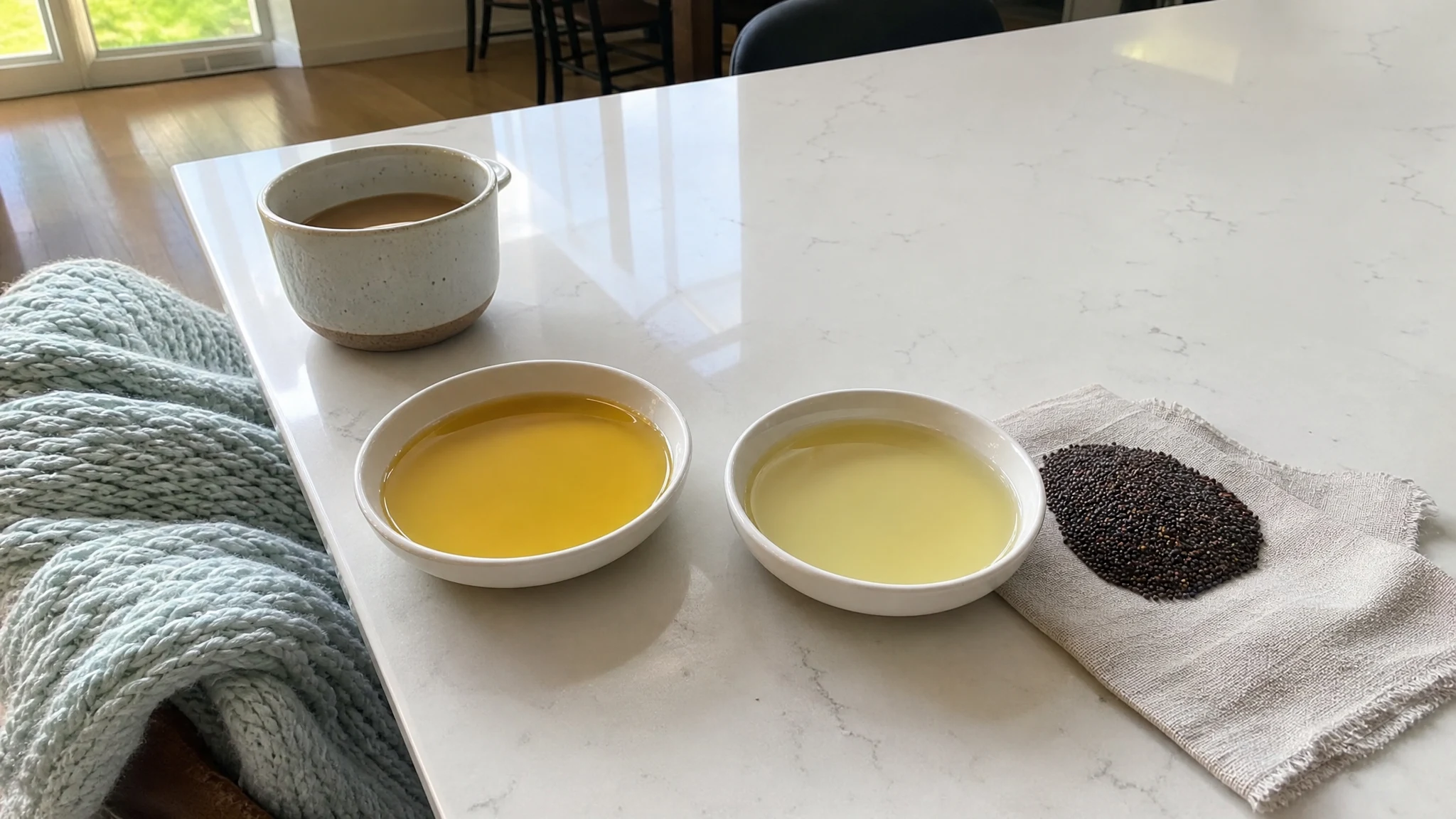
- Colour. Bleaching lightens an oil. A cold-pressed oil keeps more of its seed colour.
- Aroma. Deodorising strips out most odour, which is why refined oils smell of very little. A cold-pressed oil keeps whatever aroma the seed gave it, which in our case is mild and nutty.
- Minor components. Refining removes some of the small natural constituents along with the impurities. In a comparison of camelina seed oils, cold-pressing gave the same yield as hexane extraction but left more tocopherols, and the cold-pressed oil held up better against oxidation at moderate temperatures.
- Keeping and cost. Refining is generally done to give an oil a steadier, more uniform character and to reduce its tendency toward going off, but it is an extra set of steps. Since refining adds steps on top of pressing, it is reasonable to expect it to add cost too.
One more finding from the research is worth a mention: heat changes the picture. In a test of twelve edible oils heated at frying temperatures, the cold-pressed ones held on to more of their polyunsaturated fats after an hour but lost more than their refined versions after four. That is a kitchen finding, not a skincare one, but it is a useful reminder that neither type wins everywhere.
Is cold-pressed better for skin?
We would not claim that, and the evidence above does not say it. Cold-pressed oil keeps its natural colour and scent, and that is a real difference you can see and smell. Whether it does more for your skin or hair is a different question that processing alone does not answer, and we would be making it up to say so. What we can say is that Abyssinian oil moisturizes dry skin and leaves skin feeling soft and smooth, in either form.
Which buyer wants which
Choosing between them comes down to what you are making.
- If you like a light golden oil with a gentle nutty smell, and you are using it on its own or in a simple serum, cold-pressed suits that.
- If you are a formulator who needs a neutral colour and almost no scent so that your own fragrance and colour sit on a clean base, a refined oil may suit your product better. That is a sensible reason to choose it, and the way to settle it is a conversation with your supplier.
If you are one of those buyers, tell us what you need before you order through our contact page or wholesale email. Our bulk buying guide walks through the questions worth asking, and our post on specifications and documents covers the paperwork side.
Reading the word "cold-pressed"
The term describes a method, and a bottle is only as informative as the information behind it. Ask any supplier to document where their oil comes from, and treat a bold claim on the front of a bottle as a starting point. For a broader look at how to judge an oil, see how to judge an Abyssinian oil, and for the plant itself, what Abyssinian oil is. Names matter too, and our naming guide explains the ones you will meet on a label.
Both routes make useful oils, and knowing which one is in your hand is half the pleasure of choosing well.
Abyssinian Oil
Cold-pressed Abyssinian oil, from a small bottle to bulk sizes.
From $11.99
Shop Abyssinian Oil →Sources & Further Reading
- Color Reversion of Refined Vegetable Oils: A Review (Molecules, 2023)
- Comparative Evaluation of Camelina Seed Oils Obtained by Cold-Pressing and Solvent Extraction (Foods, 2024)
- Effect of continuous high thermal processing on physico-chemical and nutritional alterations in cold-pressed and refined edible oils (Frontiers in Nutrition, 2026)