What Research Says About Crambe Oil and Sustainability
"Sustainable" is a word that gets attached to almost every plant oil, and it deserves a more careful look. For crambe, the honest version is interesting: there is real research on how the crop grows and what it costs the environment, and it is more nuanced than a slogan.
Abyssinian Oil
Cold-pressed Abyssinian oil, in sizes from 0.5 oz to bulk.
From $11.99
Shop Abyssinian Oil →What the agronomy reviews say
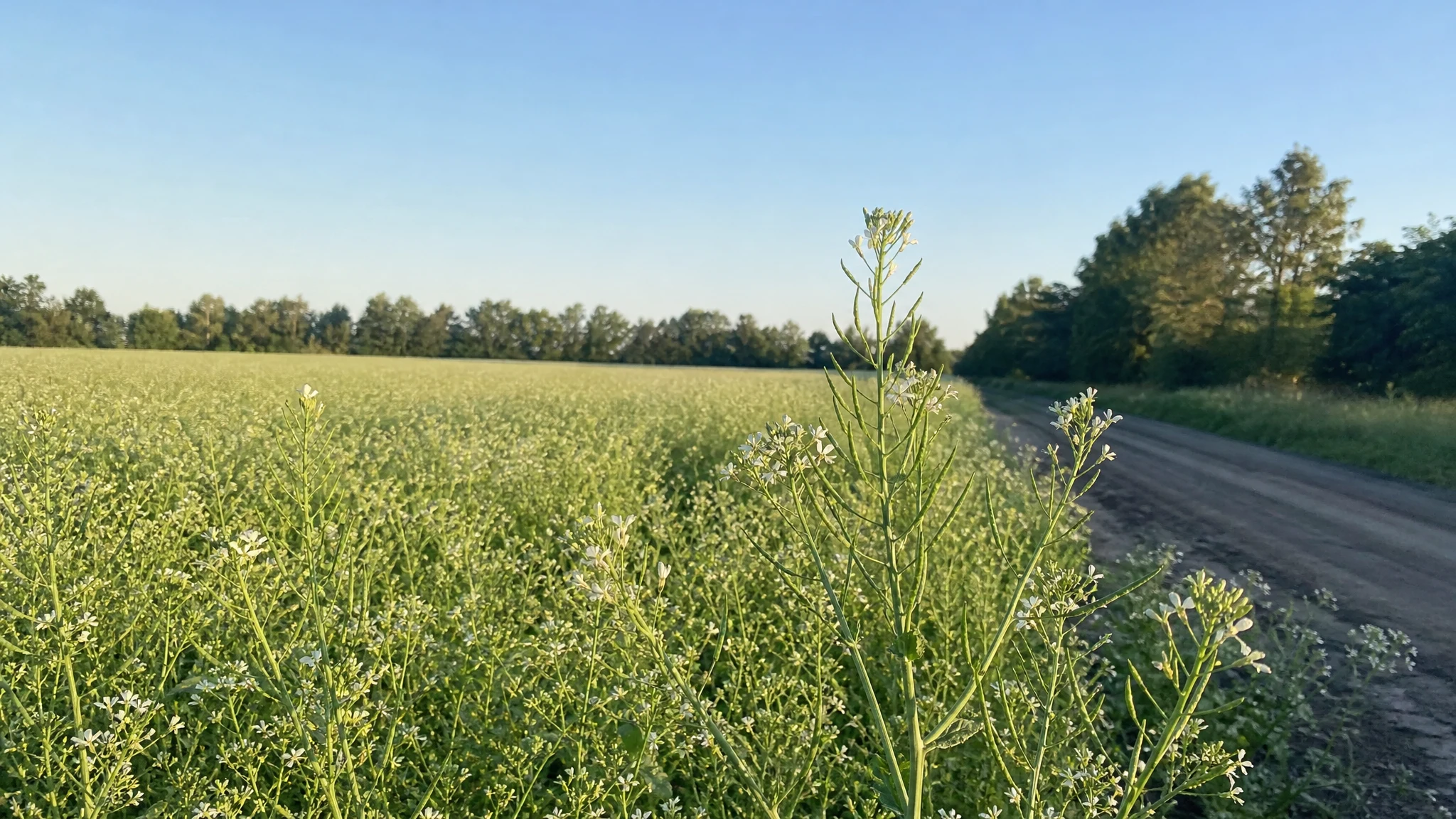
A 2020 review in Agronomy summarises crambe's case for fitting into crop rotations: a short life cycle, low fertility requirements, resistance to pests and diseases, and relative drought tolerance. Purdue University's crop database puts planting to harvest at about 100 days, and a University of Wisconsin and Minnesota extension publication says 90 to 100 days, and the 2020 review adds that the crop suits equipment already used for small grains.
The same extension publication, written in 1991, recommends about 80 to 100 pounds of nitrogen per acre and notes that no herbicides had been registered for crambe in the US. So "low-input" is relative. The 2020 review reads crambe as comparatively undemanding, while an older recommendation shows that good yields still call for fertiliser and weed management.
A comparison with high-erucic rapeseed
The same 2020 review compares crambe with high-erucic rapeseed, today's main source of erucic acid. It lists the risk of cross-pollination with food-quality canola and the climate impact of high inputs as limits to expanding rapeseed for that purpose, and suggests crambe could at least partly replace it, as long as seed yields rise. That is a research view, not a guarantee: the review is explicit that yield and agronomy knowledge gaps remain.
What a life cycle study found
The most concrete environmental data we found comes from Portugal. A 2019 study in Industrial Crops and Products grew crambe over several seasons and ran a life cycle assessment. Its abstract reports that yields in three seasons were lower than Brazilian figures, that cold weather meant a fourth season produced no seed, and that the environmental impact came mainly from the diesel and electricity used to prepare fields and irrigate. Overall, it found a lower climate-change impact than other extensive systems.
The lesson is that where and how you grow crambe changes the footprint, and that a crop with promising traits can still struggle in the wrong climate. That kind of detail is why we are wary of broad statements.
Food, fuel or factory
Crambe is grown as a non-food crop, so it does not compete with a food oil for the same market. That is our reasoning from how it is used, not a measured outcome, and it applies to the plant in general. Its meal is approved only for beef cattle at limited levels, according to the extension publication, so the crop's by-products have narrower outlets than those of soy or canola.
What we do and do not say about our oil
We make no sustainability or environmental certification claim about our own oil. We can say it is cold-pressed from crambe seed and comes from reliable suppliers. If a supplier's origin and practices matter to you, ask for documentation before you buy, from us or anyone; our post on sourcing questions goes into what to ask. For wholesale buyers, tell us which documents you need before ordering.
The research gives crambe a credible story as a short-season oilseed with modest inputs in trials, and it also shows limits in yield and climate. For background on the plant, see our crambe plant guide, and for where its oil ends up, crambe oil industrial uses.
We think the most useful thing a small business can do with a word like "sustainable" is show its homework and stop where the evidence stops.
Abyssinian Oil
Cold-pressed Abyssinian oil, from a small bottle to bulk sizes.
From $11.99
Shop Abyssinian Oil →Sources & Further Reading
- Crambe (Crambe abyssinica Hochst): A Non-Food Oilseed Crop with Great Potential: A Review (Agronomy, 2020)
- Crambe (University of Wisconsin-Madison and University of Minnesota Extension, 1991)
- Cultivation of Crambe abyssinica non-food crop in Portugal for bioenergy purposes: agronomic and environmental assessment (Industrial Crops and Products, 2019)
- Crambe abyssinica Hochst. ex R.E.Fries (Purdue University NewCROP)