Questions to Ask Any Abyssinian Oil Supplier
The best time to learn how a supplier works is before the first pallet is on your dock. A few clear questions, asked politely and answered in writing, will tell you more than a price list ever will. Here are the ones we would ask of any Abyssinian oil supplier, followed by our own answers where we can give them.
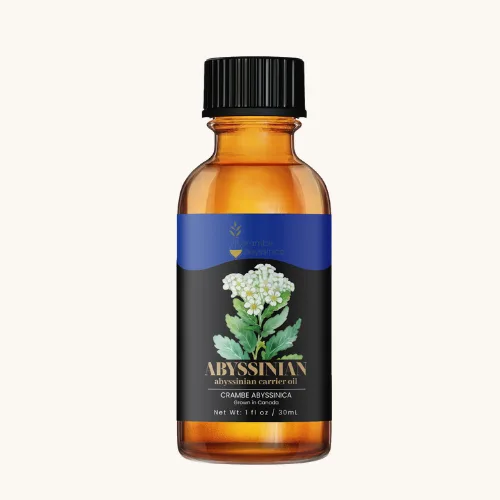
Abyssinian Oil
Cold-pressed Abyssinian oil, in sizes from 0.5 oz to bulk.
From $11.99
Shop Abyssinian Oil →1. Where does the seed come from?
The seed's origin and harvest year are the first facts a good supplier can document. Ask for the country and, ideally, the harvest. A vague answer is itself an answer. We would put it the way we put it to buyers: ask any supplier to document where their oil comes from.
2. How was the oil extracted?
Cold-pressed, solvent-extracted and refined oils can look similar in a bottle and behave differently in a formula. Published research on crambe oil often uses hexane extraction, for example, which tells you the lab method but not what a commercial oil went through. Ask the supplier to name the method, in plain words, for the exact oil you will receive. Ours is cold-pressed, and our post on cold-pressed versus refined oil explains why the difference matters.
3. What documents come with it?
This is where your own regulatory duties meet the supplier. Under MoCRA, the responsible person must keep records supporting adequate safety substantiation for its products, so the paperwork a supplier can offer feeds straight into your files (the FDA's MoCRA page sets out the requirements). Write down which documents you need for your own labels and ask for them by name. Our post on specifications helps you decide which lines to look for. With us, tell us which documents you need before you order.
4. Can you trace a lot?
If something looks off in a finished jar in six months, you want to know which lot of oil went into it. Ask how lots are numbered, whether the number appears on every container, and how the supplier would trace one back.
5. How is it packed and filled?
Oil is happiest with little air and little light. Ask what containers are used, how full they are and what the closure is. We fill and cap in-house on an automated line built for oil production.
6. What are the lead times and minimums?
Do not guess. Get the minimum order and the typical lead time in writing, tied to the size you are actually considering. Plan launch dates around the written answer, not the hopeful one.
7. Will you tell me if something changes?
A new seed source, a different process or a new packaging supplier can all change an oil. Ask how the supplier would notify you, and how far in advance, so that a change never reaches your buyers before it reaches you.
How we answer
For the record, here is the part we can say plainly. We sell one oil, cold-pressed Abyssinian oil, and it comes from reliable suppliers. Every size, from 0.5 oz up to 400 lb, is the same oil bottled from the same lots, so a small bottle is an honest preview of a larger order. We offer private label, with options for labels, bottles and packaging, and we will help with custom needs where we can. If you tell us your volume and the documents you need, we can talk through what makes sense: write to [email protected], and you will find the details on our wholesale page and in the bulk buying guide.
Two companion reads sit well here: how to judge an oil in your hands and what sustainability can and cannot tell you about crambe oil. For the formula side, the formulation guide picks up where this leaves off.
The right supplier is the one who answers these questions calmly, in writing, and keeps answering them after the first order. Ask early, keep the replies, and you will build a launch on facts.
Abyssinian Oil
Cold-pressed Abyssinian oil, from a small bottle to bulk sizes.
From $11.99
Shop Abyssinian Oil →Sources & Further Reading
- Modernization of Cosmetics Regulation Act of 2022 (MoCRA), U.S. Food and Drug Administration.
- Full Characterisation of Crambe abyssinica Hochst. Seed Oil, Journal of the American Oil Chemists' Society, 2012.