Meet the Crambe Plant Behind Abyssinian Oil
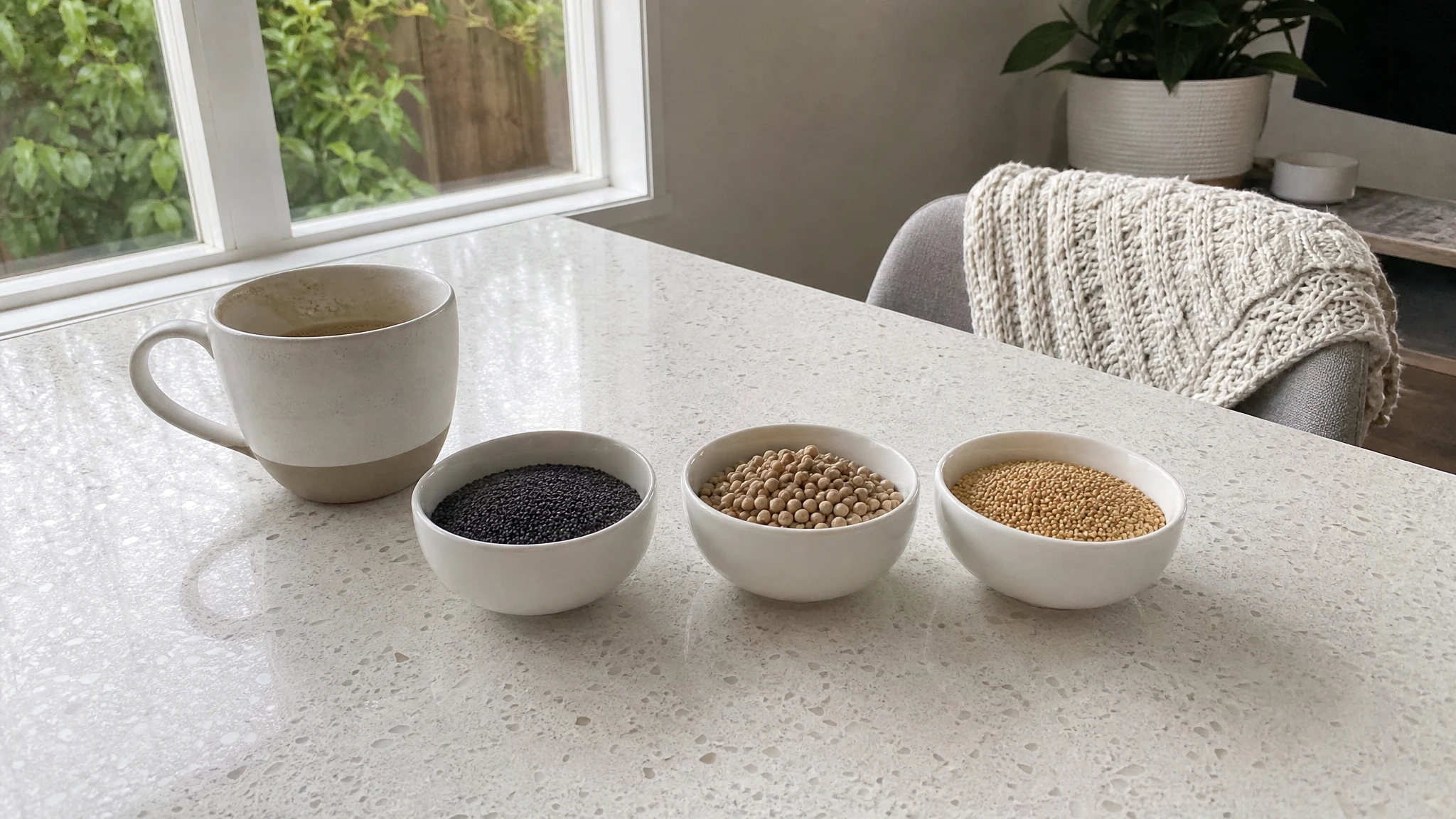
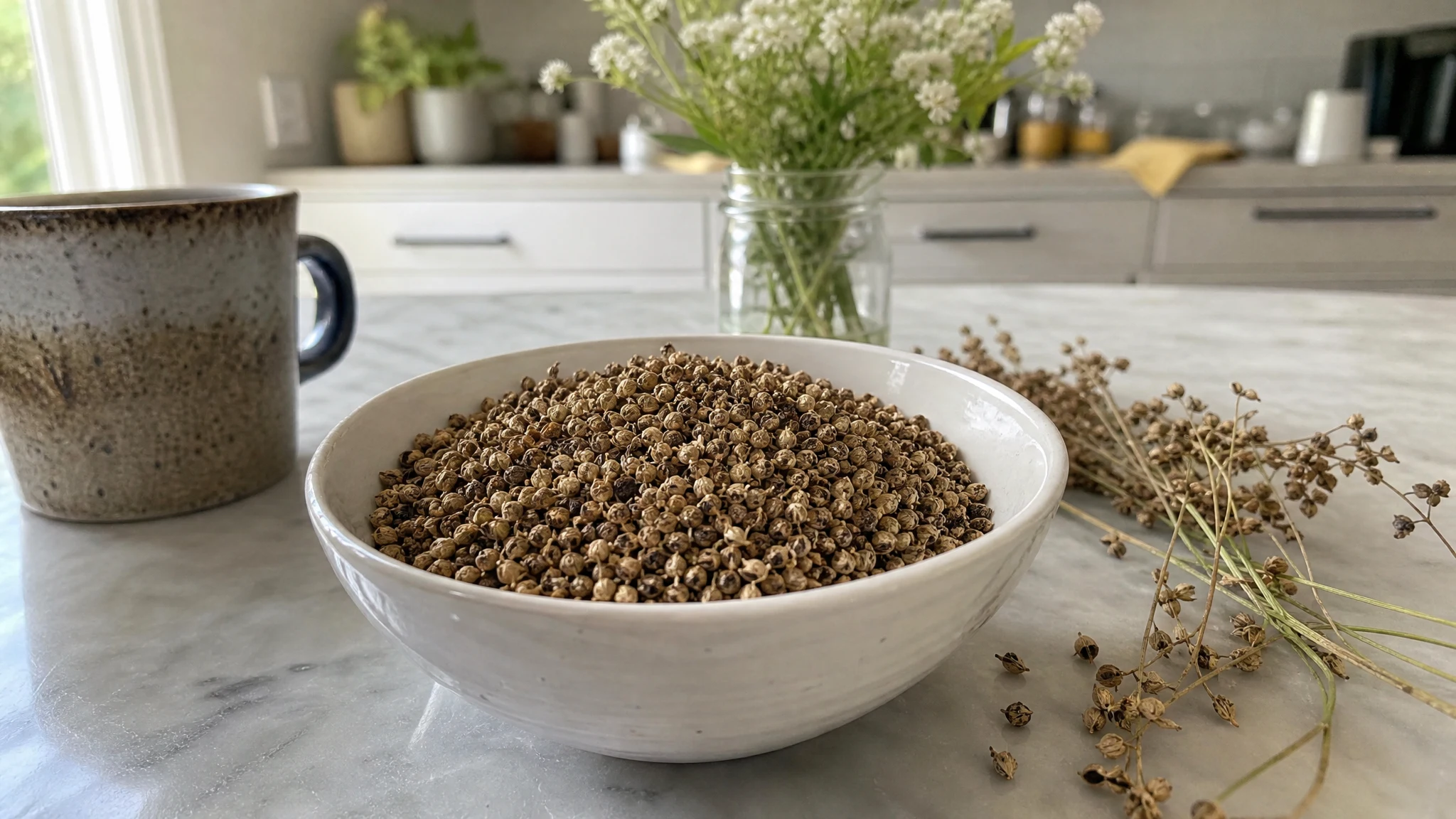
Pour crambe seed into a bowl and the first surprise is how ordinary it looks: small, round, tan beads, a little like peppercorns that never grew up. Each one is still wrapped in its hull, and inside is the oil that goes into our Abyssinian oil. The plant that makes it is a more interesting character than the seed suggests.
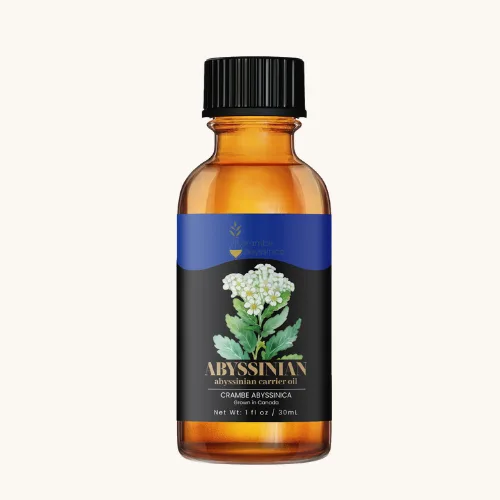
Abyssinian Oil
Cold-pressed Abyssinian oil, in sizes from 0.5 oz to bulk.
From $11.99
Shop Abyssinian Oil →A mustard in disguise
Crambe abyssinica belongs to the Brassicaceae, the mustard family, which also gives us cabbage, broccoli and rapeseed. Purdue University's NewCROP database describes it as an erect annual herb up to about a metre tall, branching mostly in its upper half, with big lobed leaves and loose clusters of small whitish flowers. Those flowers turn into round, one-seeded pods that do not split open, which is why the seed stays wrapped in its hull right through harvest.
The species was described from East Africa. You will see it called crambe, and Purdue lists "Abyssinian mustard" as another common name. The seed we press is from this plant, and our oil comes from reliable suppliers.
What is in a handful of seed
Purdue gives the numbers for harvested seed: about 32 percent of the seed-plus-hull weight is oil, and the hull itself makes up around 30 percent of what comes off the field. Take the hull off and the kernel is much richer, at roughly 46 percent crude fat. That is a good reminder that "oil content" depends on whether you are talking about the seed in its hull or the kernel alone.
The oil is the reason anyone grew the plant in the first place. Purdue puts erucic acid at 55 to 60 percent of crambe oil, a very high share for a fatty acid that most familiar cooking oils barely contain. We cover how that shapes the oil in the Abyssinian oil fatty acid profile.
From a Connecticut trial to Texas test plots
Crambe reached the United States in the 1940s through the Connecticut Agricultural Experiment Station, according to a University of Wisconsin and Minnesota extension publication. Strain evaluations began in Texas in 1958, and trials followed in other states, including variety trials at North Dakota's Carrington research center. The appeal for breeders was practical: it matures in about 90 to 100 days from planting, so it fits a short season.
Extension specialists also noted its fussy side. It likes well-drained, fertile soil and dislikes waterlogged clay, and when that publication was written no herbicides were registered for it in the US. Those details help explain why it stayed a specialty crop instead of a household name.
Why industry took notice
A 2020 review in Agronomy calls crambe a non-food oilseed with great potential, pointing to its short life cycle, relative drought tolerance and a place in ordinary crop rotations, and it suits the equipment used for small grains. Its main job is to supply erucic acid, which industry turns into slip agents for plastic film, lubricants and specialty nylons. We follow that thread in where crambe oil goes beyond cosmetics, and in how it ends up in plastic films.
The family connections matter too. Crambe sits beside rapeseed and canola on the family tree but plays a very different role, which we untangle in crambe vs rapeseed vs canola. And if you are wondering what the plant's farming record says about its environmental footprint, our crambe oil sustainability post sticks to what the studies show.
Where the cosmetic oil comes in
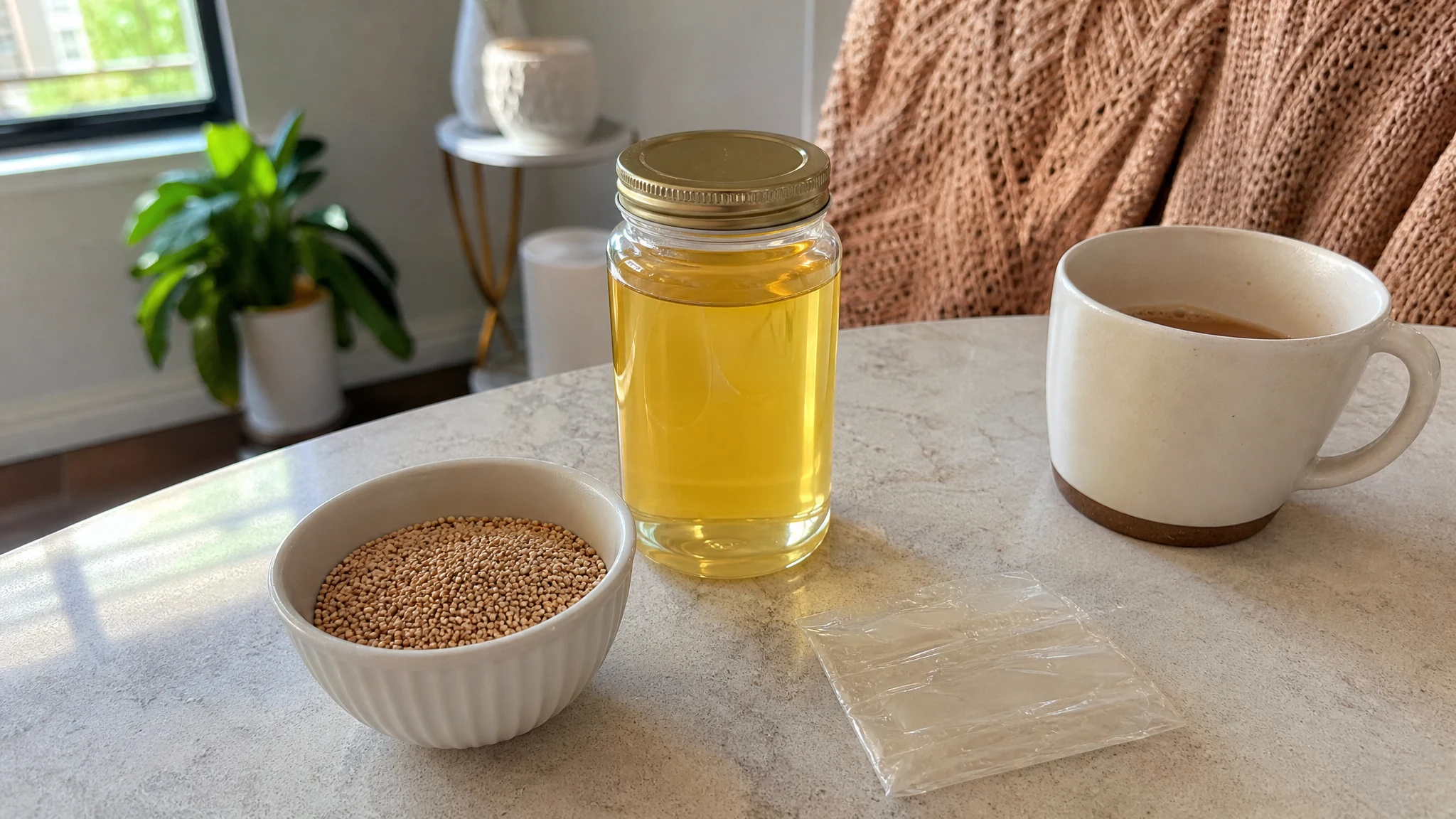
Cold-pressing the seed gives a light golden oil with a mild, nutty aroma, and that is what we sell, from a 0.5 oz bottle up to bulk sizes. The plant has been an industrial workhorse for decades, but in the bottle it is simply a lightweight oil for skin and hair. If you want the short version of what that oil is, start here, or see the oil itself on our Abyssinian oil page.
So the next time someone says crambe, picture the small white flowers, the round pods and the beads of seed inside them.
Abyssinian Oil
Cold-pressed Abyssinian oil, from a small bottle to bulk sizes.
From $11.99
Shop Abyssinian Oil →Sources & Further Reading
- Crambe abyssinica Hochst. ex R.E.Fries (Purdue University NewCROP)
- Crambe (University of Wisconsin-Madison and University of Minnesota Extension, 1991)
- Crambe (Crambe abyssinica Hochst): A Non-Food Oilseed Crop with Great Potential: A Review (Agronomy, 2020)