Crambe vs Rapeseed vs Canola: Cousins, Not Twins
Canola, rapeseed and crambe all belong to the mustard family, and their flowers and seeds can look alike from across a field. What separates them is a single fatty acid, and a 1970s breeding story that changed what ended up on supermarket shelves.
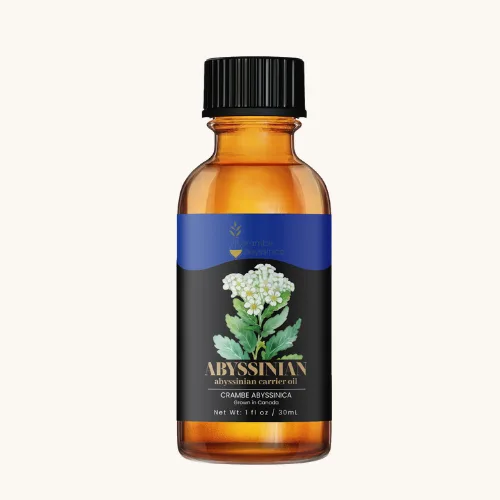
Abyssinian Oil
Cold-pressed Abyssinian oil, in sizes from 0.5 oz to bulk.
From $11.99
Shop Abyssinian Oil →Rapeseed: one name, two crops
Rapeseed oil used to contain a lot of erucic acid. A 2019 paper in Plant Biotechnology Journal says that high-erucic rapeseed cultivars carry more than 45 percent erucic acid, and that they are still grown today as a feedstock for the oleochemical industry, supplying lubricants, slip additives and plasticizers. So "rapeseed" can mean an industrial crop or, as we will see, a food one.
Canola: bred to be low
The Canola Council of Canada's history timeline tells how the food version came about. Breeders found a low-erucic trait in the late 1950s, and Health Canada urged an immediate switch to low-erucic varieties in 1967. By 1970 most Canadian rapeseed was grown from low-erucic seed. The first registered "double-low" variety, Tower, followed in 1973, and in 1985 the trademark was amended so that canola oil must contain less than 2 percent erucic acid. The council's timeline dates the canola name itself to 1977. The industry had also agreed, back in 1970, to voluntarily limit erucic acid in food products to 5 percent, so the 2 percent line was a tightening, not a starting point.
In the US, the FDA's rule on rapeseed oil as a food ingredient describes low erucic acid rapeseed oil, also known as canola oil, as having no more than 2 percent erucic acid in its component fatty acids.
Crambe: a different species and a different aim
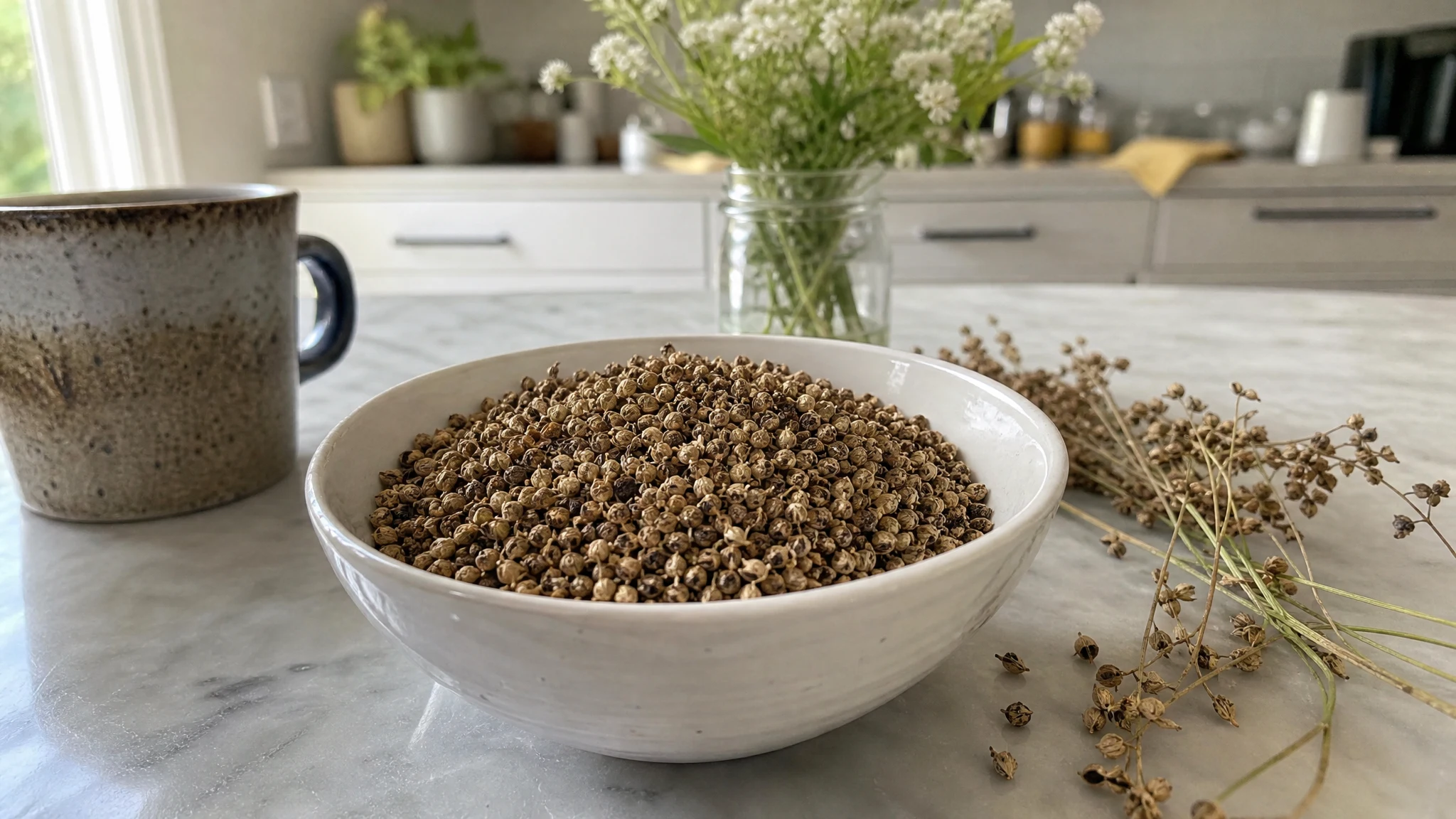
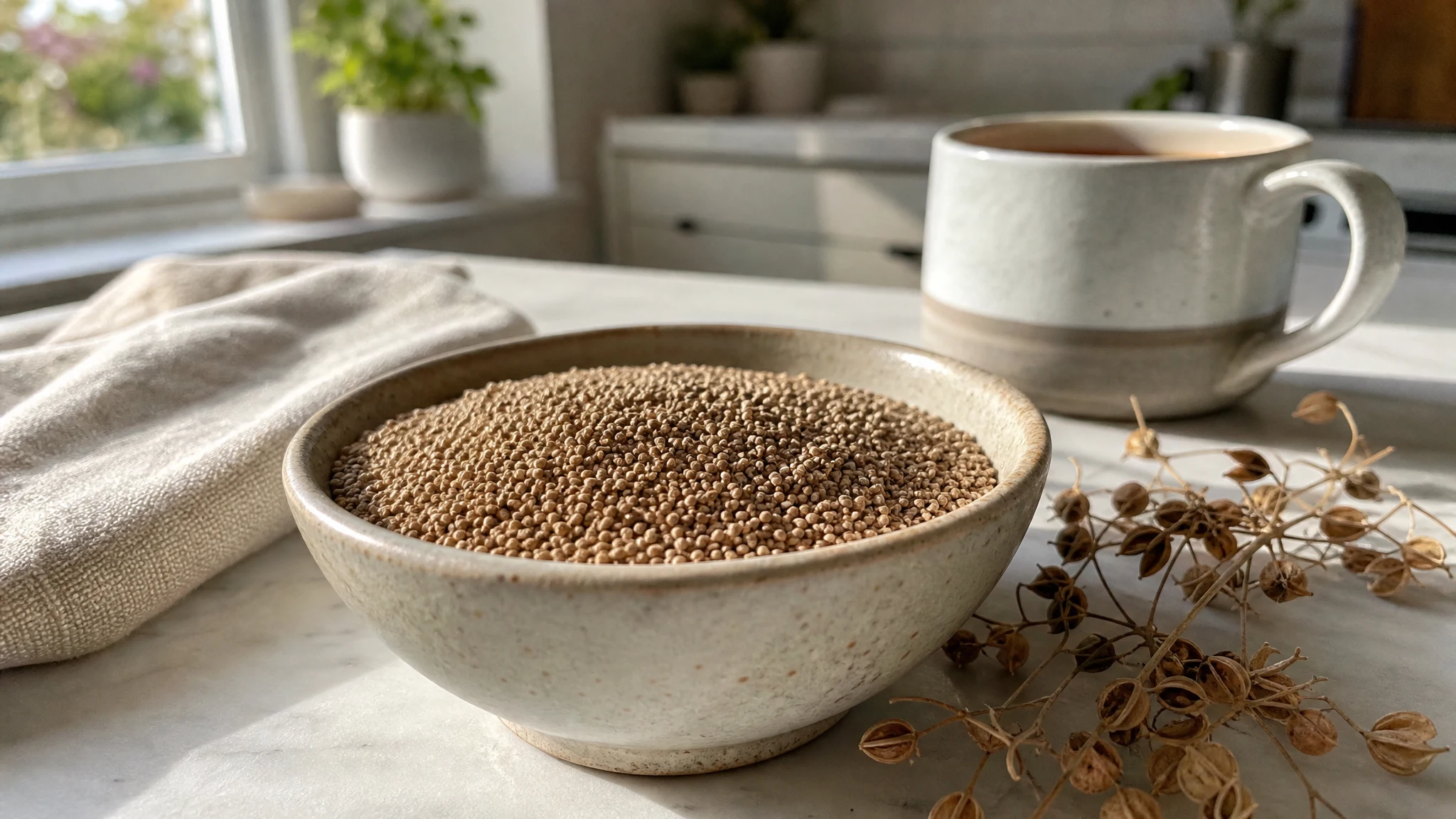
Crambe abyssinica is not a rapeseed at all; it is a separate species from the same family. Purdue University's crop database puts its oil at 55 to 60 percent erucic acid. A 2020 review calls it a non-food oilseed and a possible partial alternative to high-erucic rapeseed. One reason it gives: high-erucic rapeseed can cross-pollinate with food-quality canola, which is a worry when both grow in the same region. Crambe is a separate species, so in our reading that particular concern does not arise.
Crambe is a smaller story in every way. Typical yields with good management in a University of Wisconsin and Minnesota extension guide ran 1,200 to 1,800 pounds per acre, and the plant matures in about 90 to 100 days.
A quick comparison
| Crop | Species | Erucic acid in the oil | Main purpose |
|---|---|---|---|
| Canola | Brassica napus or rapa (low-erucic types) | Under 2 percent | Food oil |
| High-erucic rapeseed | Brassica napus | Over 45 percent | Industrial chemistry |
| Crambe | Crambe abyssinica | 55 to 60 percent | Industrial chemistry, cosmetic oil |
What it means for us
The point is not that one of these is good and another bad. They have different jobs. Canola was bred so people could cook with it. Crambe is grown for what its erucic acid does in other products, and in our case we cold-press the seed to make a light golden oil for skin and hair. If you are curious about the fatty-acid side, the Abyssinian oil fatty acid profile goes through it, and our industrial uses post follows the factory route.
It helps to think of erucic acid as a dial that breeders and chemists turn in opposite directions. Food oil breeders turned it down; industrial users want it up. The plants are close relatives, which is why the names get muddled, and why a description that says only "mustard-family oil" does not tell you which job the oil was grown for.
Whether crambe oil belongs on a plate is its own question; we answer it in is crambe oil edible. To meet the plant first, start with our crambe plant guide.
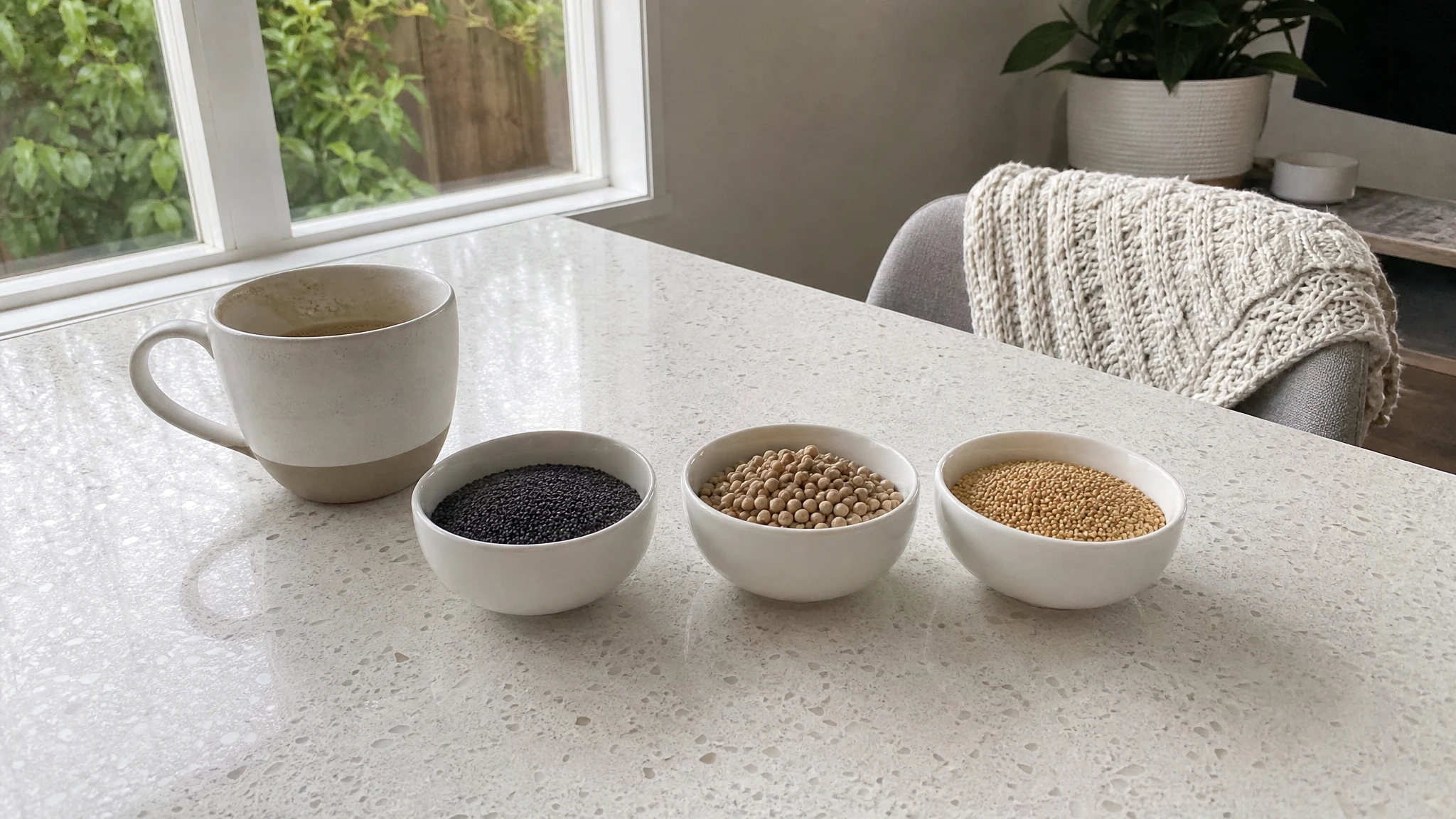
Three seeds, one family, three destinations. That, more than any table, is the thing to remember when a bottle or a bag says "mustard-family oil".
Abyssinian Oil
Cold-pressed Abyssinian oil, from a small bottle to bulk sizes.
From $11.99
Shop Abyssinian Oil →Sources & Further Reading
- The impact of reducing fatty acid desaturation on the composition and thermal stability of rapeseed oil (Plant Biotechnology Journal, 2019)
- Good As Gold. Celebrating 50 Years of Canola (Canola Council of Canada)
- 21 CFR 184.1555 Rapeseed oil (Electronic Code of Federal Regulations)
- Crambe abyssinica Hochst. ex R.E.Fries (Purdue University NewCROP)
- Crambe (Crambe abyssinica Hochst): A Non-Food Oilseed Crop with Great Potential: A Review (Agronomy, 2020)
- Crambe (University of Wisconsin-Madison and University of Minnesota Extension, 1991)