How to Tell if Abyssinian Oil Is Pure: What You Can Check
There is a persistent idea that a trained nose or a quick home test will tell you whether an oil is the real thing. We wish it were that easy, because we would happily teach it to you. The honest truth is that colour and smell tell you a little, and a bottle that looks perfect on your counter can still be anything. So the better question is not how to spot a fake, but what a careful buyer can ask a seller to show them.
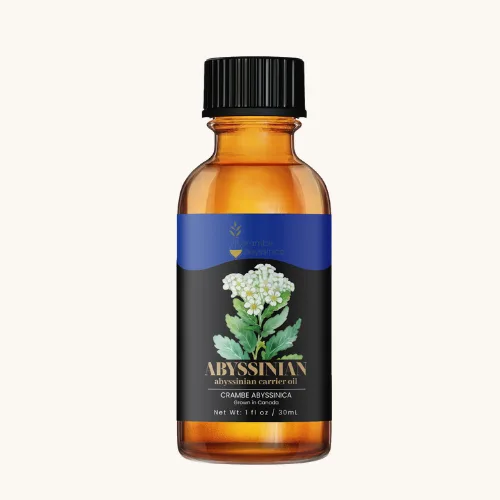
Abyssinian Oil
Cold-pressed Abyssinian oil, in sizes from 0.5 oz to bulk.
From $11.99
Shop Abyssinian Oil →What your eyes and nose can tell you
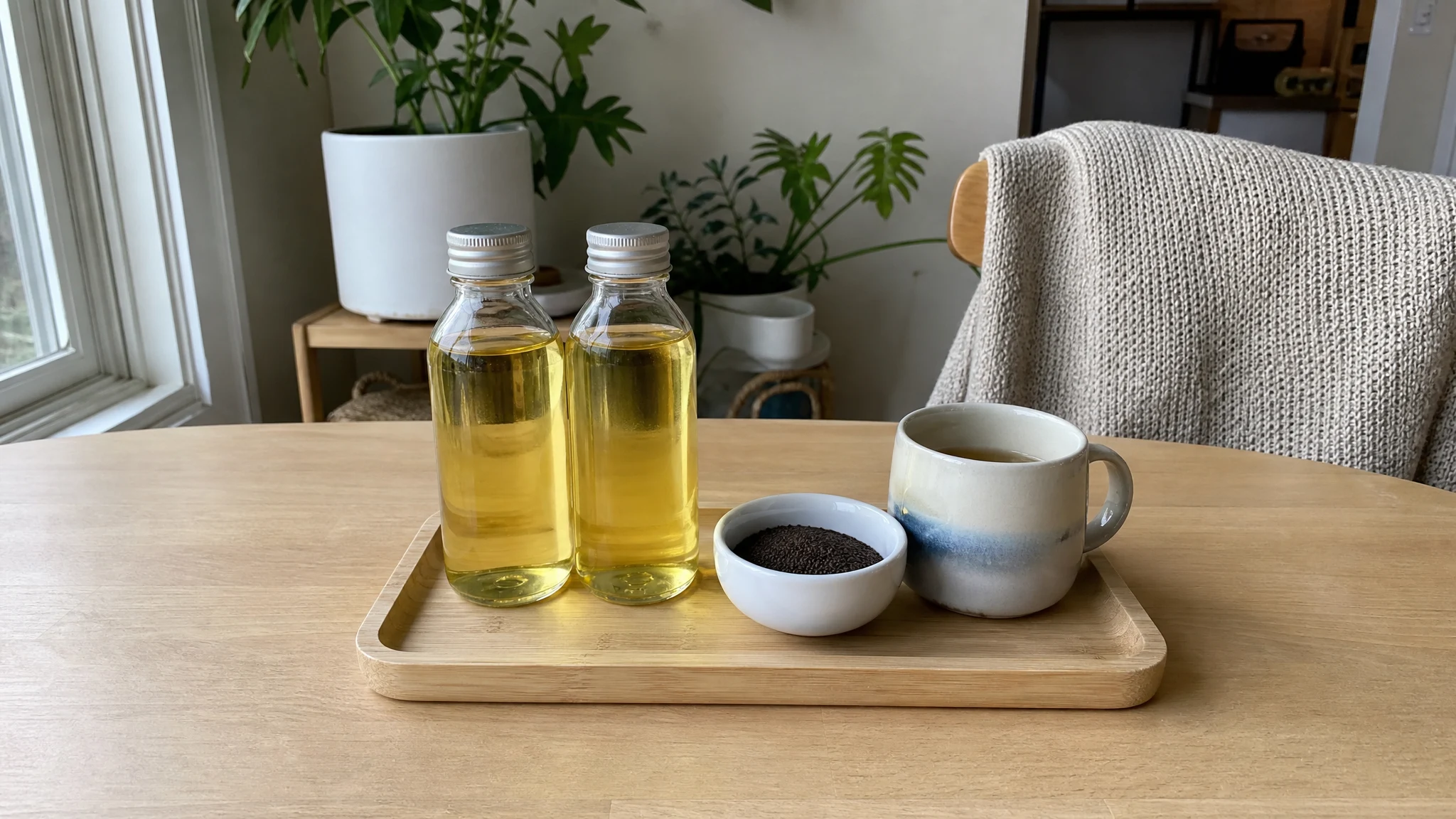
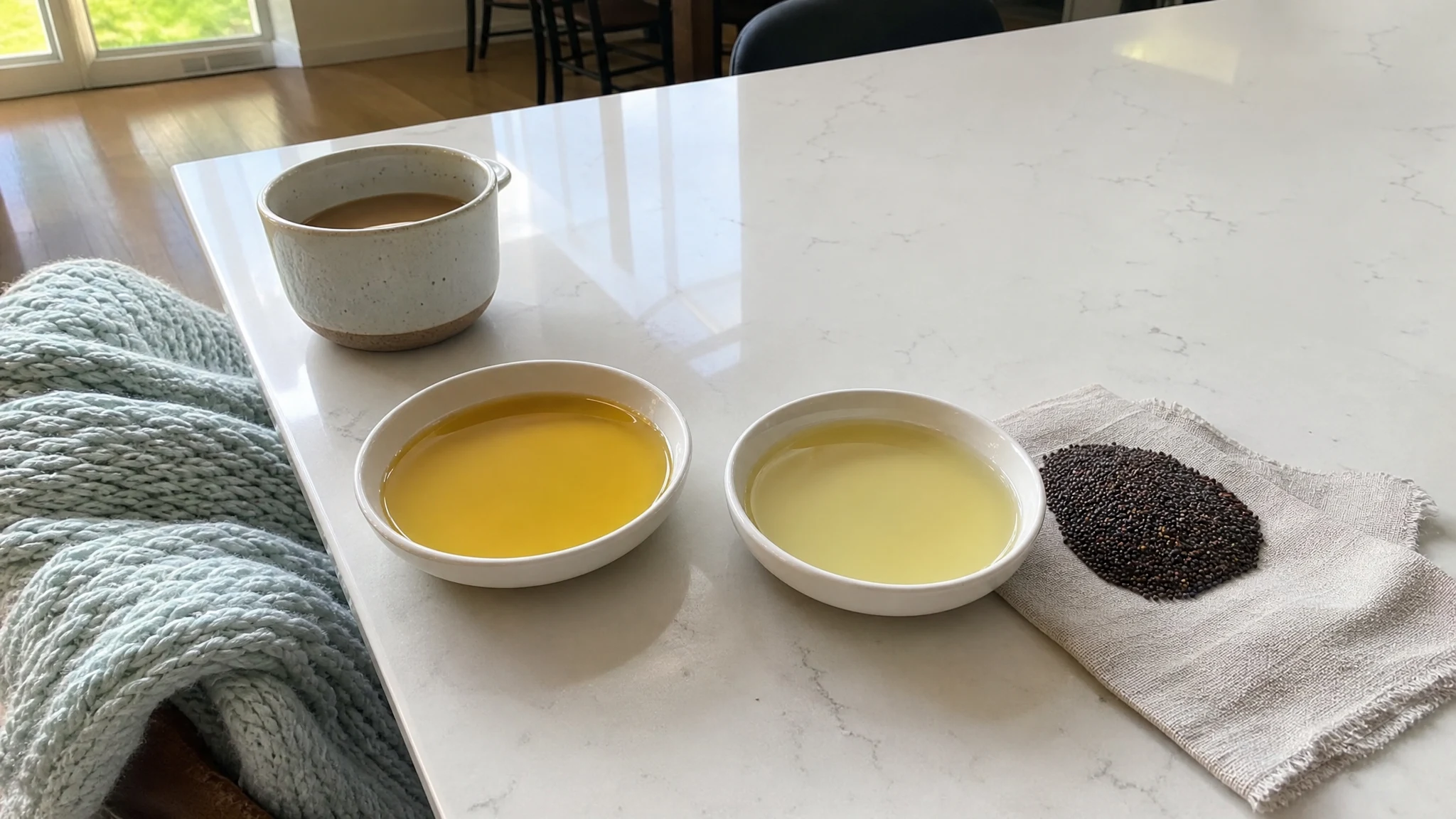
Quite a lot about expectations, very little about contents. Our Abyssinian oil is a light golden oil with a mild, nutty aroma, and if you buy any Abyssinian oil you can reasonably expect something in that neighbourhood. If an oil arrives dark, cloudy or with a sharp, off smell, that is worth a question. But the reverse does not hold: pleasant colour and aroma do not confirm what the oil is made of. Checking what is actually in an oil is a laboratory job. Published work on oil authenticity relies on techniques such as GC-MS and LC-MS, which profile an oil's chemical markers, and describes economically motivated adulteration as a standing risk across the oil trade. Nothing on your kitchen counter does that.
The same reasoning is why we would not lean on popular home tricks, such as chilling the bottle to see what happens. A chilled oil shows how it behaves at one temperature, and many things could explain what you see. We read those tests as entertainment, not evidence.
What you can read on the label
- One ingredient, named properly. The standard cosmetic name for this oil is Crambe Abyssinica Seed Oil, the name the Cosmetic Ingredient Review also uses. A single-ingredient oil should list that and nothing else. We unpack the naming in our post on Abyssinian oil versus crambe oil.
- How it was made. Our oil is cold-pressed, and a seller should be happy to say how theirs was produced. We lay out what the difference means in our cold-pressed versus refined post.
- A batch or lot reference and a date. This is how a seller traces a bottle back to its source if a question ever comes up.
What only paper can show
For a hobbyist the label may be plenty. If you are formulating, or putting your own name on a product, you will want documents, and the right habit is to ask before you pay. Tell us which documents you need before you order and we will talk it through with you, and we encourage any buyer to do the same with any supplier. We cover what specification paperwork typically contains in our post on oil specifications.
The same goes for origin. Ask any supplier to document where their oil comes from, ours included, and notice how comfortable the answer is. A seller who welcomes the question is telling you something good. One who deflects it is telling you something too. Our own list of questions to bring to a seller is in the post on sourcing questions.
Try before you commit
If you are a business buyer, the most useful check is the simplest: order the smallest size first. Every size we sell is the same Abyssinian oil, bottled from the same lots, so a 0.5 oz sample shows you what a larger order will be like. Compare it with what you were told, ask your questions, then decide. If you are new to the oil, our introduction to crambe oil is a friendly place to start.
Good buying comes down to good questions, and a supplier worth choosing will be glad to hear them.
Abyssinian Oil
Cold-pressed Abyssinian oil, from a small bottle to bulk sizes.
From $11.99
Shop Abyssinian Oil →Sources & Further Reading
- "Phytosterol Profiling as a Tool for Edible Oil Authentication: Challenges and Prospects." Foods, 2026. Europe PMC
- Burnett CL, et al. "Safety Assessment of Plant-Derived Fatty Acid Oils." International Journal of Toxicology, 2017 (source of the INCI name Crambe Abyssinica Seed Oil). PubMed