Abyssinian Oil vs Rosehip Oil: Colour, Feel and Keeping
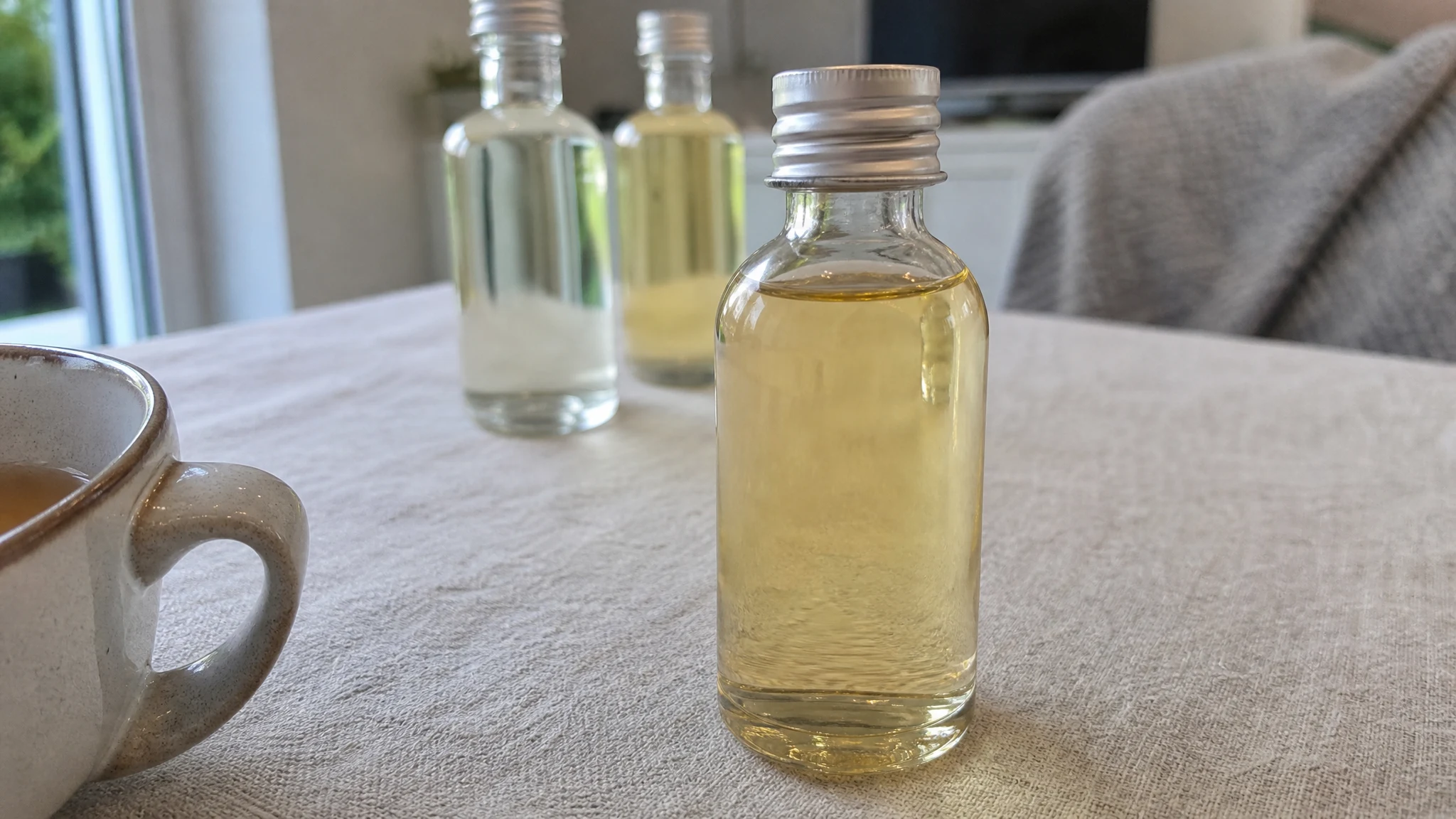
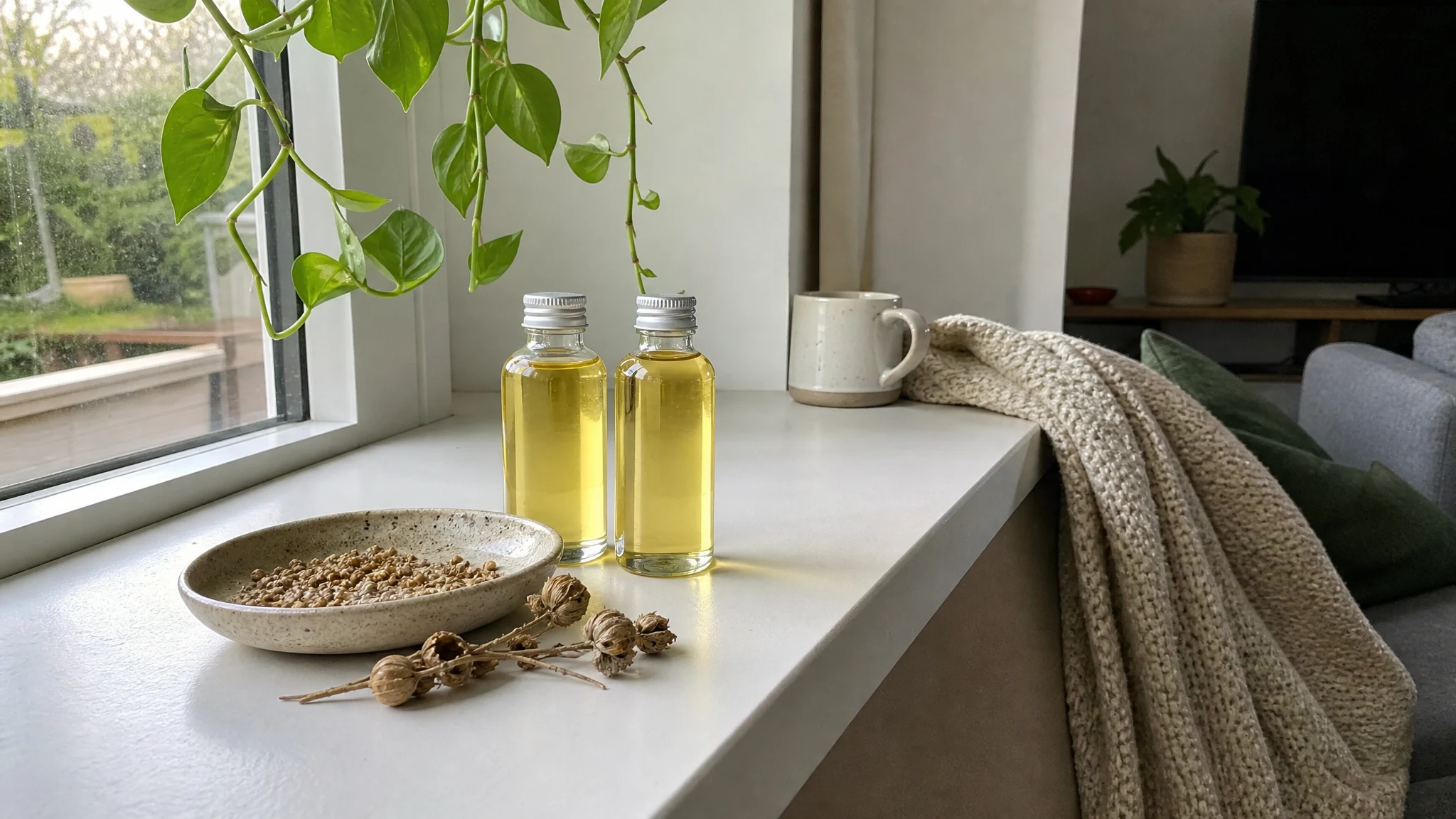
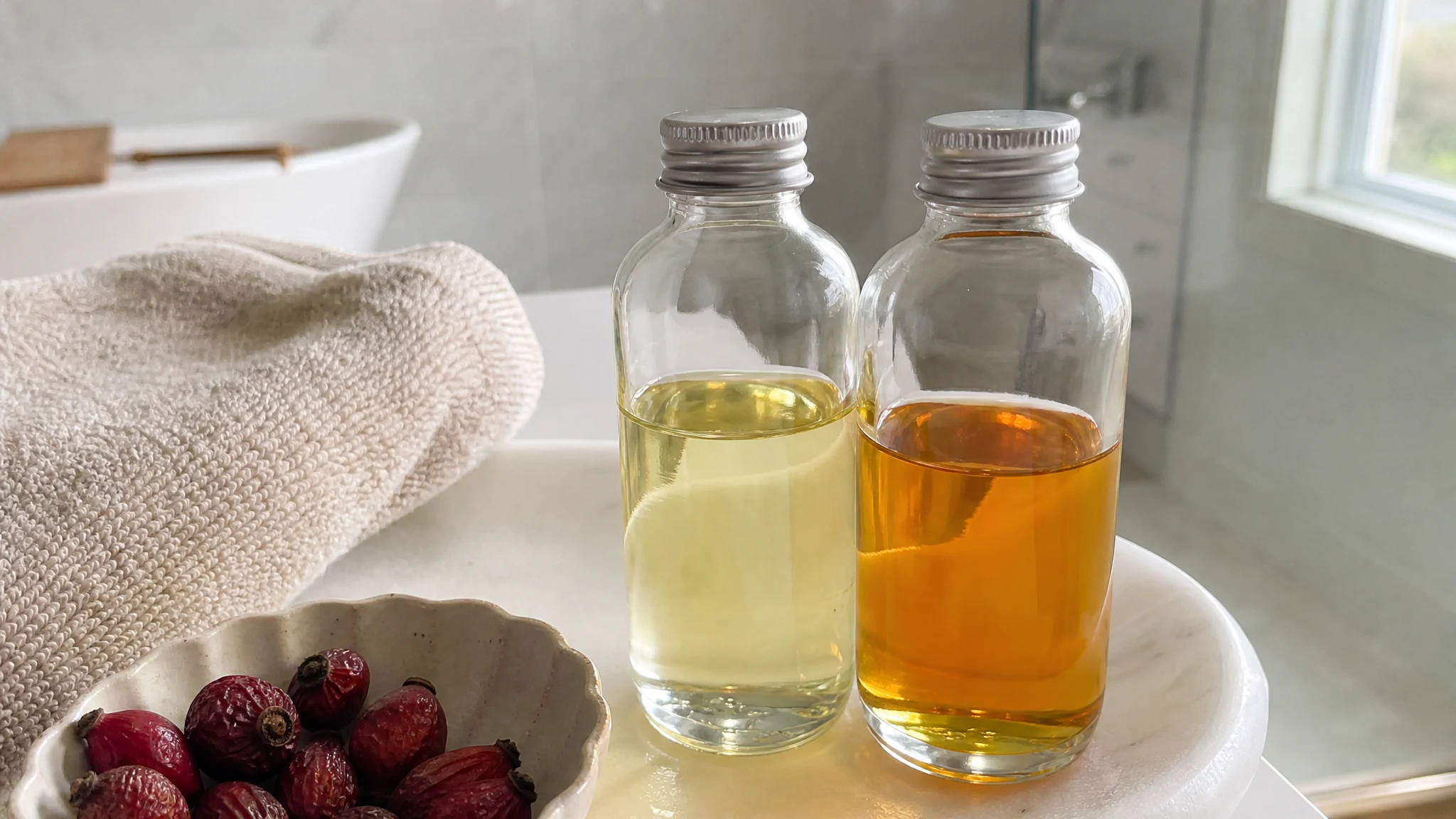
Hold a bottle of rosehip oil up to the window and it glows amber to orange, a colour that comes with the fruit. Hold up Abyssinian oil beside it and you see a pale, clear gold. The colours are the first clue that these are two quite different face oils, and the rest of the differences follow from what each is made of.
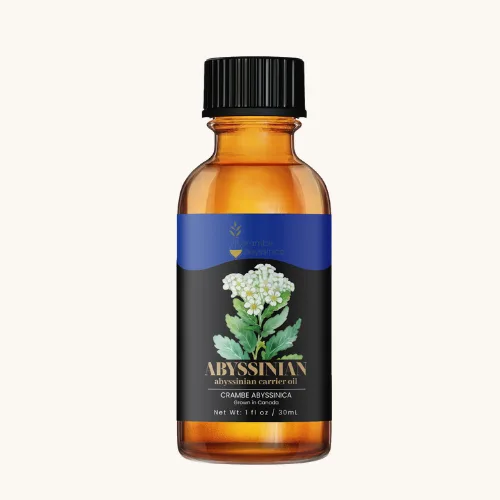
Abyssinian Oil
Cold-pressed Abyssinian oil, in sizes from 0.5 oz to bulk.
From $11.99
Shop Abyssinian Oil →What is inside the bottle
Rosehip seed oil, pressed from the seeds of the wild rose species Rosa canina or Rosa rubiginosa, is a polyunsaturated oil. A 2025 analysis of seven commercial rosehip oils found polyunsaturated fatty acids at about 75 percent in one of them, and a wider survey of seed oils from the rose family reports them as rich in linoleic acid, along with oleic. Linoleic and linolenic acids are the 18-carbon fats with two and three double bonds.
Abyssinian oil leans the other way. Published figures put crambe seed oil at roughly 55 to 60 percent erucic acid, a 22-carbon fat with a single double bond, with oleic, linoleic and linolenic acids making up much of the rest. Purdue's crop profile lists them at about 15, 10 and 7 percent. Those are general figures for crambe oil, not statements about any one bottle, and our fatty acid profile post sets out the context.
Feel, colour and keeping quality
Feel first. A highly polyunsaturated oil tends to be thin and to leave a drier, less cushioned finish, which is why rosehip is often described as a dry oil. Abyssinian oil is lightweight and non-greasy; ours is cold-pressed, light and golden with a mild nutty aroma. If you like a face oil that finishes quickly and does not look like much, rosehip can be that. If you like a little glide while you press it in, the long-chain make-up of Abyssinian oil points that way.
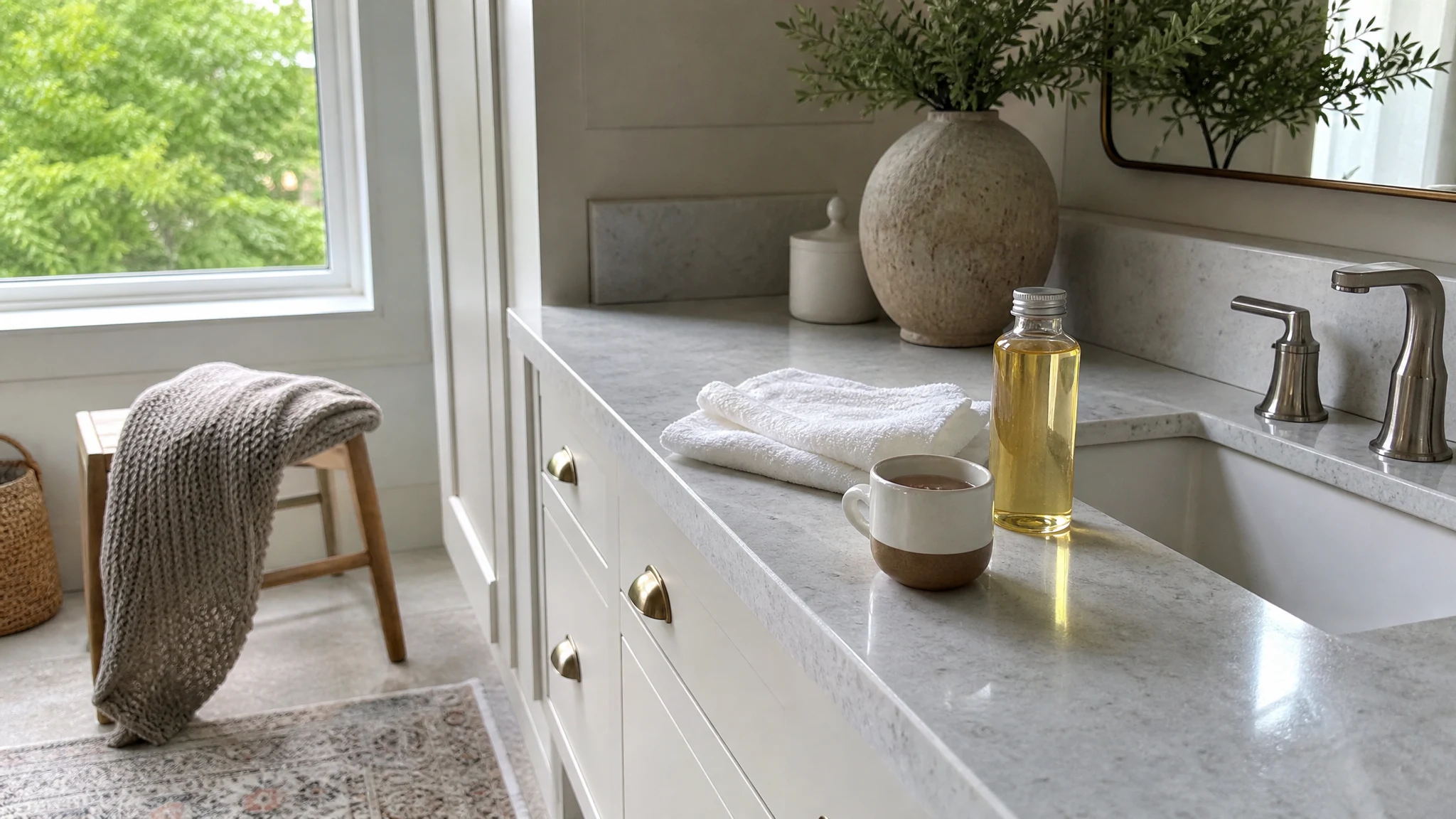
Colour is simply practical. A deeper oil can leave a faint tint on a pillowcase or a white collar, so if you wear it in the daytime, pale gold is the easier shade to live with.
Keeping quality is where the chemistry really shows. Each double bond is a spot where oxygen can attack, so more polyunsaturated oils age faster. A 2026 comparison of rosehip, sunflower, olive and jojoba oils measured exactly that, and in its high-temperature test rosehip had the shortest resistance to oxidation of the four, with the result tracking polyunsaturated content. Our reasoning from that is straightforward: with its single-double-bond long-chain make-up, Abyssinian oil should be the steadier of the two. For a deeper look, see our oxidative stability guide.
The advice for rosehip, then, is to buy small, check the date, store it cool, dark and tightly capped, and use it up. A fresh bottle is the nicest one.
Two oils, one routine
They need not compete. Because their make-ups differ, you can use them one after another, a drop or two of each, and see which pairing suits your skin and your mornings. The wider logic of building a face-oil routine is in our face care guide and in our routine order post. We do not sell rosehip oil, so if you want to try it, a pharmacy or craft supply shop is the place, and a small bottle suits it best.
If you are choosing only one, our pick for a face oil you plan to use steadily is Abyssinian oil, for the steadier keeping and the paler colour. If you love rosehip's colour and finish, buy it in a small size and enjoy it fresh. Our marula comparison and carrier oil roundup cover other candidates.
As always, skin varies from person to person: patch test a new oil before first use and keep it away from your eyes. Past that, two pretty bottles on a shelf is a fine way to find out what you like.
Abyssinian Oil
Cold-pressed Abyssinian oil, from a small bottle to bulk sizes.
From $11.99
Shop Abyssinian Oil →Sources & Further Reading
- Oxidative Stability and Kinetics of Oxidation of Rosehip, Sunflower, Olive and Jojoba Oils (Antioxidants, 2026)
- Fatty acid, tocopherol and squalene contents of Rosaceae seed oils
- Characterization of Bulgarian Rosehip Oil by GC-MS, UV-VIS Spectroscopy, Colorimetry, FTIR Spectroscopy, and 3D Excitation-Emission Fluorescence Spectra (Molecules, 2025)
- Crambe abyssinica Hochst. ex R.E.Fries (Purdue NewCROP)