Abyssinian Oil vs Grapeseed Oil: Light Feel, Keeping Quality
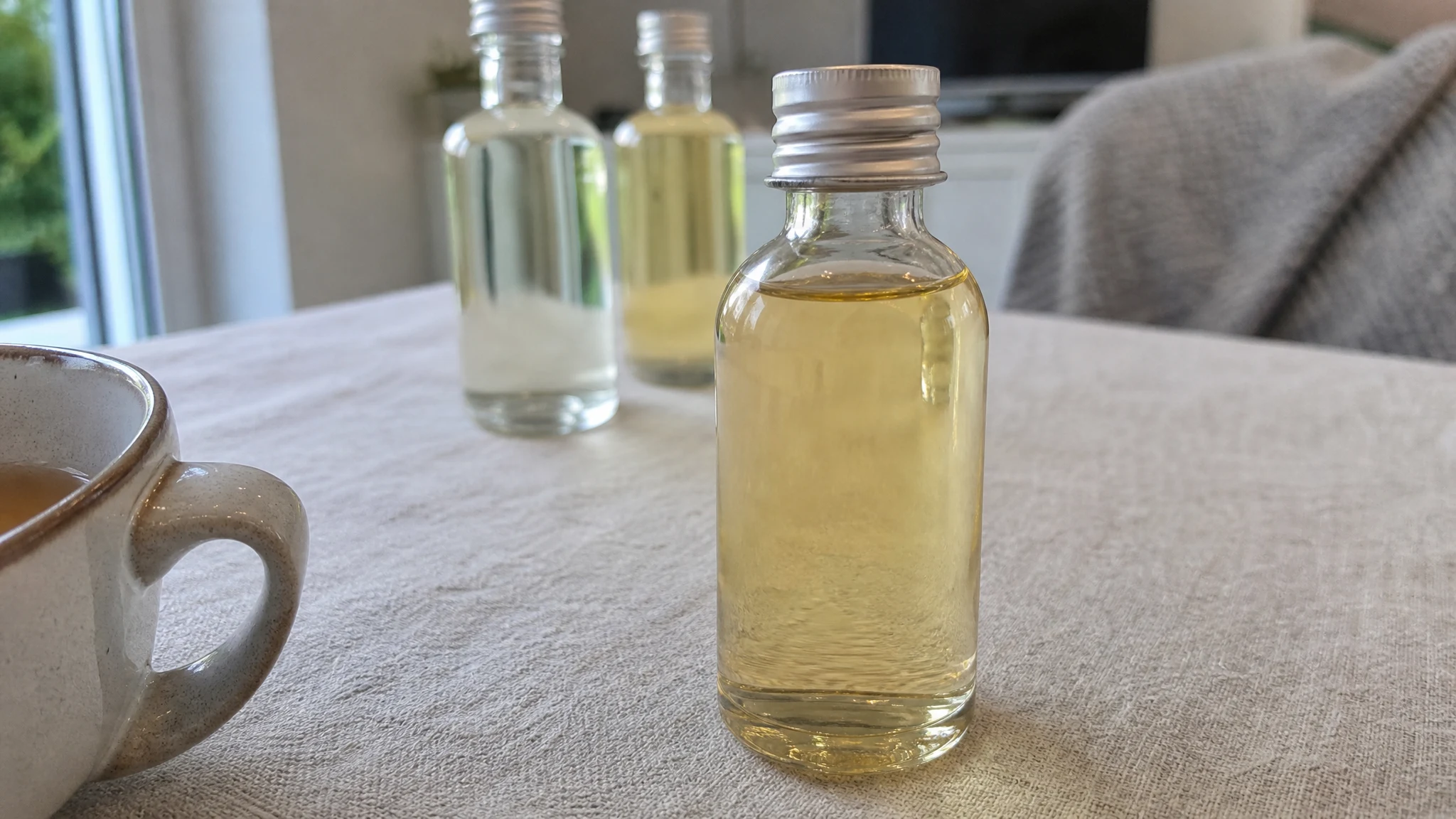
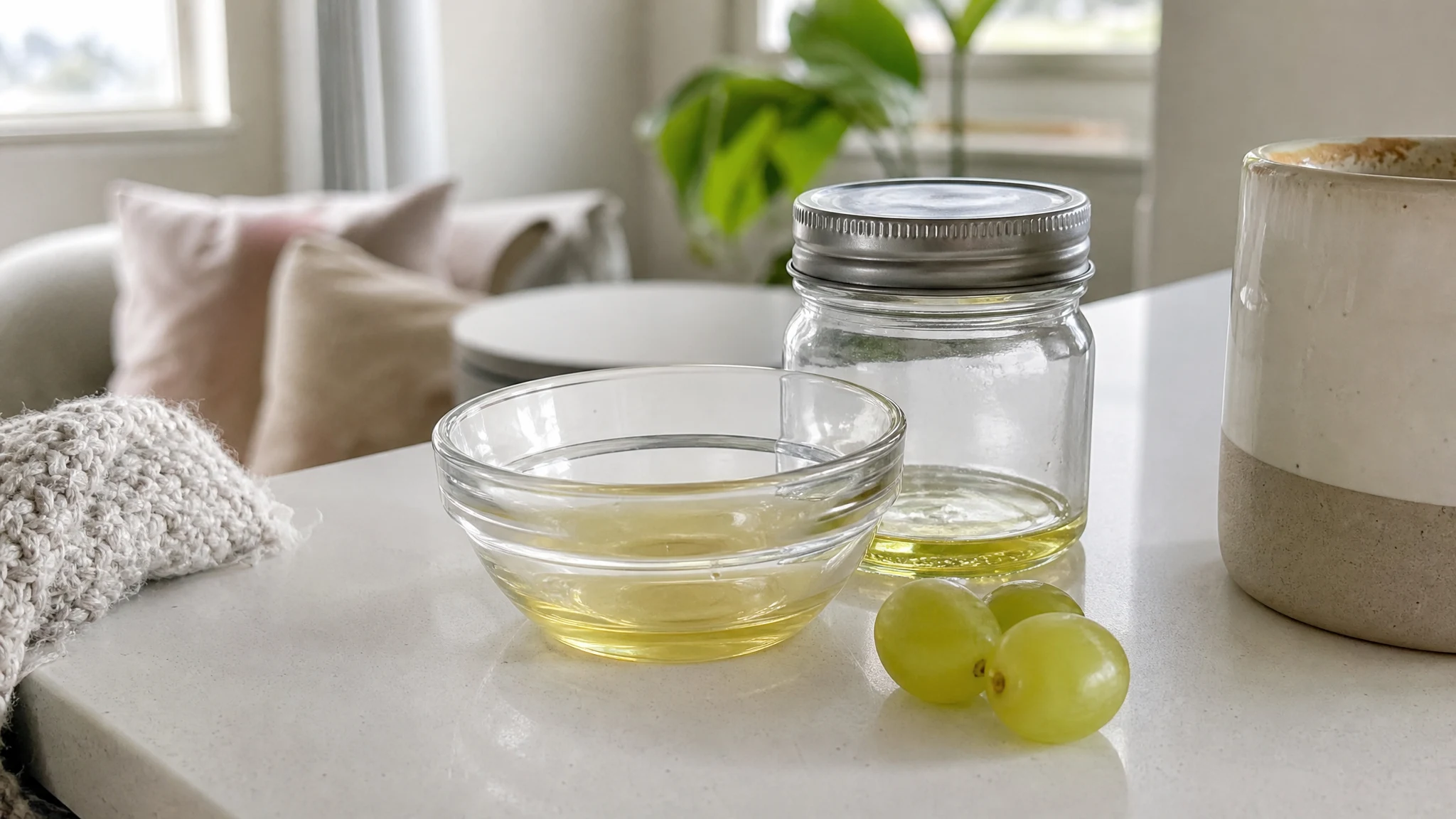
If you have ever wanted an oil that vanishes into skin without a trace of grease, someone has probably told you to buy grapeseed. It earned that reputation honestly: it is thin, light and widely available. What gets less airtime is why it is so light, and what that same chemistry means for the bottle sitting in your cabinet in a few months.
Abyssinian Oil
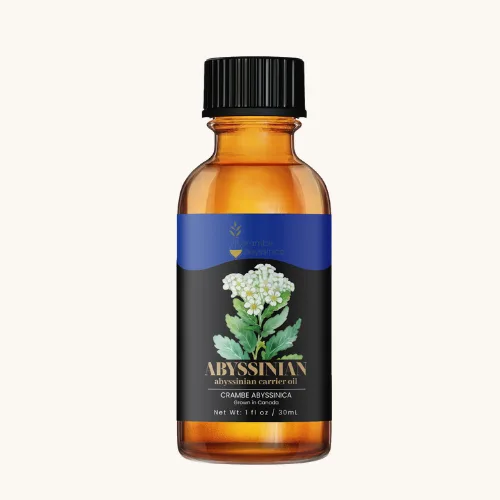
Cold-pressed Abyssinian oil, in sizes from 0.5 oz to bulk.
From $11.99
Shop Abyssinian Oil →Why grapeseed feels so light
Grape seed oil is overwhelmingly linoleic acid. A study of five Spanish grape varieties measured 65.55 to 69.00 percent linoleic acid and about 17 to 20 percent oleic acid, and the paper notes earlier reports of 61 to 73 percent linoleic across the literature. Linoleic acid is an 18-carbon fatty acid with two double bonds, and fats with that much bend and unsaturation stay fluid and thin.
That fluidity is the whole charm. Grapeseed spreads easily, leaves little slick, and suits anyone who wants a minimal-feeling oil, including skin that already feels oily and wants nothing heavy on top.
What the same chemistry does to shelf life
Every double bond is a spot where oxygen can attack. A 2026 comparison of rosehip, sunflower, olive and jojoba oils found that how long each resisted oxidation tracked its polyunsaturated fatty acid content, with the most polyunsaturated oil the quickest to give way. Grapeseed, with about two-thirds of its fatty acids doubly unsaturated, sits firmly on the quicker side of that line. That is our reasoning from the same principle rather than a measurement on grapeseed itself.
The practical advice is simple and not at all alarming: check the date on any grapeseed oil you buy, keep it cool, dark and tightly capped, and use it within its stated time. If it smells sharp or off, that is the oil telling you it is past its best, and a fresh bottle is the answer.
A different route to light
Abyssinian oil gets its lightness another way. Published figures put erucic acid, a 22-carbon fatty acid with one double bond, at about 55 to 60 percent of crambe seed oil, with oleic, linoleic and linolenic acids taking up much of the remainder (Purdue's crop profile lists about 15, 10 and 7 percent). Those figures describe crambe oil in general. The point for this comparison is the balance: far less linoleic and linolenic than grapeseed, and a long chain with a single double bond in the lead.
Our Abyssinian oil is cold-pressed, light and golden with a mild nutty aroma, and we describe it as lightweight and non-greasy. If you want to know why long-chain oils are discussed so often when people talk about steadiness, our oxidative stability guide goes into it, and the fatty acid profile post sets out the numbers.
So which one?
Grapeseed is a good choice when you want a very thin, widely available oil and plan to use the bottle quickly. Abyssinian oil is the one we would choose when you want a light finish but also want an oil that is less likely to be sitting half-used on the shelf losing its edge. That is a judgment from the chemistry, not a claim about any one bottle.
For shiny, oily-feeling skin, either can sit in a routine in small amounts, and our oily skin post covers how to think about that without overdoing it. Fine hair that goes limp easily has similar needs, which we talk through in our fine hair post. And since this is one of several comparisons, our carrier oil roundup shows the wider field.
As with any new skin or hair product, patch test first and keep oils away from your eyes. A light oil is one of the easier things to get right, and the dates on the bottle do most of the work.
Abyssinian Oil
Cold-pressed Abyssinian oil, from a small bottle to bulk sizes.
From $11.99
Shop Abyssinian Oil →Sources & Further Reading
- Fatty Acid and Tocopherol Composition of Pomace and Seed Oil from Five Grape Varieties Southern Spain
- Oxidative Stability and Kinetics of Oxidation of Rosehip, Sunflower, Olive and Jojoba Oils (Antioxidants, 2026)
- Crambe abyssinica Hochst. ex R.E.Fries (Purdue NewCROP)