Citrus Oil Blends With Abyssinian Oil: Scent and Sun Rules
Bergamot, sweet orange and grapefruit are the scents people reach for first when they start blending, because they smell like the brightest part of a morning. They also come from the peel, and that is where an old and well-documented rule comes from. Some pressed citrus oils carry molecules that react with sunlight on skin, so a lovely blend needs a number attached to it.
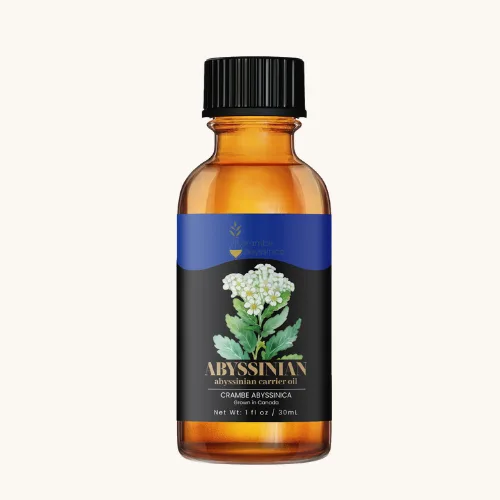
Abyssinian Oil
Cold-pressed Abyssinian oil, in sizes from 0.5 oz to bulk.
From $11.99
Shop Abyssinian Oil →What the peel puts in the bottle
Pressed (or "expressed") citrus oils retain compounds called furanocoumarins. Robert Tisserand's explanation is short: on skin, in the presence of UVA light, a furanocoumarin forms a chemical bond with the cell's DNA, and without light the molecule simply leaves the cell and nothing happens. That is why the guidance is about light, not about the oil itself. Bergamot is the best-known case; its main culprit is a furanocoumarin called bergapten. IFRA and the EU both cap bergapten at 15 parts per million (0.0015 percent) in leave-on cosmetics.
The bergamot number
For bergamot oil, the figure to remember is 0.4 percent. Tisserand's page states that bergamot oil should be limited to a maximum of 0.4 percent in the final product, for skin exposed to sunshine, with bath preparations, soaps and other wash-off products excluded (it cites IFRA 2009 and traces the bergamot guideline to 1974). IFRA's standards are revised from time to time, so check the current text or your supplier's own safety paperwork before you finalize anything for sale.
Here is plain arithmetic: 0.4 percent of one ounce (about 30 mL) of blend is roughly 0.12 mL of bergamot, which is two to three drops at the common rule of thumb of 20 drops per mL. Drops vary by bottle, so treat that as approximate. It also sits below the 0.5 to 1.2 percent range the Tisserand Institute suggests for facial products in general, so a bergamot note in a face oil is a very light touch.
For lemon, Tisserand's dilution page gives IFRA's limit as 2 percent to avoid phototoxicity, and calls it "the safe maximum, not a recommended amount." We take that phrase seriously and suggest the same: a limit is a ceiling, not a target. Tisserand's phototoxicity page gives no percentage for grapefruit, lime or sweet orange, and notes only that grapefruit oils can be produced with low or zero furanocoumarins, so the supplier's documentation for the exact oil you buy is the place to find its figure.
When you wear it matters as much as how much
Tisserand's guidance for a phototoxic amount of one of these oils is to keep that skin away from UV for at least 12 hours, by covering it or staying indoors, and to avoid them entirely if you are sunbathing or using a tanning bed. This is a rule about timing, not a promise that anything shields skin. Our own judgment, from those facts, is that citrus-forward blends belong in the evening routine, on skin that will be covered, and in the wash-off category where the limits do not apply.
If you blend two oils that carry this concern, treat the lower limit as the cap for the pair. That is our conservative reading, not an IFRA calculation.
Distilled and furanocoumarin-free versions
Tisserand reports that distilled citrus oils contain virtually no furanocoumarins, and that bergamot sold as FCF (furanocoumarin-free) is made by fractional distillation and is considered non-phototoxic. Distilled oils can still carry small amounts, and a bottle's label does not tell you which kind you have, so ask the supplier to name the type and show the documentation. We do not sell essential oils; an aromatherapy or craft supply shop is where to find them.
Choosing the scent
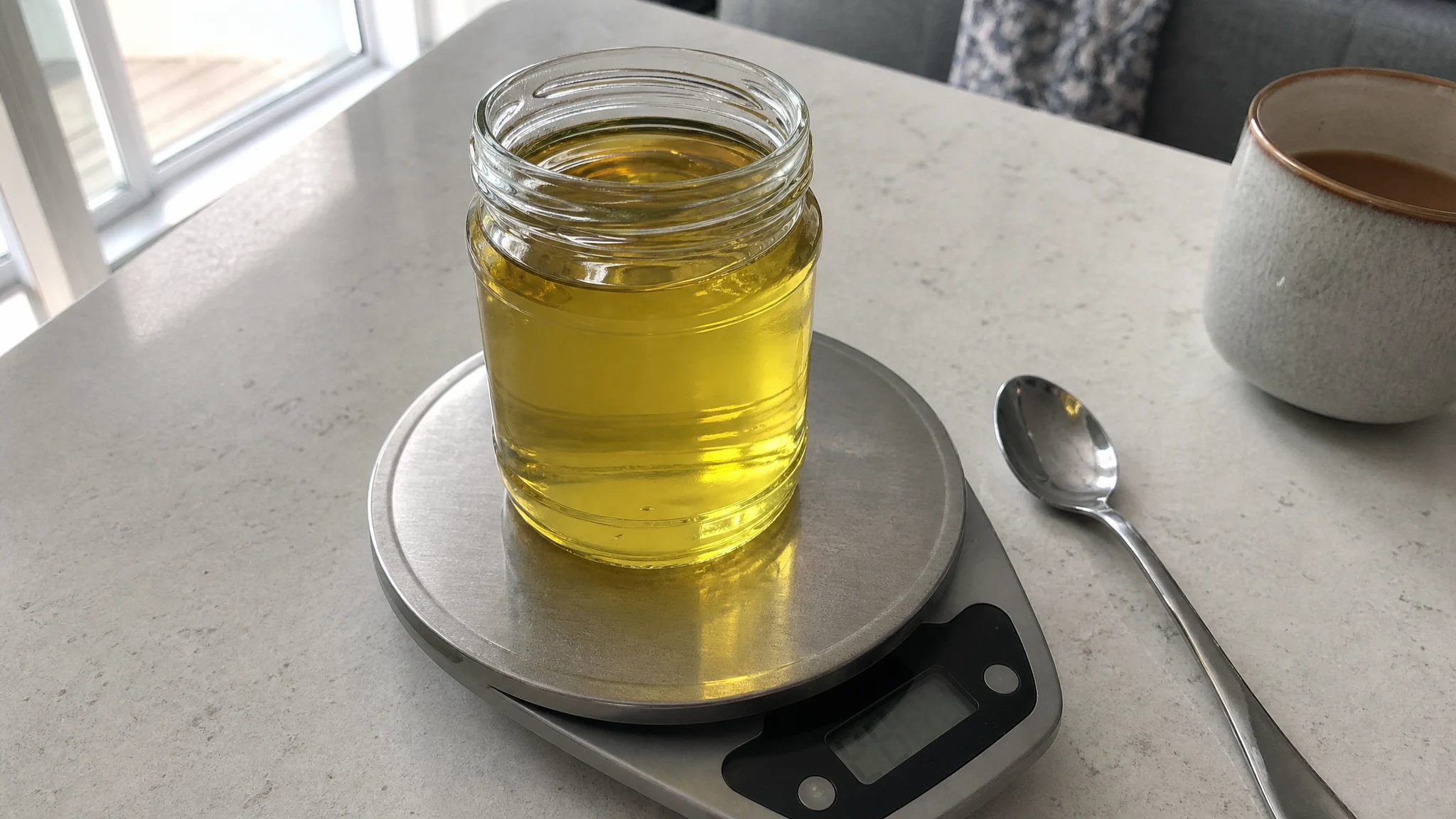
Our oil is a light golden, lightweight oil with a mild, nutty aroma of its own, which leaves room for a citrus note to come through. For ideas about which scents sit well beside bergamot or orange, our pairing guide goes through the options, and our calming blends post pairs citrus with softer, rounder oils. The arithmetic for turning a percentage into drops is in essential oil dilution with Abyssinian oil.
One more household note: Pet Poison Helpline lists citrus oils (the d-limonene in them) among essential oils known to poison cats, so our post on cats is worth a read if one lives with you.
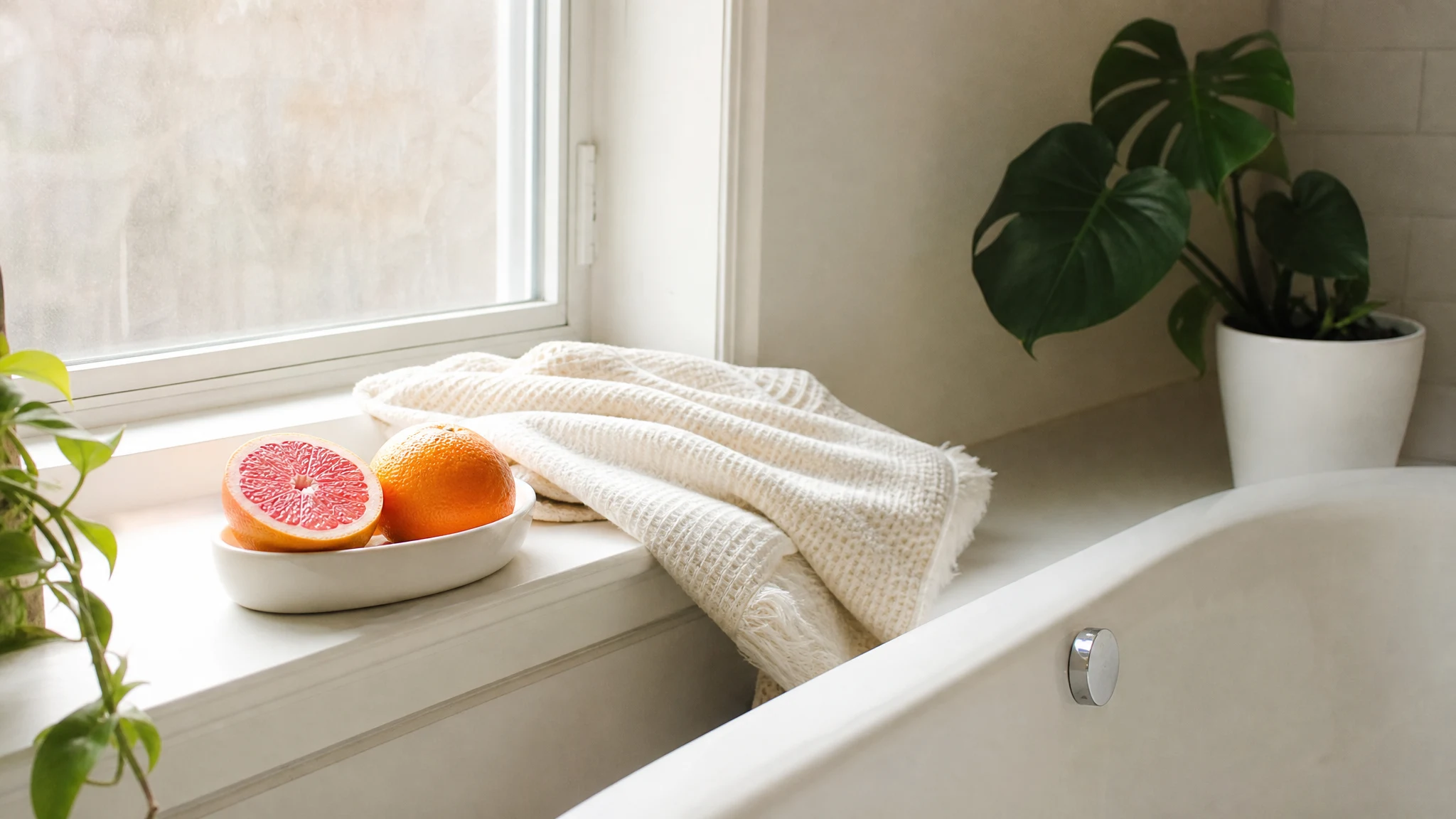
A good citrus blend is a small, well-measured thing, worn at night and enjoyed in the morning light through a window.
Abyssinian Oil
Cold-pressed Abyssinian oil, from a small bottle to bulk sizes.
From $11.99
Shop Abyssinian Oil →Sources & Further Reading
- Phototoxicity: essential oils, sun and safety, Robert Tisserand, Tisserand Institute
- Dilution for essential oils, Tisserand Institute
- Essential Oils and Cats, Kia Benson, DVM, Pet Poison Helpline