Essential Oils to Pair with Abyssinian Oil by Scent Family
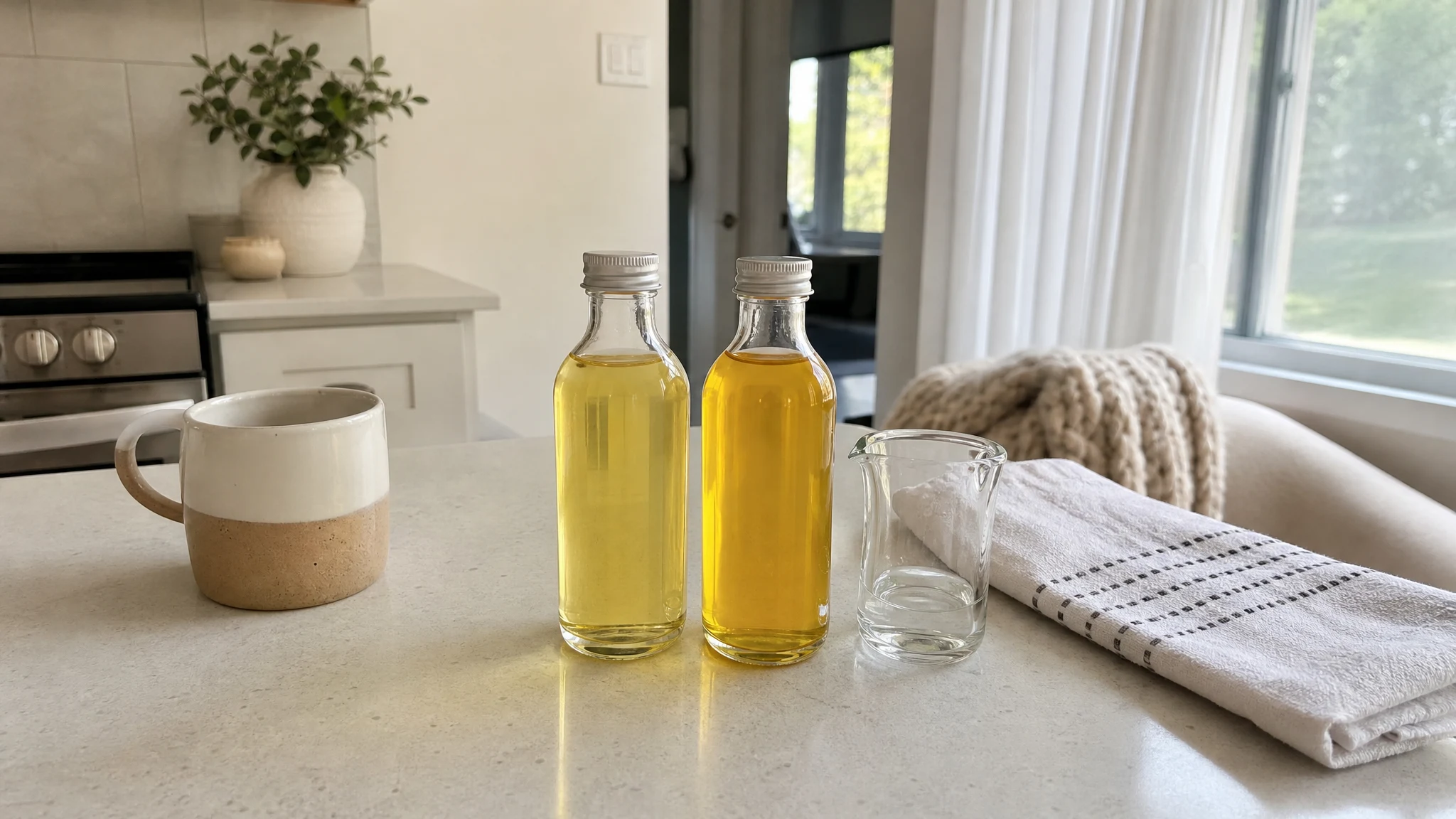
Abyssinian oil is a quiet partner. We describe ours as a light golden oil with a mild, nutty aroma, which means whatever you stir into it is what you smell first. That makes the pairing question more fun than it is with a loud carrier, and it is the reason a nearly odorless base is worth wanting in the first place.
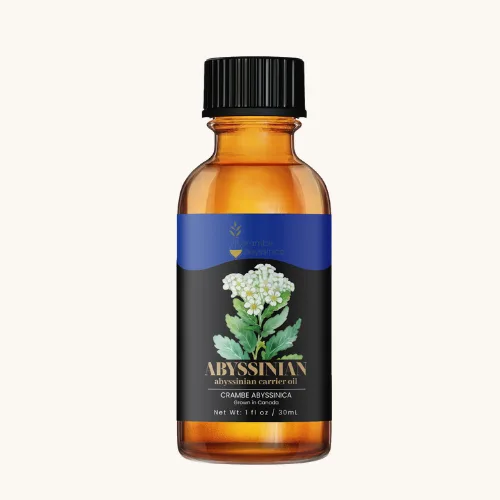
Abyssinian Oil
Cold-pressed Abyssinian oil, in sizes from 0.5 oz to bulk.
From $11.99
Shop Abyssinian Oil →One percentage for the whole blend
Before any scent talk, one piece of arithmetic that changes how you build everything. The dilution figure applies to the total of all essential oils in the bottle, not to each one. If you want 1% in 30 ml of base and you like two oils together, you split the drops between them; you do not give each one 1%.
The Tisserand Institute's general guidance gives the ranges most home blenders work from: 0.5 to 1.2% for facial products, 1 to 3% for body oils and lotions, and 0.2 to 1% for sensitive or impaired skin. Robert Tisserand calls them guidelines, not rules, and suggests starting low and increasing only if needed. The page also says drop conversions are always approximate, so the numbers below treat a milliliter as roughly 20 drops, a common pharmacy convention. Your bottle may deliver a slightly different drop.
| Use | Range | Total drops in 30 ml |
|---|---|---|
| Sensitive skin | 0.2 to 1% | about 1 to 6 |
| Face | 0.5 to 1.2% | about 3 to 7 |
| Body | 1 to 3% | about 6 to 18 |
The range is a ceiling, not a target. A scent you can only just catch when you lift your wrist is usually the right strength for a leave-on oil.
Four scent families to wander through
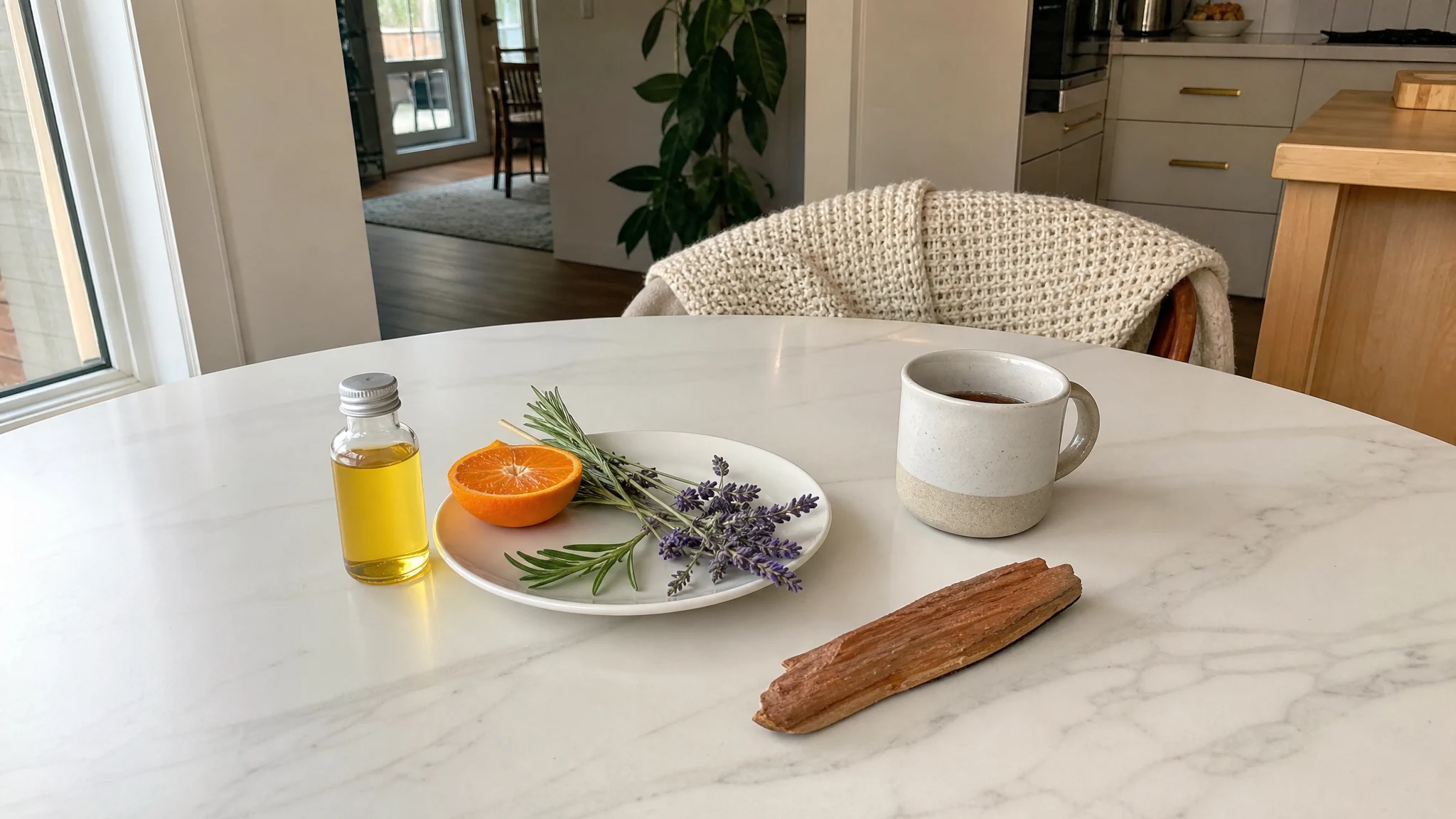
We do not sell essential oils; you will find them at an aromatherapy or craft supply shop, where you can open the tester bottles and smell before you commit. Think in families rather than single oils, because oils in the same family tend to sit comfortably together.
Floral
Lavender is the familiar one, and chamomile is the gentler cousin. Roman chamomile is the sweet, fruity one; German chamomile is a different species with a stronger, hay-like character. Our lavender and chamomile blends work through exactly that choice.
Citrus
Bright and quickly noticed, and quick to fade, which is why citrus pairs well with a woody oil that gives it something to stand on. Citrus peel oils carry their own limits: the Tisserand page cites an IFRA limit of 2% for lemon oil because of phototoxicity, and notes that the general table leaves out oils with specific restrictions. Read the supplier's safety sheet for any citrus oil you buy, and see our citrus blends for the details.
Woody
Cedarwood, sandalwood and their relatives are the base notes: dry, warm, long-lasting. They are the natural choice for cold weather, and we give them their own page in winter oil blends.
Herbal
Rosemary and its green, sharp neighbours. A little goes a long way against a nutty base, and our rosemary blend by the numbers shows how few drops that really is.
A simple way to compose
Perfumers talk in top, middle and base notes, and the idea is useful even at kitchen scale: a light oil that you smell first, a rounder one in the middle, and a woody one that lingers. For a 30 ml body oil at 1.5% (nine drops in total), a plain split would be four citrus, three floral and two woody. For a face oil at 0.8% (about five drops), two oils are plenty.
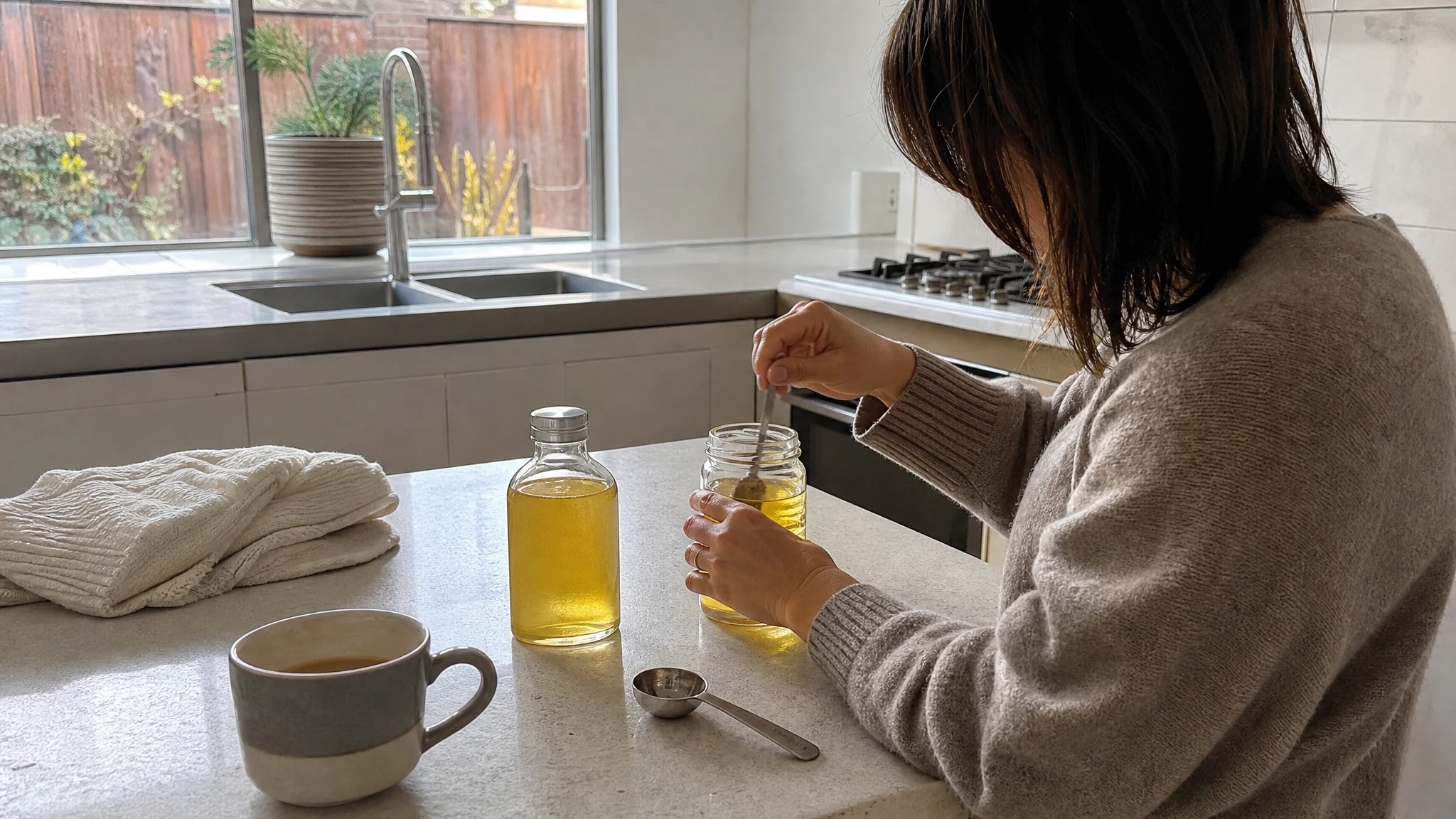
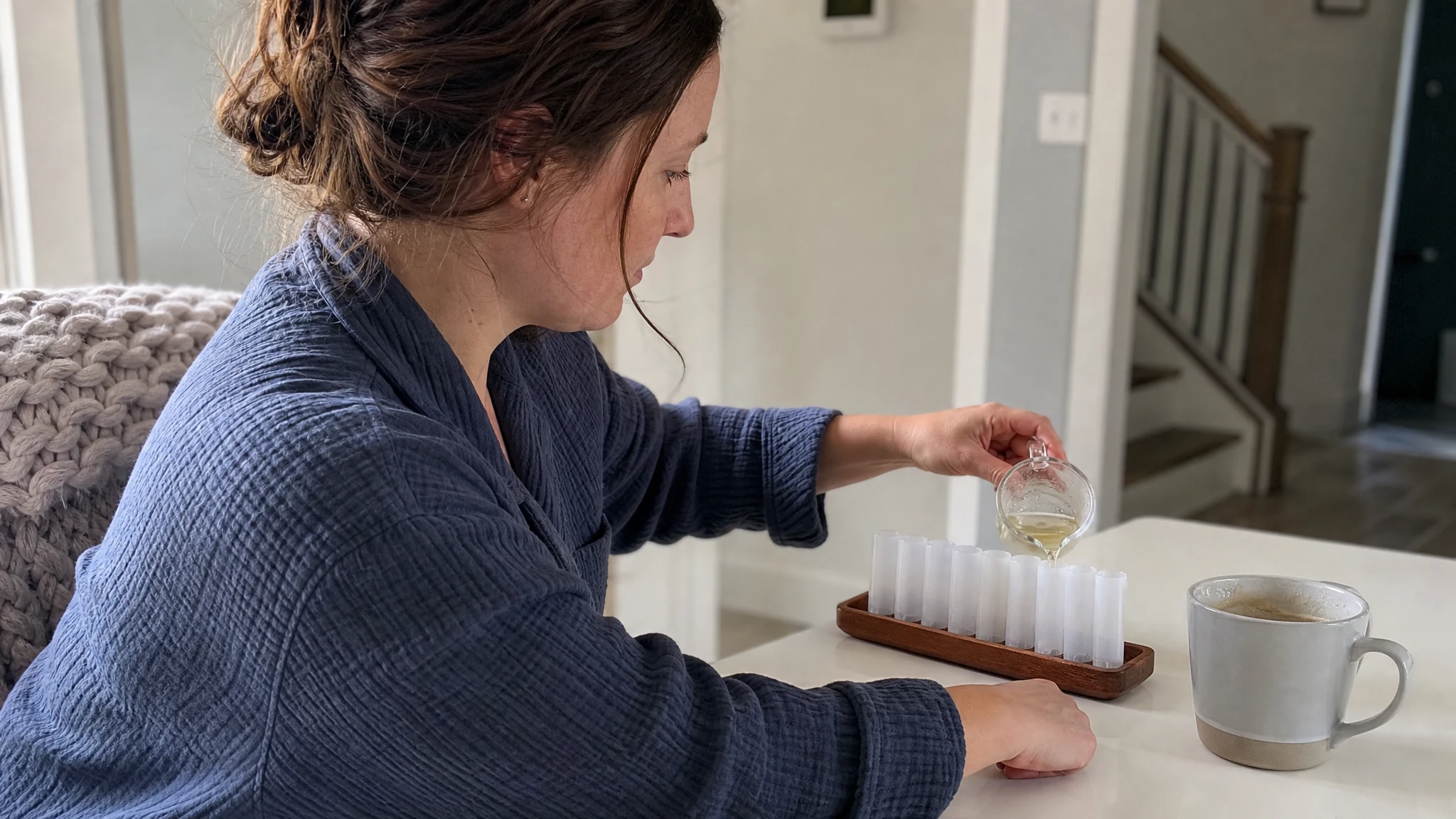
Two habits make blending kinder to your skin and your wallet. Mix one small bottle at a time, so you learn what each oil is contributing. And patch test any new blend, as we say about all of our own oil: skin varies from person to person, so test before first use and keep it away from your eyes. Tisserand is plain on the rest: do not apply undiluted essential oils to skin, keep them out of reach of young children, and if you are pregnant, ask a doctor or a suitable practitioner first.
Why we like the quiet base
A carrier with a strong smell of its own competes with your blend, and the result is a third scent that nobody chose. A mild, nutty one gets out of the way, which is the argument we make in more detail in why a low-scent carrier oil matters. If you would rather work from a worked example, essential oil dilution with Abyssinian oil goes through the arithmetic bottle by bottle, and usage rates by product covers how much of the base itself to use.
Start with one oil, smell it on your skin an hour later, and add a second only when you know what the first is doing. The best blends tend to be shorter than the shopping list that inspired them.
Abyssinian Oil
Cold-pressed Abyssinian oil, from a small bottle to bulk sizes.
From $11.99
Shop Abyssinian Oil →