Mixing Abyssinian Oil into Moisturizer or Conditioner
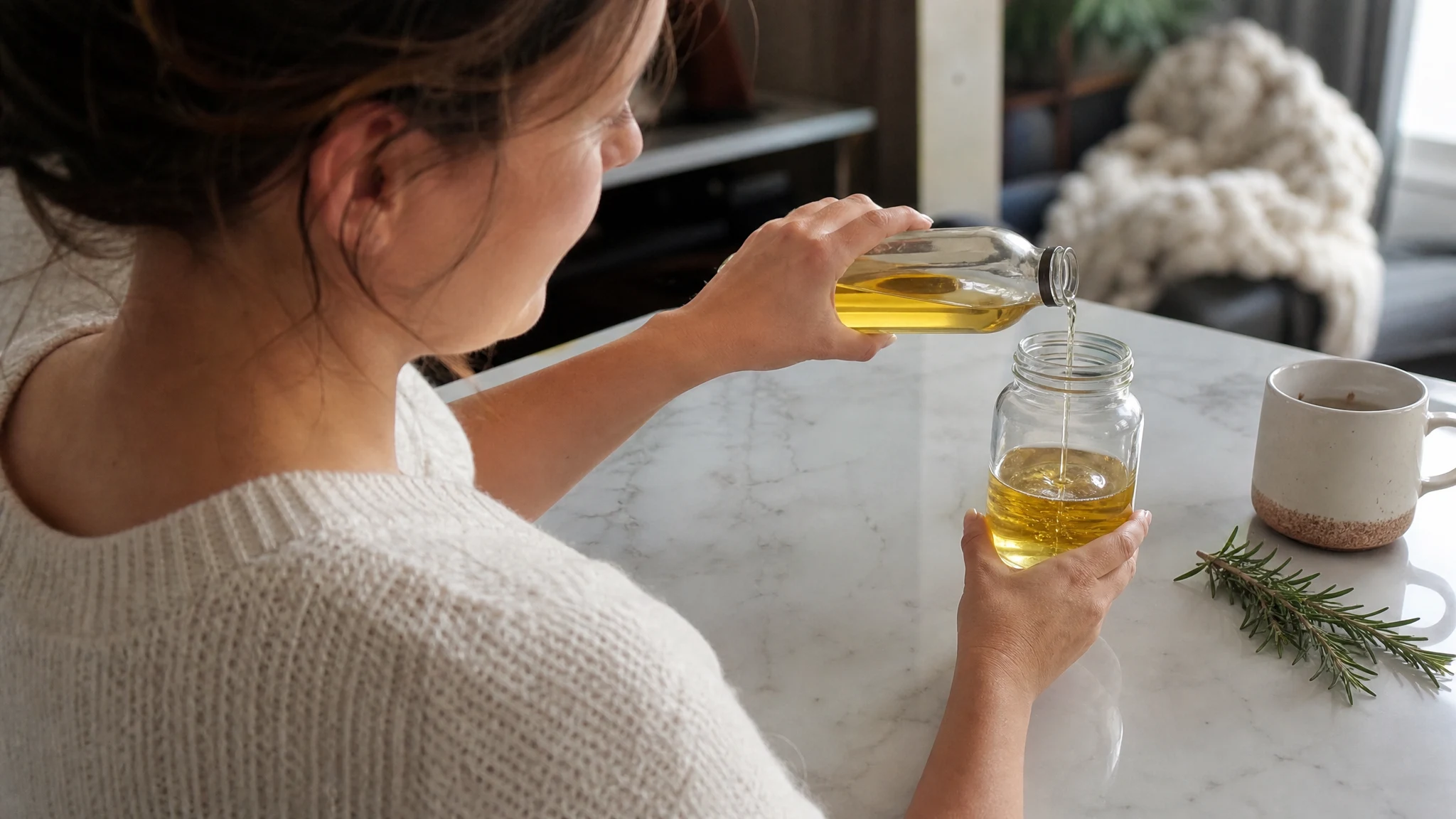
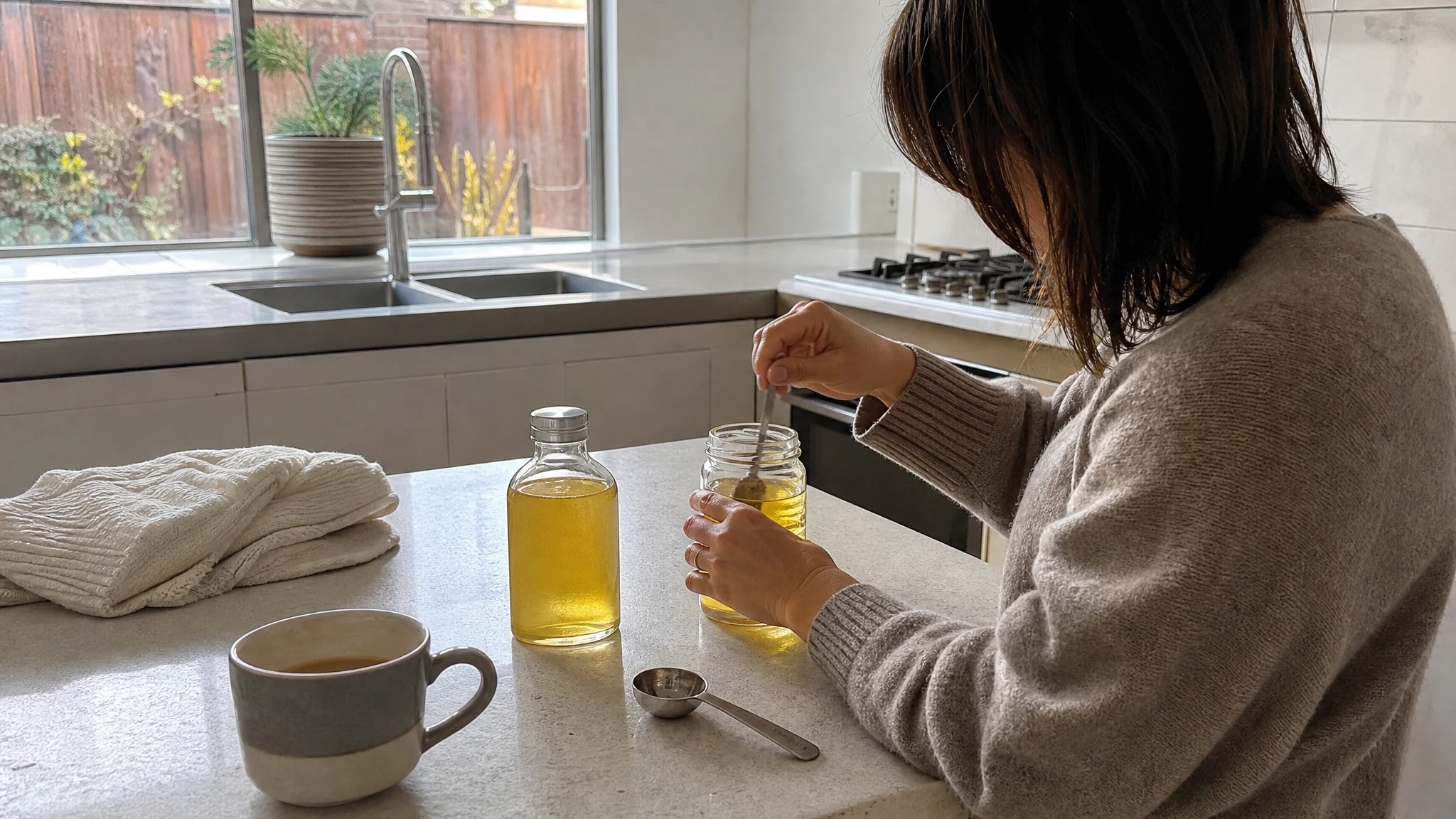
The short answer is yes, you can, and if you are going to, do it in your palm rather than in the jar. A drop of oil stirred into the portion of moisturizer or conditioner you are about to use works as a fresh, personal booster. Pouring the oil into the whole bottle changes the product itself, and that is a bigger decision than most DIY posts admit.
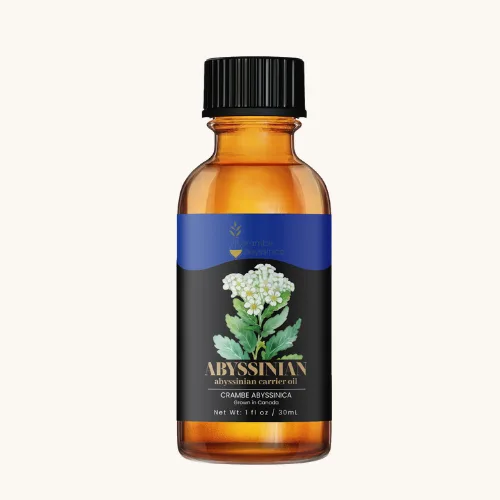
Abyssinian Oil
Cold-pressed Abyssinian oil, in sizes from 0.5 oz to bulk.
From $11.99
Shop Abyssinian Oil →What one drop actually does
Percentages sound abstract until you do the arithmetic. Count about 20 drops to the milliliter, a common pharmacy convention; real drops shift with the oil and the dropper, so treat the numbers as close, not exact. One drop is then 0.05 ml. Stir one drop into a milliliter of cream and you have made a 5% oil addition, about 4.8% once you count the cream. That is more than people tend to expect from a single drop.
For a whole jar the numbers look like this:
| Added to a 50 ml jar | Oil | Drops |
|---|---|---|
| 1% | 0.5 ml | about 10 |
| 2% | 1 ml | about 20 |
| 5% | 2.5 ml | about 50 |
So per use, one drop in a coin-sized portion is already at the top of that table. Start with a single drop, feel the result, and stop there if the texture is right. The same arithmetic, expressed per product type, is in usage rates by product.
Why the jar is a different decision
A lotion or conditioner is an emulsion: tiny droplets of oil held in water by an emulsifier, and kept free of microbes by a preservative. Three things follow from that, and the first two are reasoning from documented chemistry, not a promise.
First, the emulsifier was chosen for a particular amount of oil. One craft-formulating guide lists "insufficient emulsifier; ratio of oil too high for emulsifier" as the cause of separation, so extra oil in a finished product can leave it thinner, greasier or prone to splitting. Second, water is the major constituent of most cosmetics and an ideal growth environment for microorganisms, as a 2018 review in Molecules puts it. The same review adds that lipophilic preservatives can partition into the oil phase of an oil-in-water emulsion, so adding oil may shift where the preservative sits. A small amount of oil is unlikely to matter much, but nobody has tested your particular jar, and the original manufacturer's preservative testing no longer describes what you have made.
That leads to our editorial rule of thumb: the more you want to put in, the more reasons to mix per use instead of per jar. A cosmetic chemist can design an emulsion with extra oil in it. A bottle of drugstore lotion was not designed that way.
Moisturizer: when mixing works
Mixing helps when a cream feels a little light for very dry skin: one drop in your palm, stirred with a fingertip, and pressed on. It is less useful when the product is built to do something specific. If a cream is medicated, or prescribed by a dermatologist or pharmacist, leave it exactly as it is; we sell a cosmetic oil, and they are the people to ask about adding anything to it.
Another option is to skip the mixing and layer the oil over a plain moisturizer. The American Academy of Dermatology suggests moisturizing while skin is still damp, so the order of products matters more than the mixing; our post on routine order gives the sequence.
Conditioner: a lighter hand
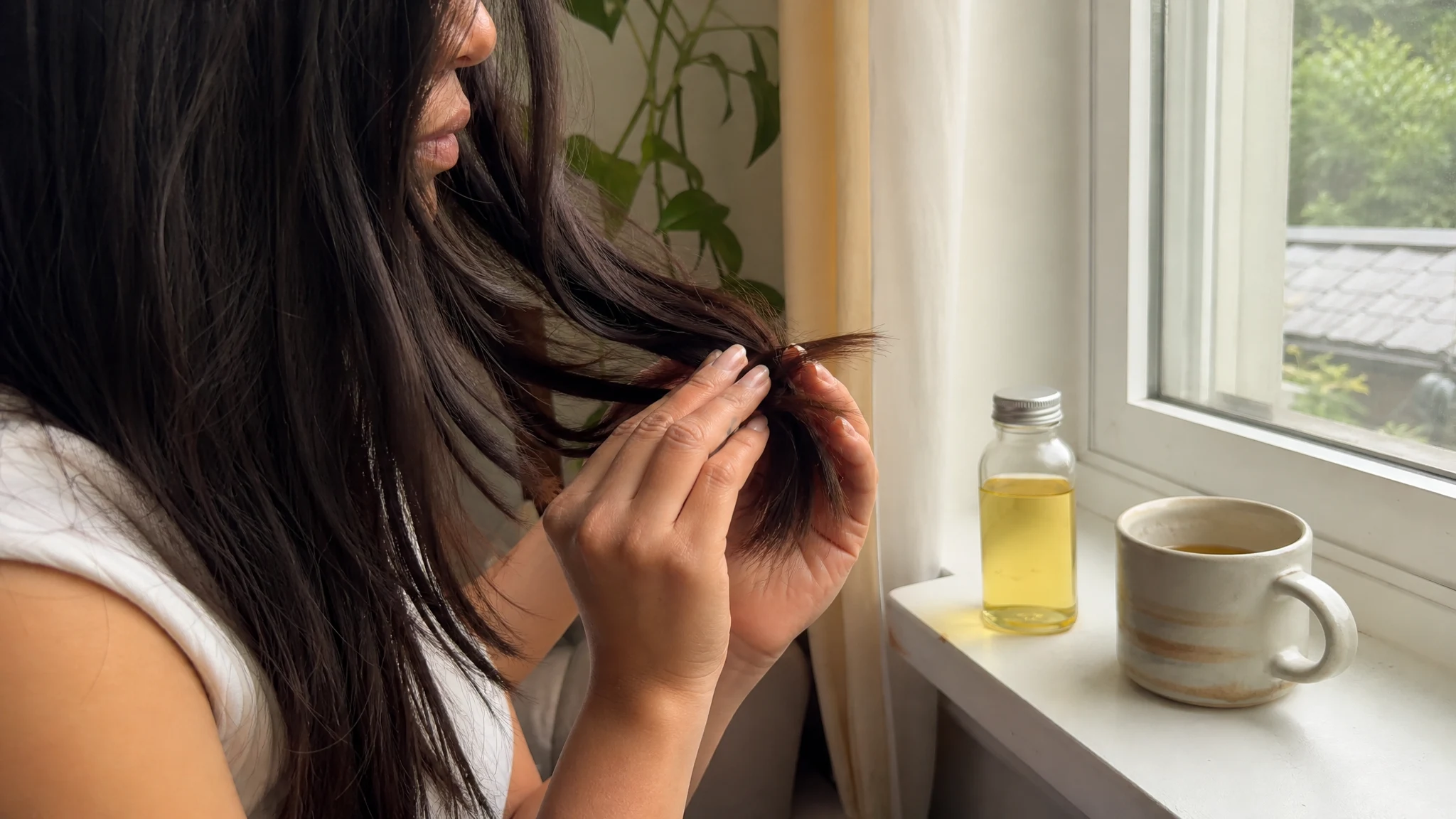
Conditioners are different again. A review in the International Journal of Trichology explains that cationic surfactants neutralise the negative charge on hair's surface, and that residue matters for leave-on products. A rinse-off conditioner is mostly rinsed away, so a drop of oil in your palm along with the conditioner is a pleasant gloss on the lengths and ends. One or two drops is a sensible start for a palmful, and fine hair wants even less. If you want to oil the hair itself, our hair-oiling guide is the better route than turning your conditioner into an oil.
If you really want to blend a batch
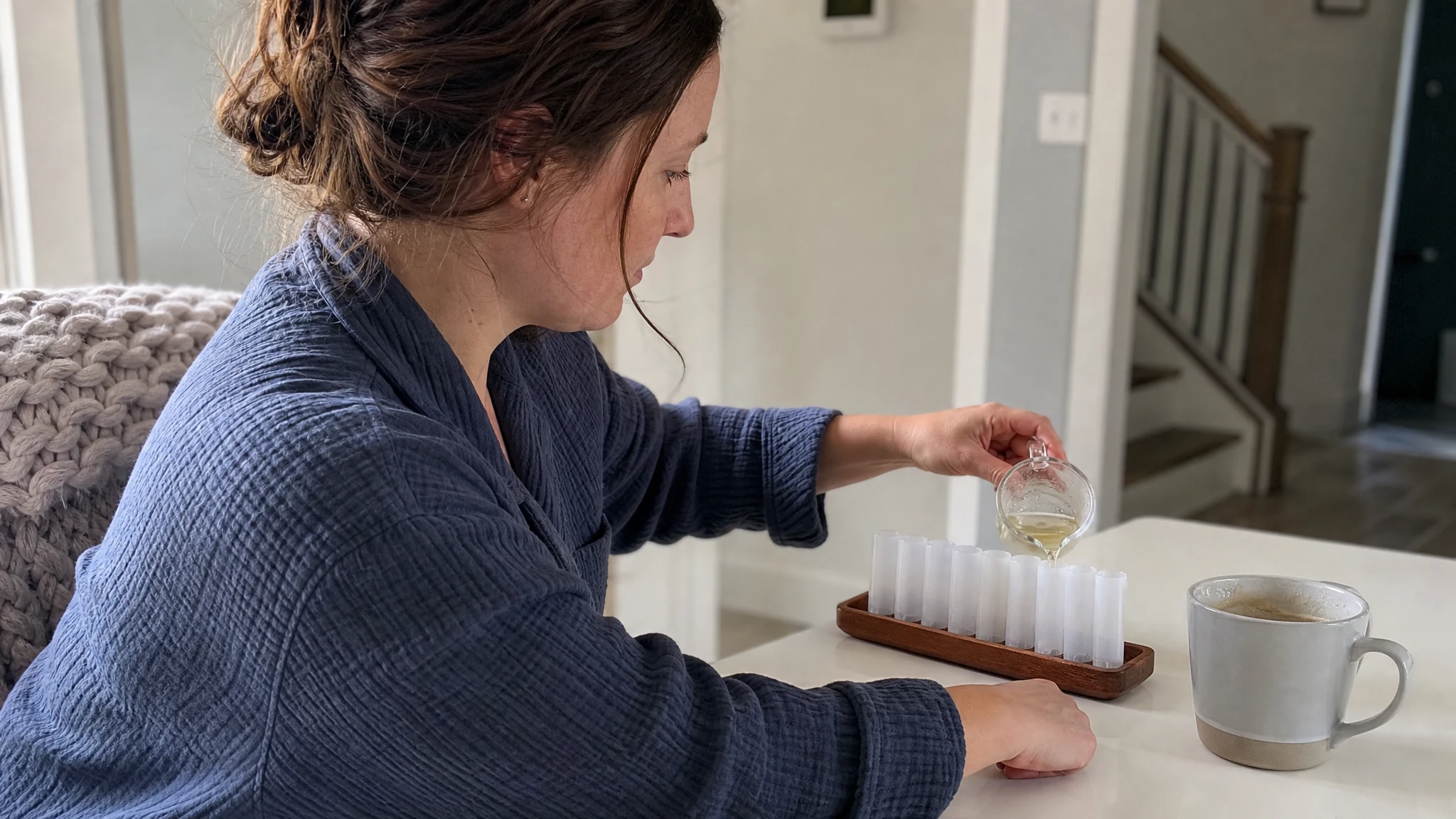
At that point you are making a formula, and it is worth working from a formulator's guide: see the maker's walk-through for how oil phases, emulsifiers and preservatives interact. Make a small amount, watch it for separation over a week or two, and discard it if it changes smell or looks cloudy. Patch test any new mixture and keep it away from your eyes, as we say about all of our own oil.
A palm is the smallest, safest laboratory there is, and the portion you mix there is always fresh.
Abyssinian Oil
Cold-pressed Abyssinian oil, from a small bottle to bulk sizes.
From $11.99
Shop Abyssinian Oil →