Oils and Pets at Home: A Practical Checklist
Most pet accidents with household oils happen in a few ordinary seconds: a roller bottle left on the arm of the sofa, a diffuser nudged off a shelf, a cap that did not quite click. The good news is that the fixes are equally ordinary. Here is a walk around the house, room by room, built from what the ASPCA and Pet Poison Helpline recommend.
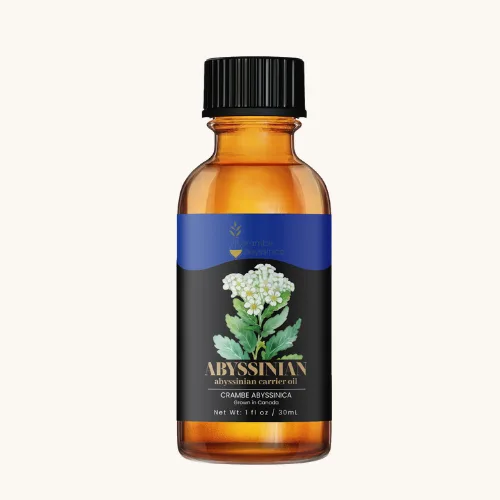
Abyssinian Oil
Cold-pressed Abyssinian oil, in sizes from 0.5 oz to bulk.
From $11.99
Shop Abyssinian Oil →Up high, with the cap on
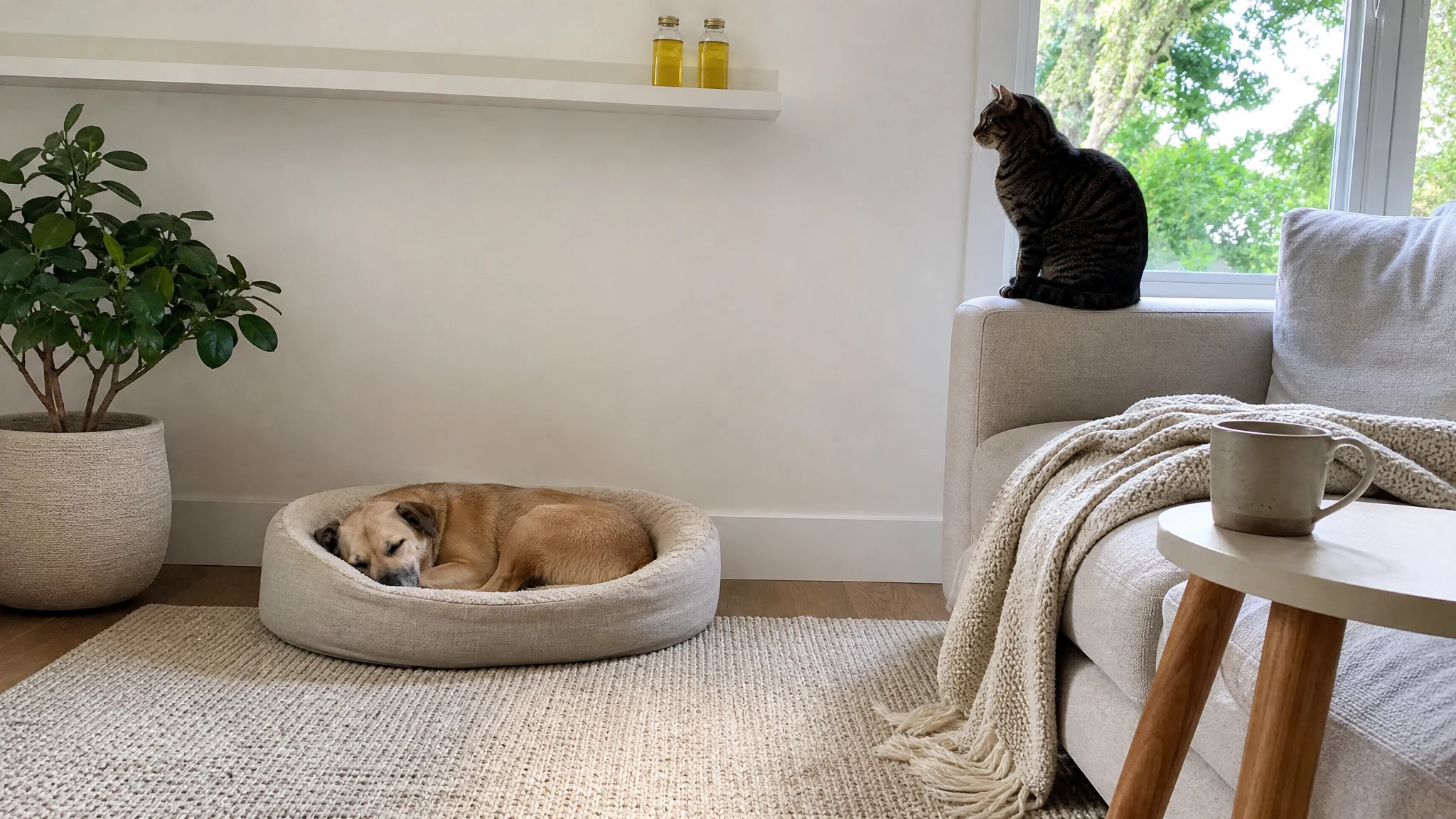
The ASPCA's one-line storage rule is to keep oils "up and out of paws' reach." We would add the obvious companion: closed. A bottle on a high shelf with its cap off is only half a plan. Small roller bottles deserve special attention because they are the right size for a dog to carry off and chew, and a cat can bat one off a bedside table in a moment. A closed drawer or a lidded box is better than a shelf a determined pet might reach.
If you keep Abyssinian oil, our storage guide covers keeping the oil itself in good condition, and a closed cupboard fits both jobs.
Diffusers get a position, not just a plug
The ASPCA says short use in a secured area your pet cannot enter is unlikely to be a problem, and that you should skip diffusers altogether if your pet has breathing problems, since a pet's sense of smell is far stronger than ours. It also asks you to put any diffuser where it cannot be knocked over, and to avoid them in homes with birds, whose respiratory tracts are very sensitive; rabbits, guinea pigs and hamsters raise similar concerns. Pet Poison Helpline adds a distinction worth knowing: reed and other passive diffusers mainly irritate the airways, while active ultrasonic and nebulizing ones also release droplets that can settle on fur.
In practice that points to a closed room with the door shut, not the living room the dog sleeps in, and a stable surface well above floor level. If a pet starts coughing, drooling or breathing hard, Pet Poison Helpline's advice is to move it into fresh air and get emergency veterinary care if it does not settle quickly.
Spills and laps
The ASPCA notes that dogs and cats that walk through oils or get them on their coats can develop health problems, and it warns against putting essential oils directly on a pet. So a spill is worth treating as more than a stain. Our reasoning is simple: mop it up straight away, keep the animal out of the room until you have, and wash the spot, because a pet that steps in oil will lick its paws. Our guides to removing oil stains and oil on sheets and furniture cover the fabric side.
The same thinking applies to you. Give body oil or hair oil a few minutes to sink in before you hand your lap or your pillow over to a pet who licks.
Blends are the careful part
A plain oil and a scented blend are different conversations, and we keep them in separate posts. The dog-specific guidance is in Abyssinian oil and dogs, and Abyssinian oil and cats explains why cats come first when anyone worries about essential oils. If you make your own blends, remember that concentrated essential oils should never be applied directly to cats or dogs, according to Pet Poison Helpline.
Two numbers worth putting on the fridge
Write down your vet's number, the nearest emergency clinic, the ASPCA Animal Poison Control Center at (888) 426-4435, and Pet Poison Helpline at (855) 764-7661, which is staffed around the clock and charges a per-incident fee covering follow-up calls. Both of the poison lines also say to call straight away if you suspect your pet has been exposed. Keep the product name and ingredients handy for the call.
A tidy shelf, a closed door and a few numbers on the fridge are most of what a pet household needs.
Abyssinian Oil
Cold-pressed Abyssinian oil, from a small bottle to bulk sizes.
From $11.99
Shop Abyssinian Oil →Sources & Further Reading
- The Essentials of Essential Oils Around Pets, ASPCA
- Updates on Essential Oils, Pet Poison Helpline
- 24/7 Animal Poison Control Center, Pet Poison Helpline