Is Abyssinian Oil Safe for Dogs? What to Know First
You rub body oil into your arms, and a minute later the dog is licking your wrist. It happens in plenty of homes, and it raises a fair question about what a plant oil does once it reaches a dog's mouth. Here is what veterinary sources give us to work with, and where the honest answer is a phone call to your vet.
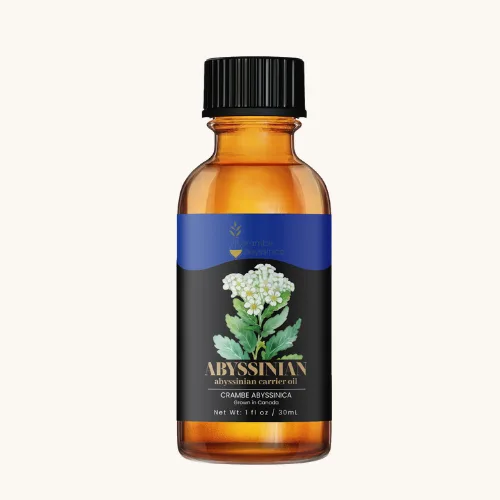
Abyssinian Oil
Cold-pressed Abyssinian oil, in sizes from 0.5 oz to bulk.
From $11.99
Shop Abyssinian Oil →Why we won't give you a verdict
We sell Abyssinian oil as a cosmetic oil for people's skin and hair. It is not a pet product, and we would never present it as one. We have not found a veterinary or poison-control source that evaluates Abyssinian oil for dogs, so we are not going to hand you a yes or a no. What those sources do offer is a clear way to think about the three different things that can be going on when oil and dog meet.
A lick of plain oil is a question about fat
The Merck Veterinary Manual's owner guide says that eating trash, large amounts of table scraps or other inappropriate food is believed to be a common risk factor for pancreatitis in dogs. Vomiting and abdominal pain are among the most common signs of the severe form, and milder cases may show up only as a dog who eats less, seems sluggish or has loose stools.
Merck does not mention cosmetic oils, so what follows is our own reading. A plant oil is all fat, which suggests that quantity is what matters: a lick of a wrist is a very different event from a tipped bottle or a licked-out jar. If a dog has gotten into a real amount of oil and then vomits, seems to hurt or goes quiet, that is a reason to call your vet that day, not to wait it out.
Scented blends change the question
Poison-control guidance gets much more specific once essential oils are in the picture. Pet Poison Helpline calls tea tree the most common essential oil toxicity it sees in dogs, and says the trouble comes from concentrated products rather than the very dilute amounts in some dog shampoos. Both skin and mouth exposure can cause problems with tea tree and pennyroyal, and pine and wintergreen oils are on its watch list too. The ASPCA says undiluted oils can be dangerous to pets, that tea tree can cause problems at as few as seven or eight drops, and that essential oils should not be applied directly to a pet. Dogs that walk through spilled oil or get it on their coats can fall ill as well.
So if your carrier oil has been blended with essential oils, the blend is the thing to read about, not the carrier. Our worked-out dilution guide, essential oil dilution with Abyssinian oil, is written for human skin; it does not make a blend suitable for a dog, and neither does any percentage.
Who to call, and one thing not to do
Your veterinarian comes first, ideally before anything oily goes on or near a pet. If you think a dog has swallowed or been coated with oil, call your vet or one of the two animal poison lines right away: the ASPCA Animal Poison Control Center at (888) 426-4435, or Pet Poison Helpline at (855) 764-7661, which answers around the clock and charges a per-incident fee that includes follow-up calls. Have the product name and its ingredient list in your hand when you dial.
Pet Poison Helpline also advises against making a dog vomit after oil products, because oil can be breathed into the lungs on the way back up. That is one of those instincts worth setting aside until a professional tells you otherwise.
Small habits that keep it simple
Most of the worry goes away with ordinary housekeeping: caps back on, bottles on a high shelf, oil given a few minutes to sink in before your dog gets a lap. Our checklist, oils and pets at home, covers storage, diffusers and spills in one place, and Abyssinian oil and cats explains why cats need an even more careful approach. For your own skin, our patch test guide is the place to start.
Whatever is in your bathroom cabinet, the vet who knows your dog's age, weight and history is the right person to ask about it.
Abyssinian Oil
Cold-pressed Abyssinian oil, from a small bottle to bulk sizes.
From $11.99
Shop Abyssinian Oil →Sources & Further Reading
- Pancreatitis and Other Disorders of the Pancreas in Dogs, Merck Veterinary Manual
- Essential Oils Are Toxic to Dogs, Pet Poison Helpline
- The Essentials of Essential Oils Around Pets, ASPCA
- 24/7 Animal Poison Control Center, Pet Poison Helpline