How to Wash Oil Out of Hair: Shampoo Before You Wet It
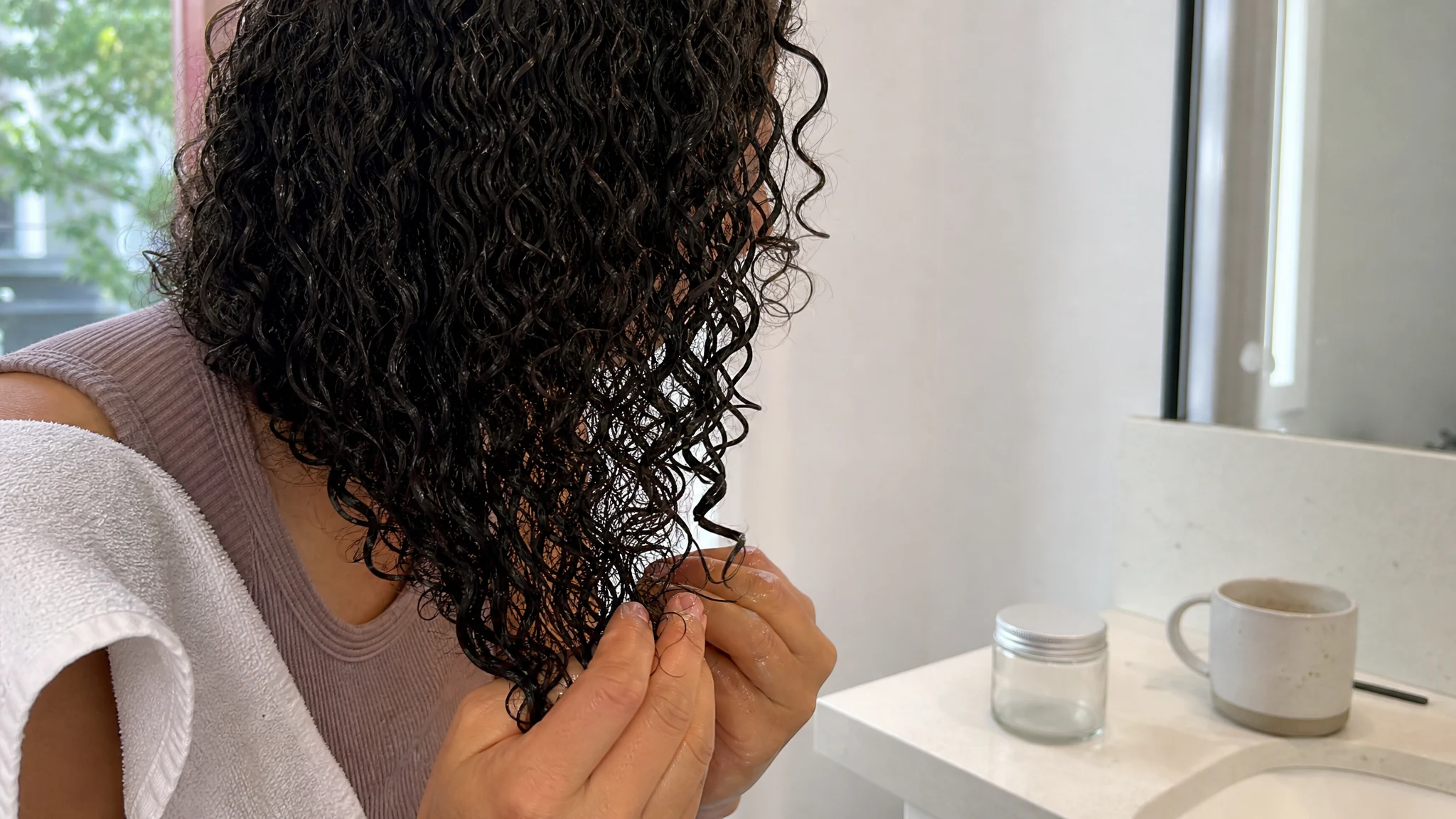
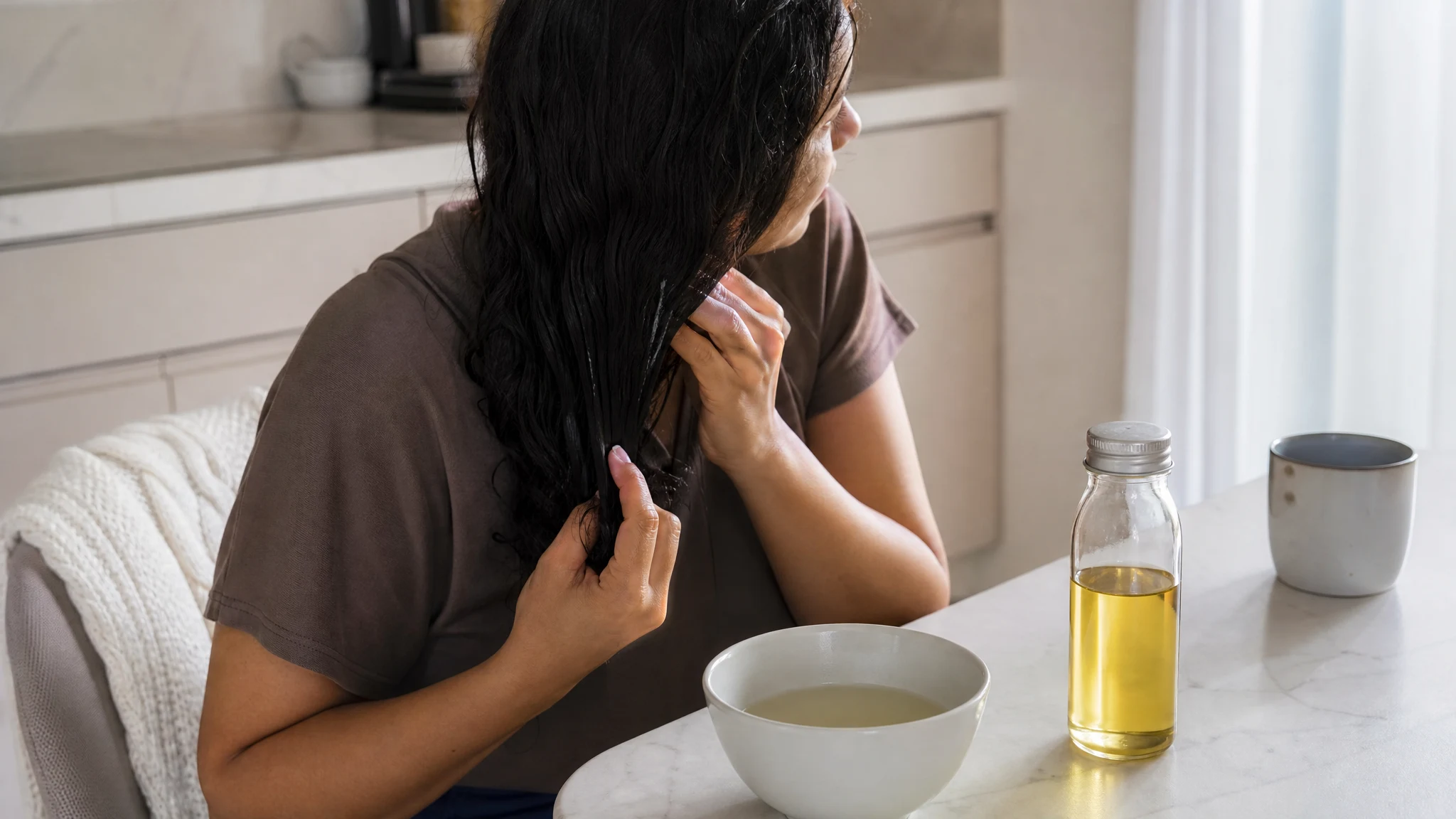
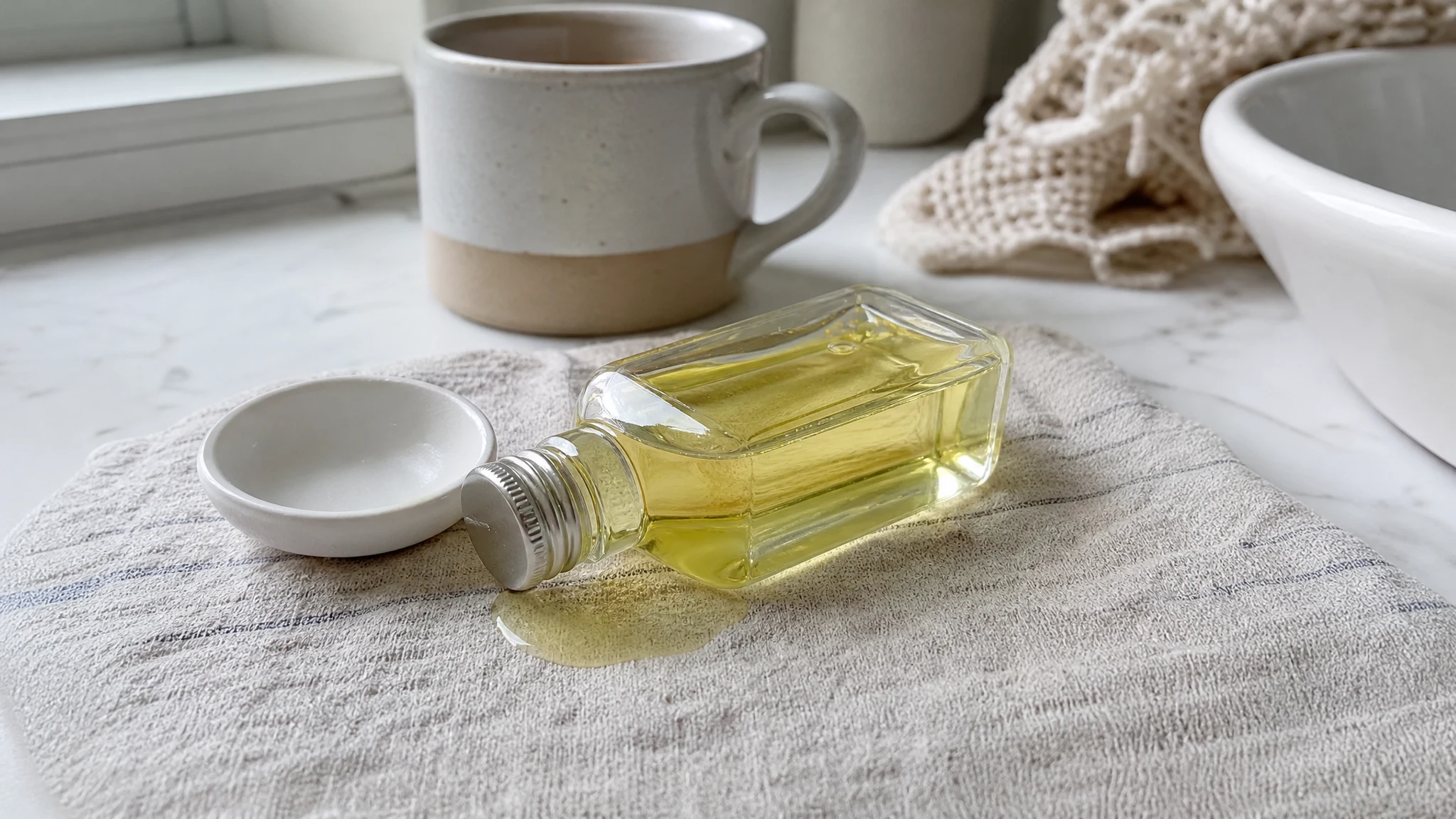
You know the feeling: hair that looks darker, clings together in strands and falls flat against your head, because a little more oil went on than it could carry. The instinct is to get in the shower, soak everything and lather up. That is the wrong order, and a small change in sequence does most of the work.
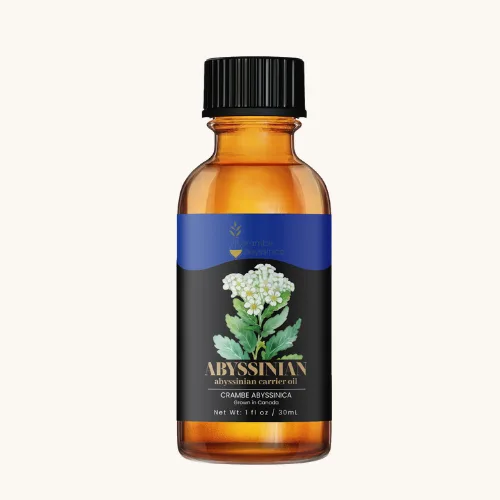
Abyssinian Oil
Cold-pressed Abyssinian oil, in sizes from 0.5 oz to bulk.
From $11.99
Shop Abyssinian Oil →Why water alone gets you nowhere
Oil and water do not mix, and a hair-science review in the International Journal of Trichology puts the same point in its own terms: the residues on hair are nonsoluble fats that do not dissolve with water. Shampoo works because its surfactants have a water-loving end and an oil-loving end. The paper describes them weakening the forces that hold residues to the hair, then forming micelles, tiny clusters that carry the oil away in the rinse.
That suggests a practical conclusion, and this part is our reasoning rather than a quoted finding. If you wet your hair first, water coats the strands and the oil sits beneath a film of it, so the shampoo meets less oil and spreads thinner. Shampoo applied to dry hair meets the oil directly.
The order that works
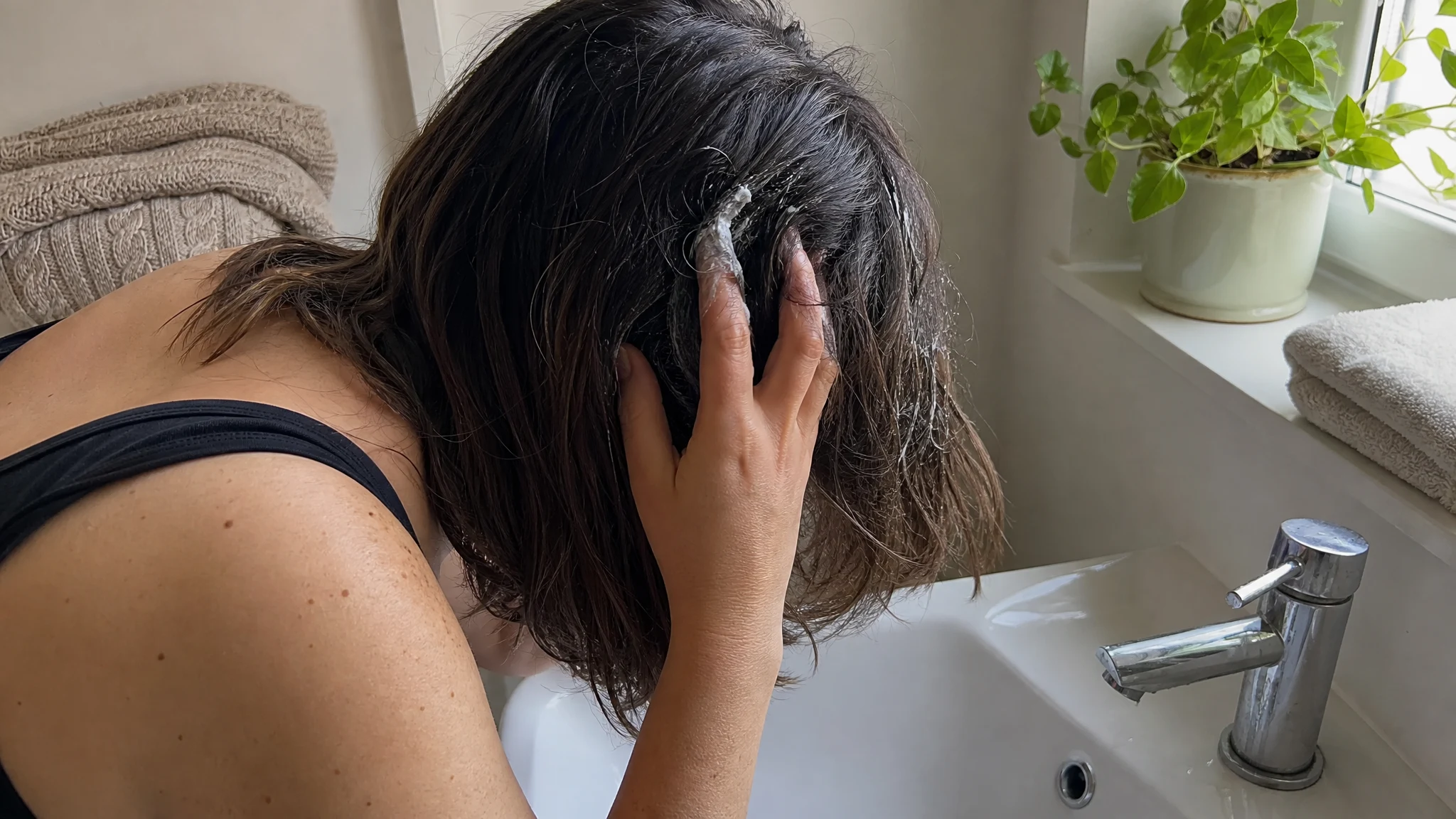
- Shampoo on dry hair. Pour a coin-sized amount into your palm, spread it between your hands and work it through the oily sections with your fingertips. Do not add water yet. Give it a minute or two.
- Add water slowly. A little at a time, until it lathers. The oil lifts into the foam.
- Rinse well, then go again. Cleansing twice is the same idea as a double cleanse on the face: the first lather loosens most of the oil and the second finishes the job. If the second lather is rich and bubbly, you are done.
- Condition the ends only. The AAD advises shampooing the scalp rather than scrubbing the whole length, so let the suds run down through the lengths as you rinse, then put conditioner where hair is driest, from the mid-lengths down.
Surfactants are strong cleaners, and the same review notes that anionic surfactants, the common kind, are very good at removing sebum and dirt. So a second lather is a good move for an oily day, and an easy one to skip on an ordinary wash.
When there is no time for a wash
Dry shampoo is a fair stopgap for a morning run. Dermatologists quoted by the American Academy of Dermatology say it absorbs excess oil on dry hair so it looks cleaner between washes, but it does not clean hair, and regular shampoo and water are still needed. Concentrate it at the roots or on the greasy spots, use a small amount at a time, and wash after one or two uses. A loose braid or low bun also hides slickness while you wait for wash day.
Using less next time
Oil is worth having in your routine, and a sensible amount looks like a soft finish rather than a wet one. Our Abyssinian oil is a light golden oil that we describe as lightweight and non-greasy, which helps, but how much you use matters more than which oil it is. Fine hair gets there fastest, so our guide to Abyssinian oil for fine hair is a good place to calibrate. Hair porosity and oil explains why the same drop behaves differently on different heads, and a weekly hair-oiling rhythm makes the timing of wash day easy to plan around. Skin and hair vary from person to person, so patch test a new product first and keep it away from your eyes.
If you are managing a persistent scalp concern such as itching or flaking, that belongs with a dermatologist, and what we sell is a cosmetic oil. For a simple case of too much oil on an otherwise normal day, though, dry hair, shampoo, a slow addition of water and a second round is all it takes.
A good wash day is mostly sequence, and now that you know the sequence, the evening is yours.
Abyssinian Oil
Cold-pressed Abyssinian oil, from a small bottle to bulk sizes.
From $11.99
Shop Abyssinian Oil →Sources & Further Reading
- Hair Cosmetics: An Overview (Dias MFRG, International Journal of Trichology, 2015)
- Dry shampoo: Dermatologists' tips for getting your best results (American Academy of Dermatology)
- Tips for healthy hair (American Academy of Dermatology)