Abyssinian Oil vs Squalane: Whole Oil or Single Molecule?
Squalane and Abyssinian oil often turn up in the same conversation, because both are described as light, silky and easy to wear. Underneath, though, they are built in completely different ways. One is a single, carefully purified molecule. The other is a seed oil, a mixture of fats with a long-chain fatty acid story to tell.
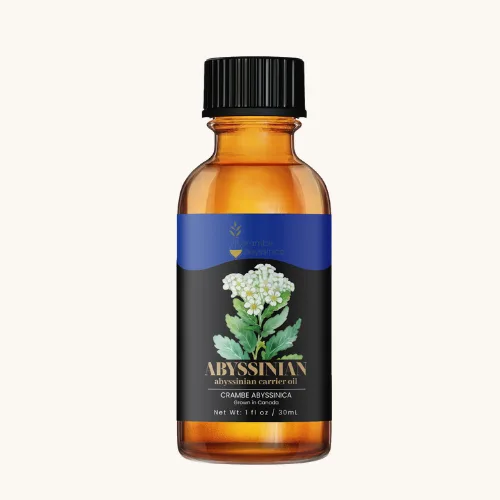
Abyssinian Oil
Cold-pressed Abyssinian oil, in sizes from 0.5 oz to bulk.
From $11.99
Shop Abyssinian Oil →One molecule, one job
Squalane starts life as squalene, a hydrocarbon with thirty carbons and six double bonds that plants and animals make as a step on the way to sterols (a review of how it is obtained sets this out). Hydrogenate it, which means saturate every one of those double bonds with hydrogen, and you get squalane. Olive by-products are one researched source: a 2025 study took squalene from olive pomace and hydrogenated it to squalane.
The result is a hydrocarbon, not a fat. It has no glycerol backbone and no fatty acids, only a long, branched, fully saturated chain. That is why squalane behaves so predictably: with no double bonds left, there is very little in the molecule for oxygen to attack. That is our reasoning from the chemistry, and it explains why formulators like it as a quiet, steady, slip-giving ingredient. The Expert Panel for Cosmetic Ingredient Safety reconfirmed in 2023 that squalane and squalene are safe as used in cosmetics.
A whole oil is a different animal
Abyssinian oil, pressed from Crambe abyssinica seed, is a triglyceride oil: glycerol with three fatty acids attached. What makes it unusual is which fatty acids. Published figures put erucic acid, a 22-carbon monounsaturated fat, at roughly 55 to 60 percent of crambe seed oil, with oleic, linoleic and linolenic acids making up much of the rest (Purdue's crop profile lists about 15, 10 and 7 percent). Those are general figures for crambe oil, and we cover the profile in more depth in our fatty acid profile post.
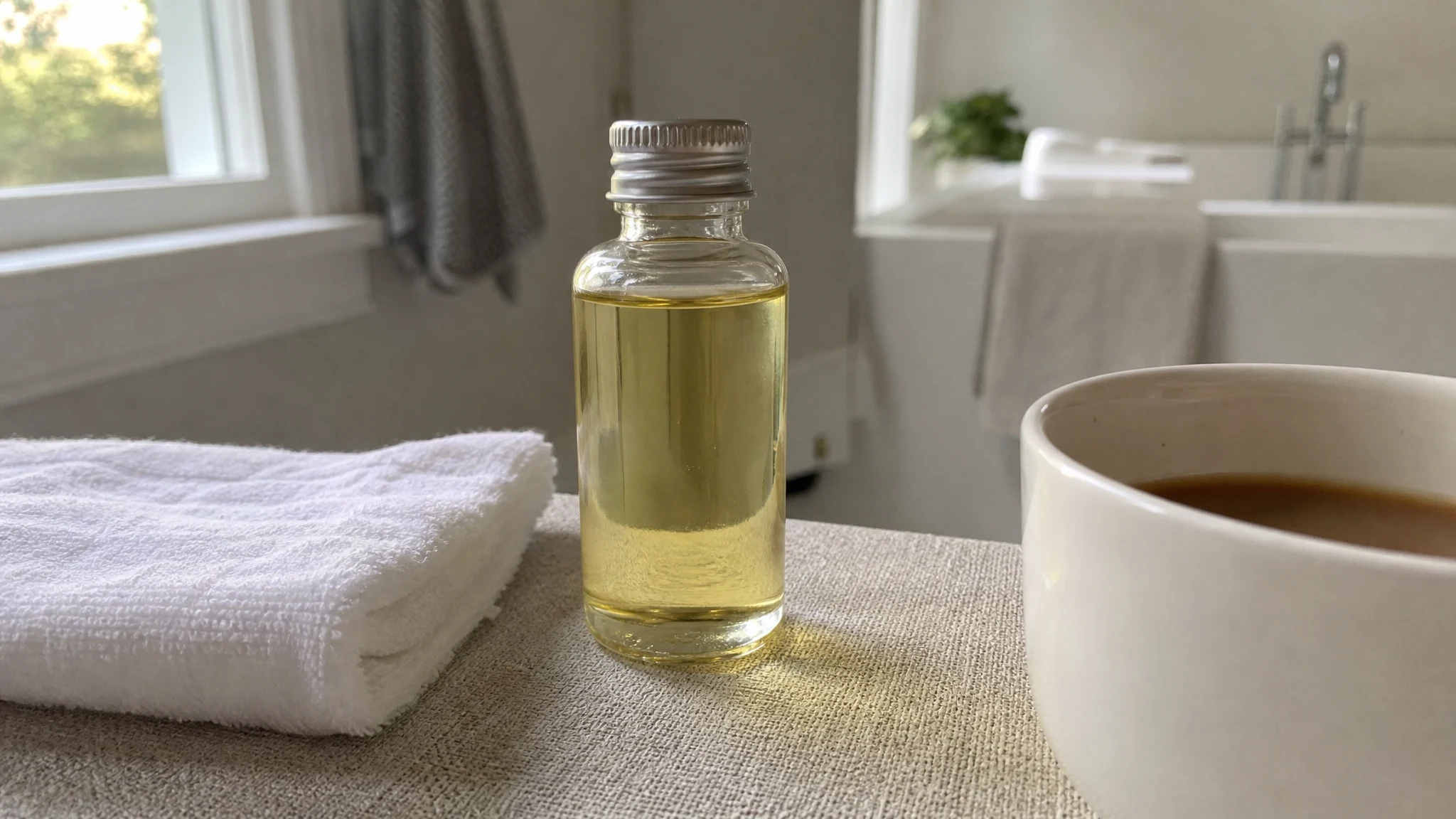
Long chains with a single double bond give an oil a glide and a cushion that a short, saturated hydrocarbon does not copy. Our Abyssinian oil is cold-pressed, light and golden with a mild nutty aroma, lightweight and non-greasy on the skin. Squalane is, by design, a molecule with nothing to say about aroma or colour at all. If you like a trace of character in what you use, that is a real difference, and one worth deciding on.
Which one we would reach for
Here is our editorial judgment, built from the chemistry above rather than from any head-to-head trial. Choose squalane when you want the plainest, most inert emollient you can get: a base for a formula that must stay neutral, or a finishing touch where you want slip and nothing else. We do not sell it, and for that job it is a very good ingredient. You will find it at a pharmacy or craft supply shop.
Choose Abyssinian oil when you want a whole seed oil that is still light: a nutty trace, a golden colour, a fatty acid make-up of its own, and a name on the label that tells a plant story. It is also a natural fit alongside other oils; our carrier oil comparison shows where it sits among them, and our post on oily-feeling skin covers how light oils behave on a shiny T-zone.
One practical note on stability. Squalane's saturated structure and a long-chain oil's single double bond are two different routes to steadiness, which we unpack in our oxidative stability guide. Neither replaces storing a bottle cool, dark and tightly capped. And with any new skin product, patch test before first use and avoid eye contact, because skin varies from person to person.
Reading the label
On an ingredient list, squalane appears as Squalane. Abyssinian oil appears as Crambe Abyssinica Seed Oil, a naming twist we sort out in our names and INCI post. Since there are several ways to make squalane, it is fair to ask any maker which one they use, the same way you would ask any oil supplier to document where their oil comes from.
The two are not rivals so much as different tools. Squalane is a polished, precise ingredient and Abyssinian oil is a character oil, and a well-stocked shelf has room for both.
Abyssinian Oil
Cold-pressed Abyssinian oil, from a small bottle to bulk sizes.
From $11.99
Shop Abyssinian Oil →Sources & Further Reading
- Methods for obtaining and determination of squalene from natural sources (BioMed Research International, 2015)
- From Olive Pomace to Squalane: A Green Chemistry Route Using 2-Methyltetrahydrofuran (ACS Omega, 2025)
- Squalane and Squalene (Expert Panel for Cosmetic Ingredient Safety, 2023)
- Crambe abyssinica Hochst. ex R.E.Fries (Purdue NewCROP)