Abyssinian Oil vs Hemp Seed Oil: Stability and Scent
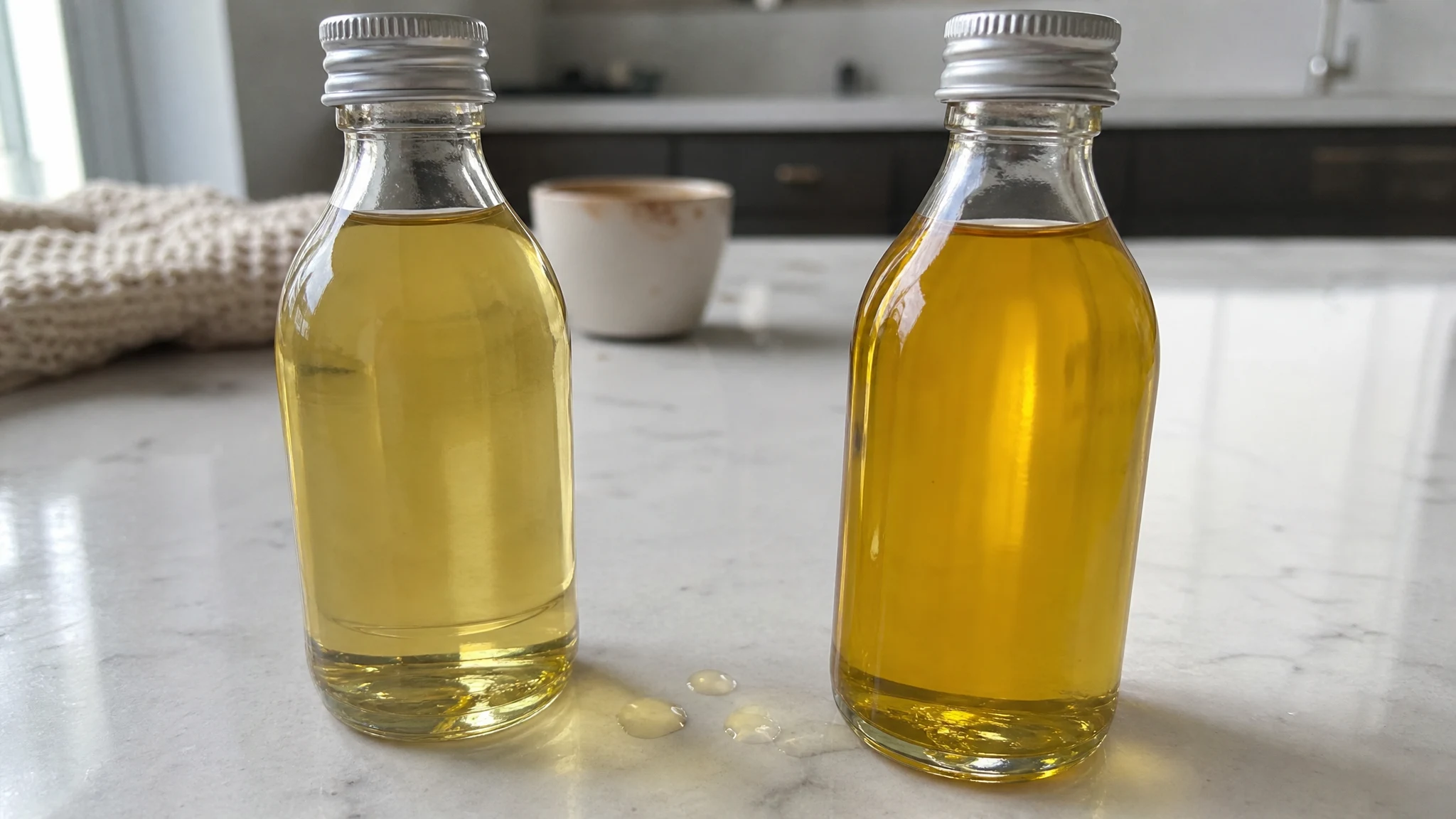
Omega-3 looks great on a product label, so a skin oil with plenty of it feels like a bonus. Hemp seed oil really does carry some. The twist is that the very feature that makes it interesting on paper also makes it a bottle you have to look after. Abyssinian oil is built the other way round, and the contrast says a lot about how to choose between them.
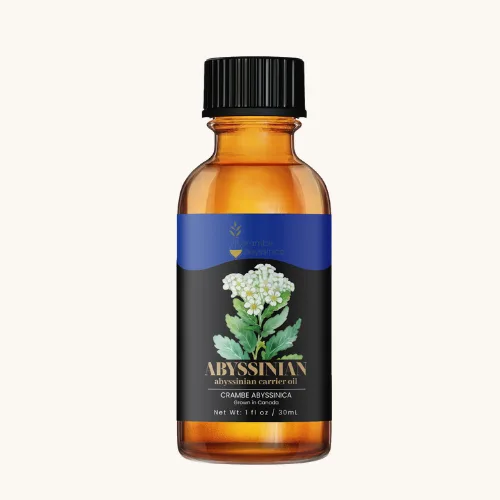
Abyssinian Oil
Cold-pressed Abyssinian oil, in sizes from 0.5 oz to bulk.
From $11.99
Shop Abyssinian Oil →Counting double bonds
Fatty acids with several double bonds are the ones that react with air first. Hemp seed sits at the crowded end. In a 2026 study of six Romanian hemp varieties, linoleic acid reached about 56% of the seed's fatty acids and alpha-linolenic acid up to 19.76%. So most of the seed's fat is made of acids with two or three double bonds.
A broader review of cold-pressed oils puts a number on it with iodine value, which rises with unsaturation: 160 to 170 for hempseed oil, against 85 to 95 for avocado. The same review notes that polyunsaturated oils, hempseed among them, show higher peroxide values than monounsaturated ones, and that light, oxygen, temperature and packaging decide how long they keep. It mentions amber or UV-protective packaging as one answer.
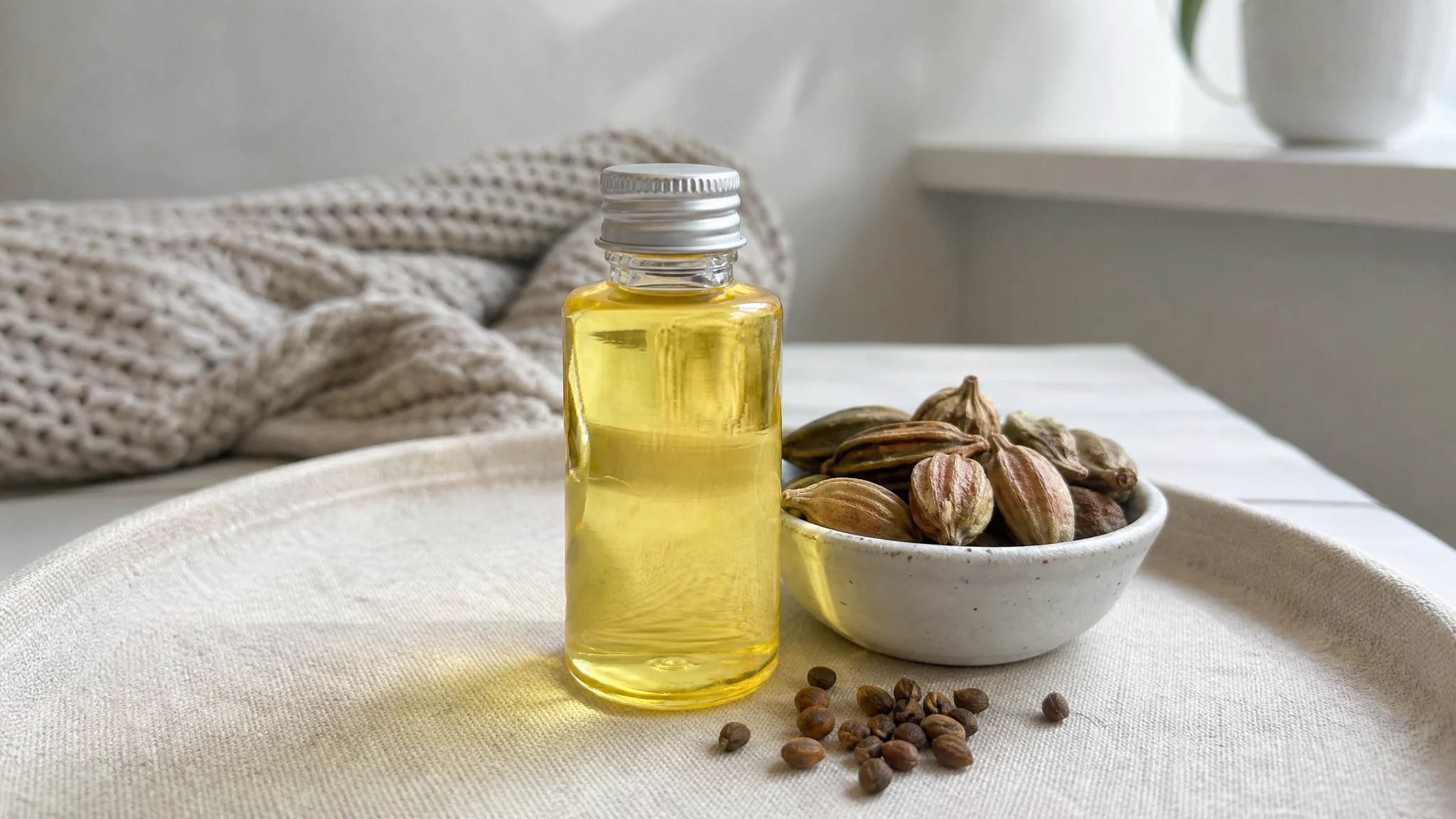
Now crambe. General analyses report erucic acid at 55 to 60%, oleic around 15%, linoleic around 10% and linolenic around 7%. Most of that is monounsaturated, or has very few double bonds to give. One supplier monograph calls the oil highly resistant to oxidation and quotes a shelf life of three or more years, though another datasheet says two years. So the two sources disagree, which is a good reason to ask any supplier for the date, and a reminder that figures for crambe oil in general are not a statement about any single bottle. Our piece on why Abyssinian oil holds up goes deeper, and its fatty acids explained is the place for the full chemistry.
What that means at home
If you do buy a hemp seed oil, treat it as a produce item rather than a pantry staple:
- Choose a small bottle you will actually finish.
- Keep it capped, away from heat and sunlight.
- Smell it when you open it, so you know what fresh smells like, and trust your nose later.
Our guide to storage and the smell test applies to every oil on your shelf, ours included.
The scent question
Aroma is the one area where we would not hand you a rule. Plant oils vary with the seed, the pressing and the age of the bottle, so what you smell in one hemp seed oil may not match the next. Ours has a mild, nutty aroma that stays politely in the background. If you want something close to scent-free for a blend, read our notes on choosing a low-scent carrier oil, and in every case open the bottle and smell before you commit.
Who should pick which
Hemp seed oil is the choice if the omega-6 and omega-3 makeup is what draws you in and you are happy to manage a short shelf life; you will find it at a grocery store or craft supply shop, in a skin-care grade. Abyssinian oil is the choice if you want a light golden oil that will sit on your shelf without drama and leave skin feeling soft and smooth. As always, patch test before first use and avoid eye contact.
It comes down to what you value in a bottle, a headline fatty acid or a long, quiet shelf life, and either answer is a perfectly reasonable one.
Abyssinian Oil
Cold-pressed Abyssinian oil, from a small bottle to bulk sizes.
From $11.99
Shop Abyssinian Oil →Sources & Further Reading
- Foods (2026), Nutritional Contribution and Bioactive Properties of Romanian Monoecious Hemp Seed (Cannabis sativa L.) Varieties for Potential Food Applications
- Frontiers in Nutrition (2026), Cold pressed oils: a systematic review on physicochemical properties, nutritional composition and pharmacological activities
- Purdue NewCROP, Crambe abyssinica Hochst. ex R.E.Fries
- Botanical Formulations, Abyssinian (Crambe) Seed Oil