Abyssinian Oil vs Olive Oil for Skin and Hair
Olive oil has earned its place in the kitchen, and it has an even older career in the soap pot. Asking whether it belongs on your face or in your hair is a fair question, because it is probably already in your cupboard. Our honest answer: it is a wonderful oil, just not the one we would choose for a light finish.
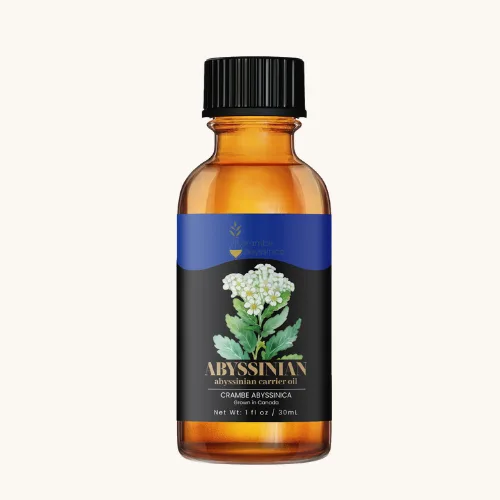
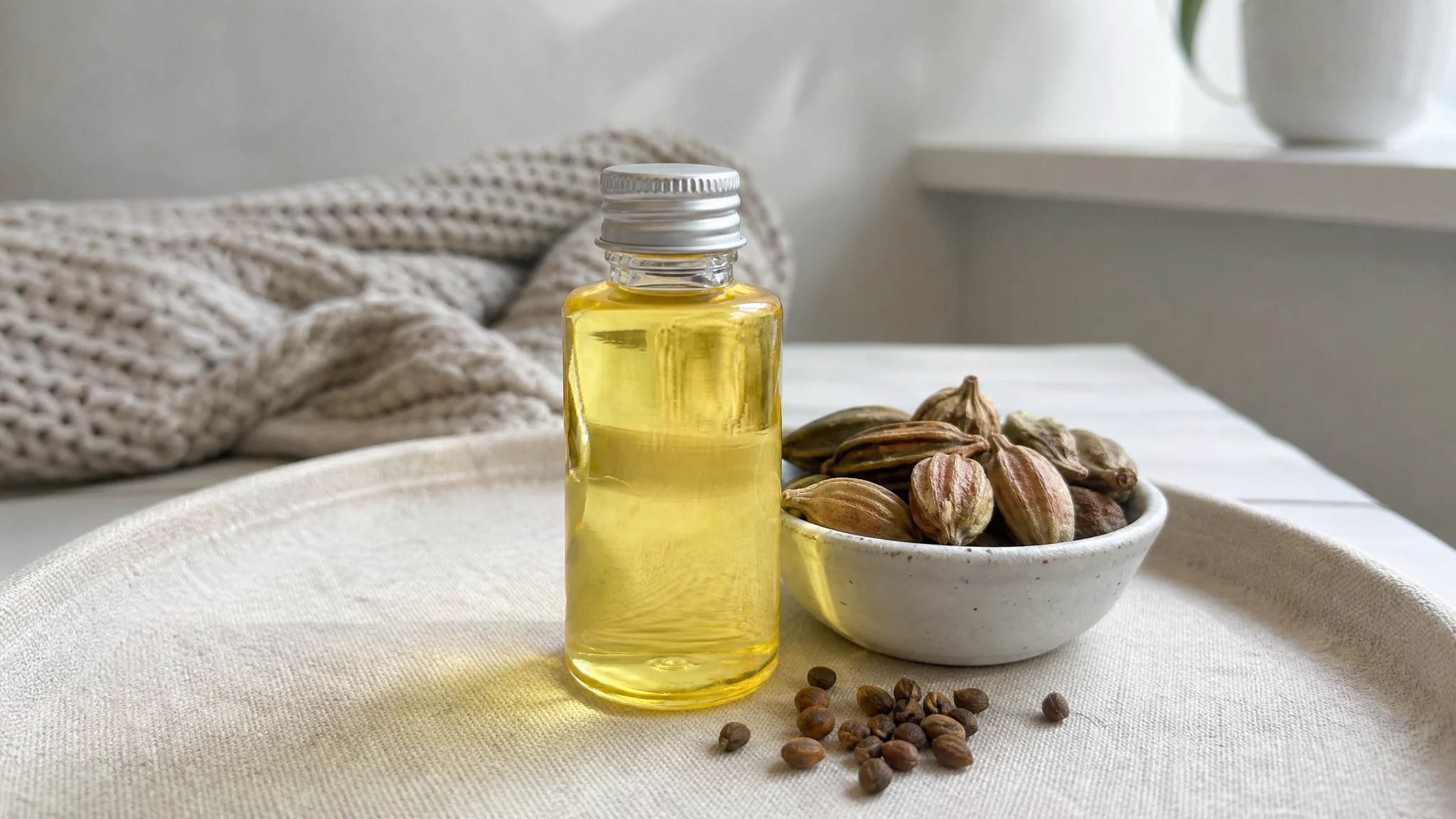
Abyssinian Oil
Cold-pressed Abyssinian oil, in sizes from 0.5 oz to bulk.
From $11.99
Shop Abyssinian Oil →What olive oil does brilliantly
In food, olive oil needs no defence from us. In soap, a 2024 review of plant-based cosmetic oils notes that olive oil is used to make castile soap, the long-standing hard soap built on olive oil and lye. In soap, a rich, oleic-heavy oil is doing what it does best. Olive oil also turns up in cosmetics, and the same review calls it an excellent moisturizer, particularly on wet skin, and says it can serve as a second skin barrier for dry, cracked skin in winter. So there is a role for it on skin, just a heavier one.
The weight is the whole story
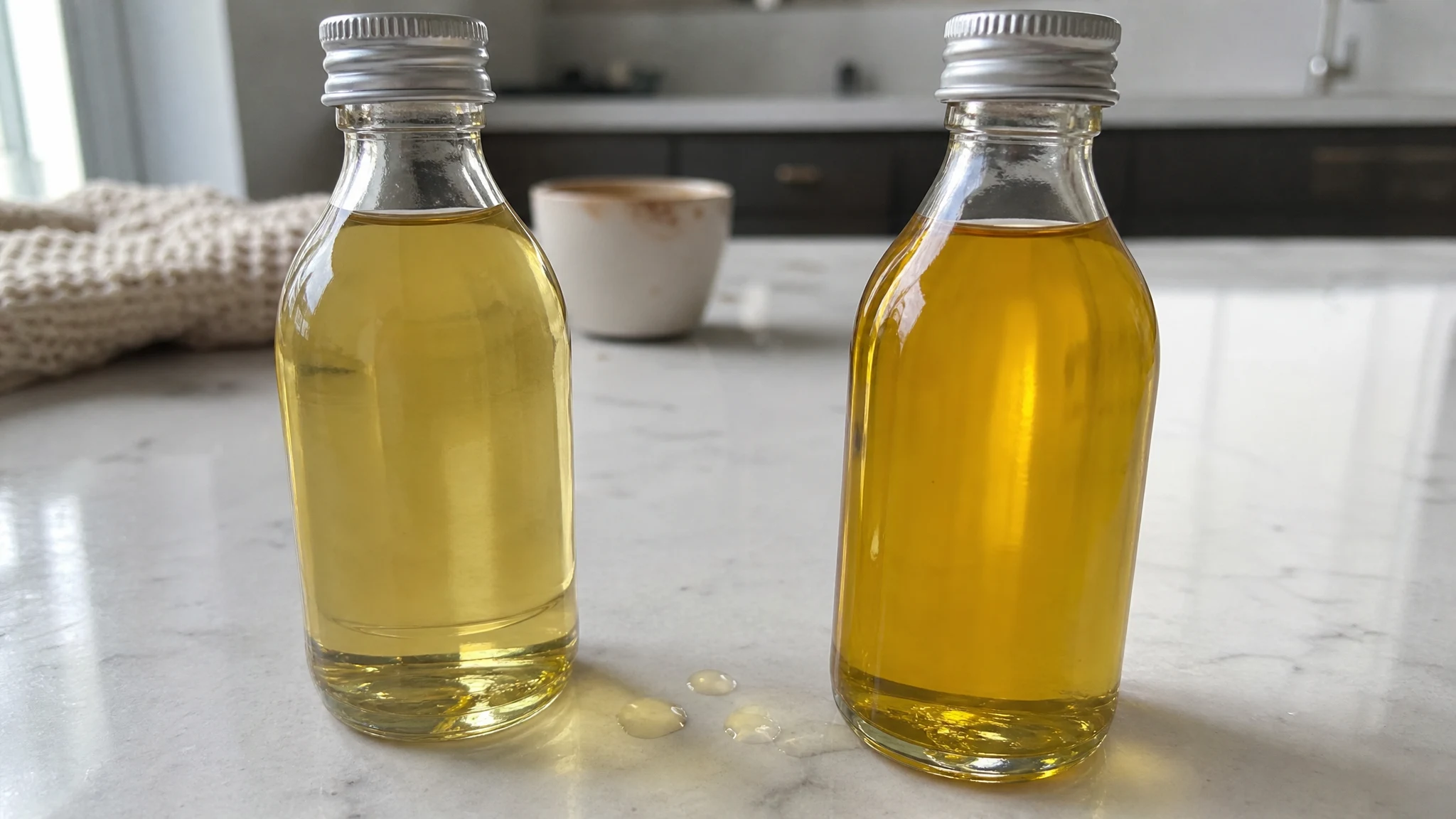
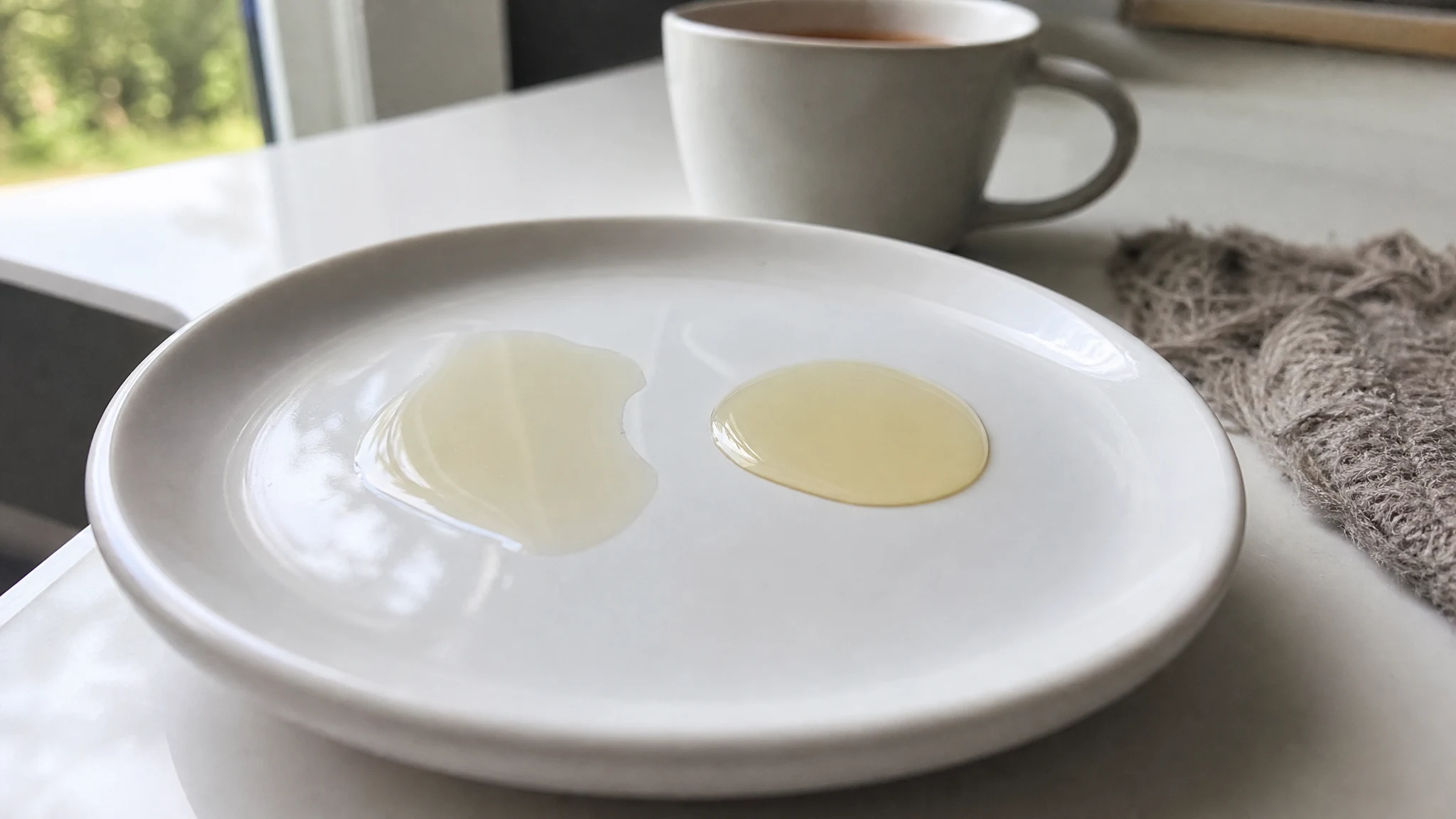
That review lists a greasy texture among olive oil's drawbacks, and puts oleic acid at 55 to 83 percent of the fatty acids, with only 3.5 to 21 percent linoleic. A high-oleic oil tends to feel rich and slow to sink in; that is our reading of the composition, and it is why we would go easy with it on fine hair. Our oil sits at the other end of the scale. We describe it as lightweight and non-greasy, a light golden oil with a mild nutty aroma, and published analyses of crambe oil in general point to long-chain fatty acids rather than the oleic-heavy profile. If you want to see how that plays out for strands, our guide to fine hair and lightweight shine is the place to look.
A note on skin
One study is worth knowing about, kept in proportion. In a 2013 study from Pediatric Dermatology, nineteen adult volunteers applied olive oil to a forearm twice a day, and after four weeks the authors reported a significant reduction in skin-barrier integrity and mild redness, in people with and without a history of atopic dermatitis. They concluded that olive oil should be discouraged for dry skin and infant massage, and that the findings challenge the belief that all natural oils are good for skin. It was a small study of one oil used heavily on bare forearms, so it is not a verdict on every use. It does suggest being thoughtful, and a patch test is the sensible first step with any oil on your skin, including ours.
Scent matters more than you think
Olive oil smells like olive oil, and some people like that and others do not want to smell like a salad. Our Abyssinian oil has a mild nutty aroma, which is a different starting point. If aroma is your deciding factor, our note on low-scent carrier oils compares options, and the carrier oil chart shows how others stack up.
Our verdict
Keep olive oil for cooking and for the soap and balm projects that suit its weight. For a light finish on hair or face, we would choose Abyssinian oil, a few drops warmed between palms. Olive oil can still be a pick for a rich conditioning treatment on coarse hair, if you like it and your skin and scalp agree. Hair and skin vary, so patch test before first use and avoid eye contact. Olive oil is at your grocery store; we sell only Abyssinian oil.
Neither oil is wrong. They simply have different jobs, and it helps to match the oil to the job.
Abyssinian Oil
Cold-pressed Abyssinian oil, from a small bottle to bulk sizes.
From $11.99
Shop Abyssinian Oil →Sources & Further Reading
- A Comprehensive Review of Plant-Based Cosmetic Oils (Virgin Coconut Oil, Olive Oil, Argan Oil, and Jojoba Oil): Chemical and Biological Properties and Their Cosmeceutical Applications (ACS Omega, 2024)
- Effect of olive and sunflower seed oil on the adult skin barrier: implications for neonatal skin care (Pediatric Dermatology, 2013)
- Crambe abyssinica Hochst. ex R.E.Fries (Purdue NewCROP)