Abyssinian Oil vs Baobab Oil: Body Versus Slip
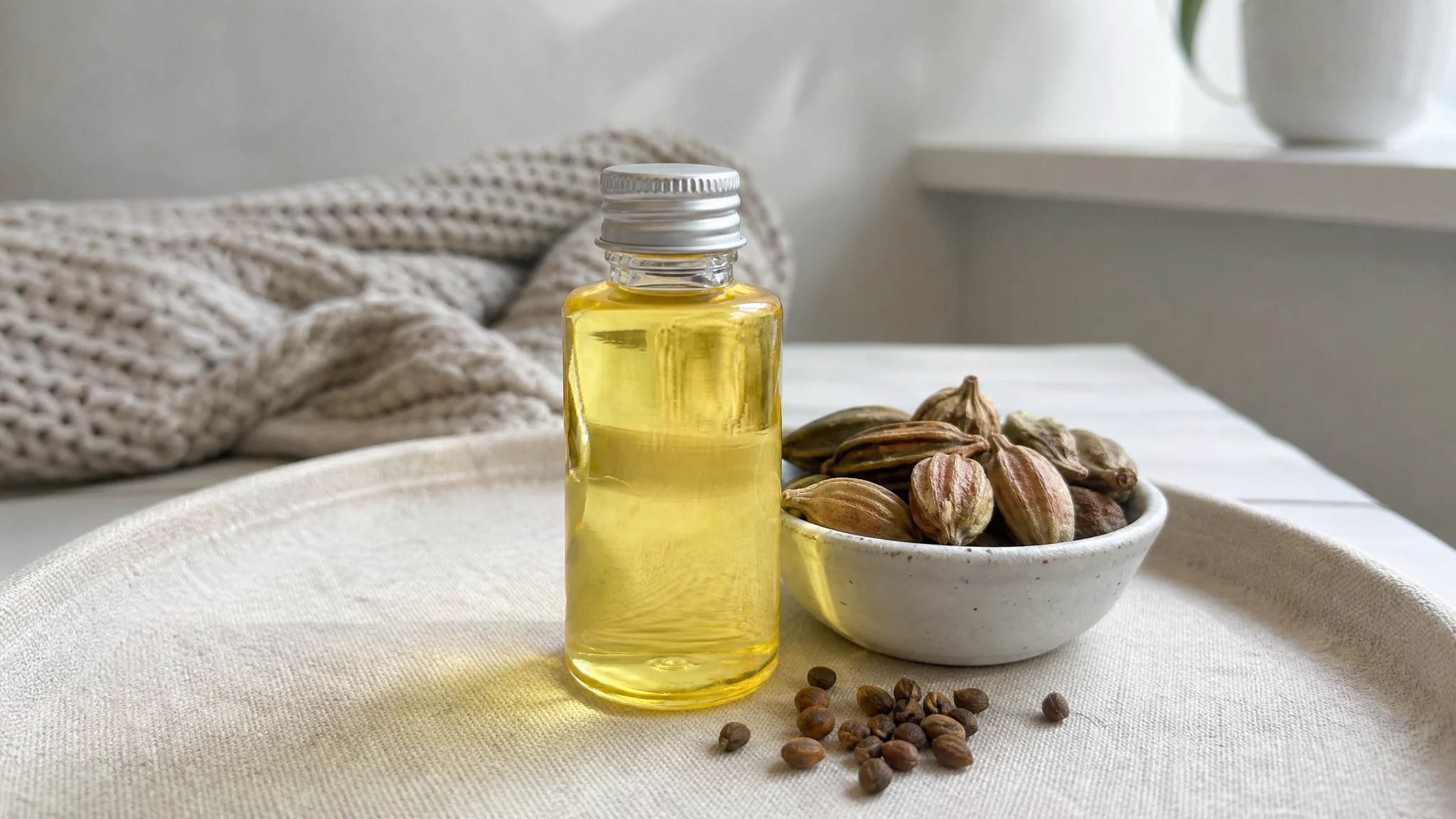
Everyone who has seen a baobab remembers it: a fat, upside-down looking tree that seems to belong to another planet. Its seeds make an oil that gets less attention than the tree, which is a pity, because it behaves very differently from the oil of a modest white-flowered crambe plant. Both come from the African continent. Their texture on your skin is where the family resemblance ends.
Abyssinian Oil
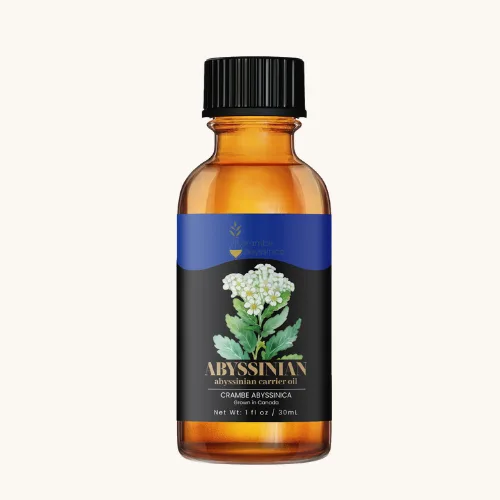
Cold-pressed Abyssinian oil, in sizes from 0.5 oz to bulk.
From $11.99
Shop Abyssinian Oil →Where they come from is the easy part
Baobab grows mainly in sub-Saharan Africa. Crambe is a small annual herb described from East Africa, though the older agricultural literature also mentions the Mediterranean, so we keep our wording to Eastern Africa for the seeds. Origin makes for a nice story on a product page, but it tells you nothing about how an oil feels. For that you need the fatty acids.
A three-way split against a single lead
A 2025 study that pressed baobab seeds at 90 °C found oleic acid at about 37.6%, linoleic at about 28.9% and palmitic at about 23.4%. In a supercritical CO2 extract of the same seeds the palmitic share rose to 30%. Palmitic acid is saturated, and a quarter or more of it gives an oil some body. Baobab is a three-way split of oleic, linoleic and palmitic.
Crambe oil is one-voiced. General analyses put erucic acid at 55 to 60%, with oleic around 15% and linoleic around 10%. Here is how the African oils we compare most often line up, with the usual caveat that these come from different studies and single samples:
| Oil | Leading fatty acids reported |
|---|---|
| Baobab (warm-pressed sample) | Oleic about 38%, linoleic about 29%, palmitic about 23% |
| Marula (one Zimbabwe kernel sample) | Oleic about 73%, linoleic about 8% |
| Crambe (general analyses) | Erucic 55 to 60%, oleic about 15% |
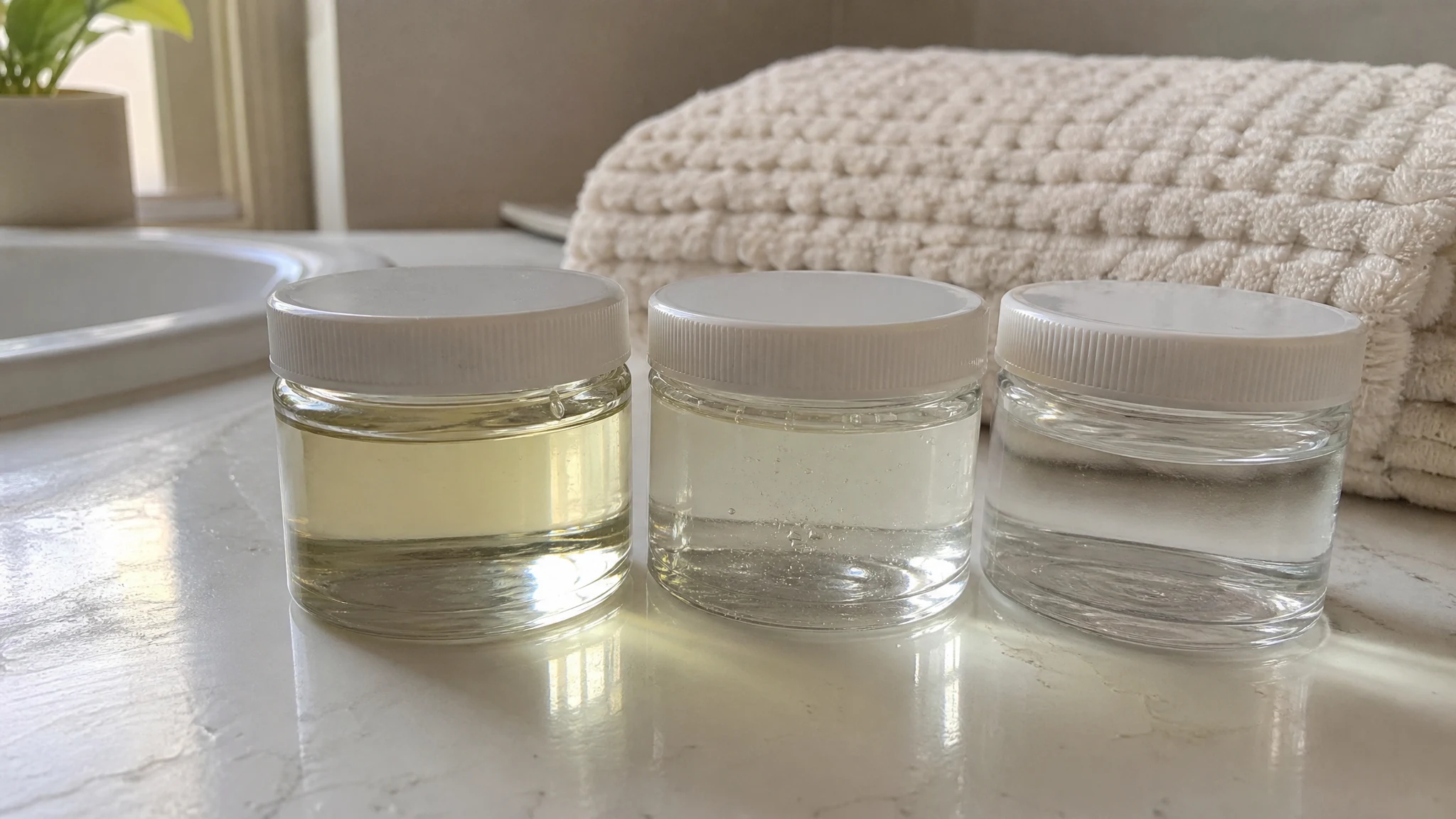
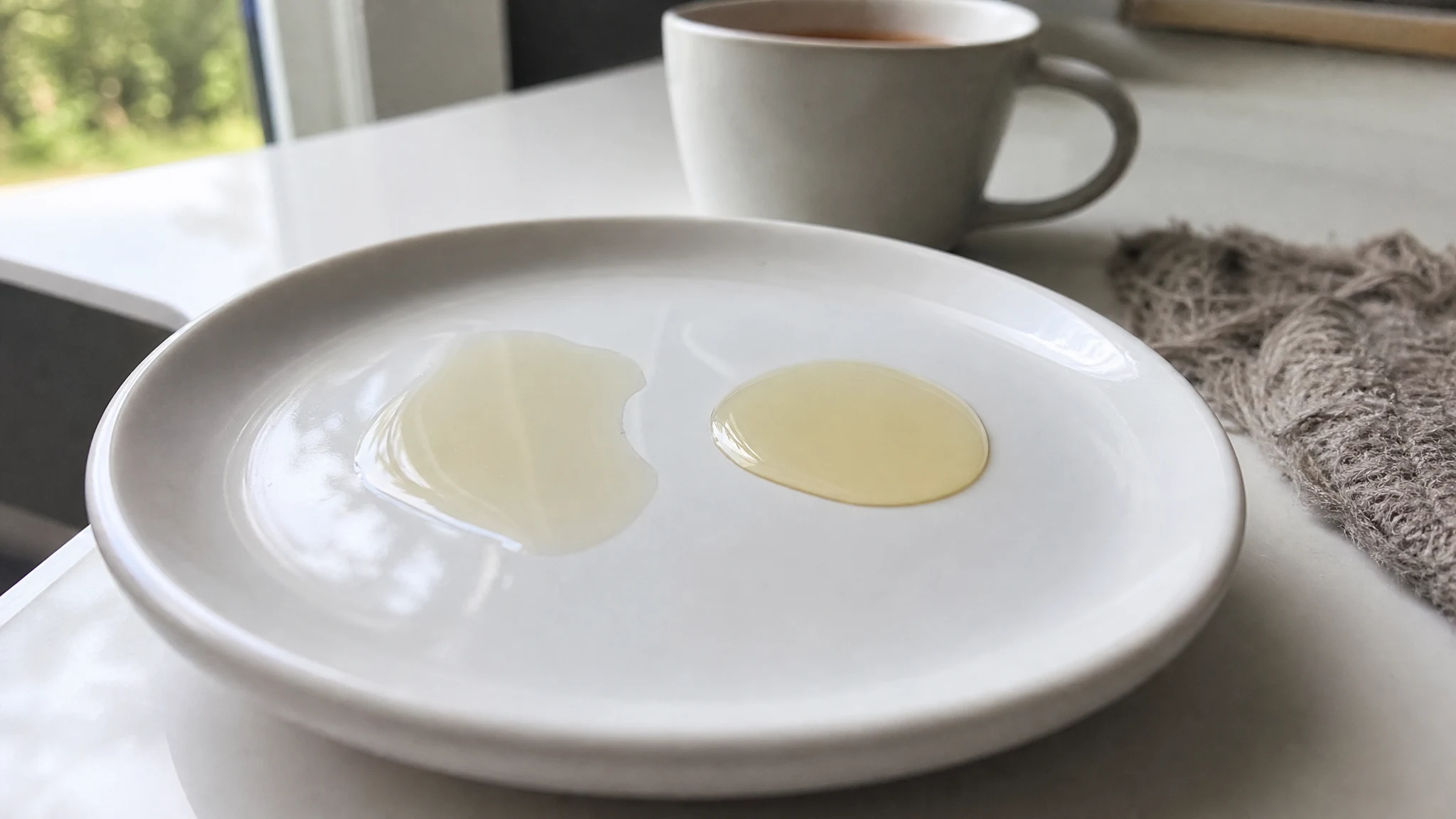
Reading across, marula is oleic-led, baobab is balanced, and crambe is erucic-led. Our reading of that, which is reasoning from the numbers and not a measurement of any bottle, is that baobab sits at the fuller end of the three and Abyssinian oil at the silkier end. We describe ours as lightweight and non-greasy.
Why baobab oil stays a niche oil
The same study offers a small surprise. Warm pressing recovered about 37% of the seed weight as oil, while pressing at room temperature recovered only 5 to 6%. Baobab seeds are tough customers, and gentle cold pressing leaves most of the oil behind. When you see a baobab oil, it is worth knowing that heat or a more elaborate process may have been involved, and that yield is part of why it tends to be a specialty ingredient.
Same seed, different oil
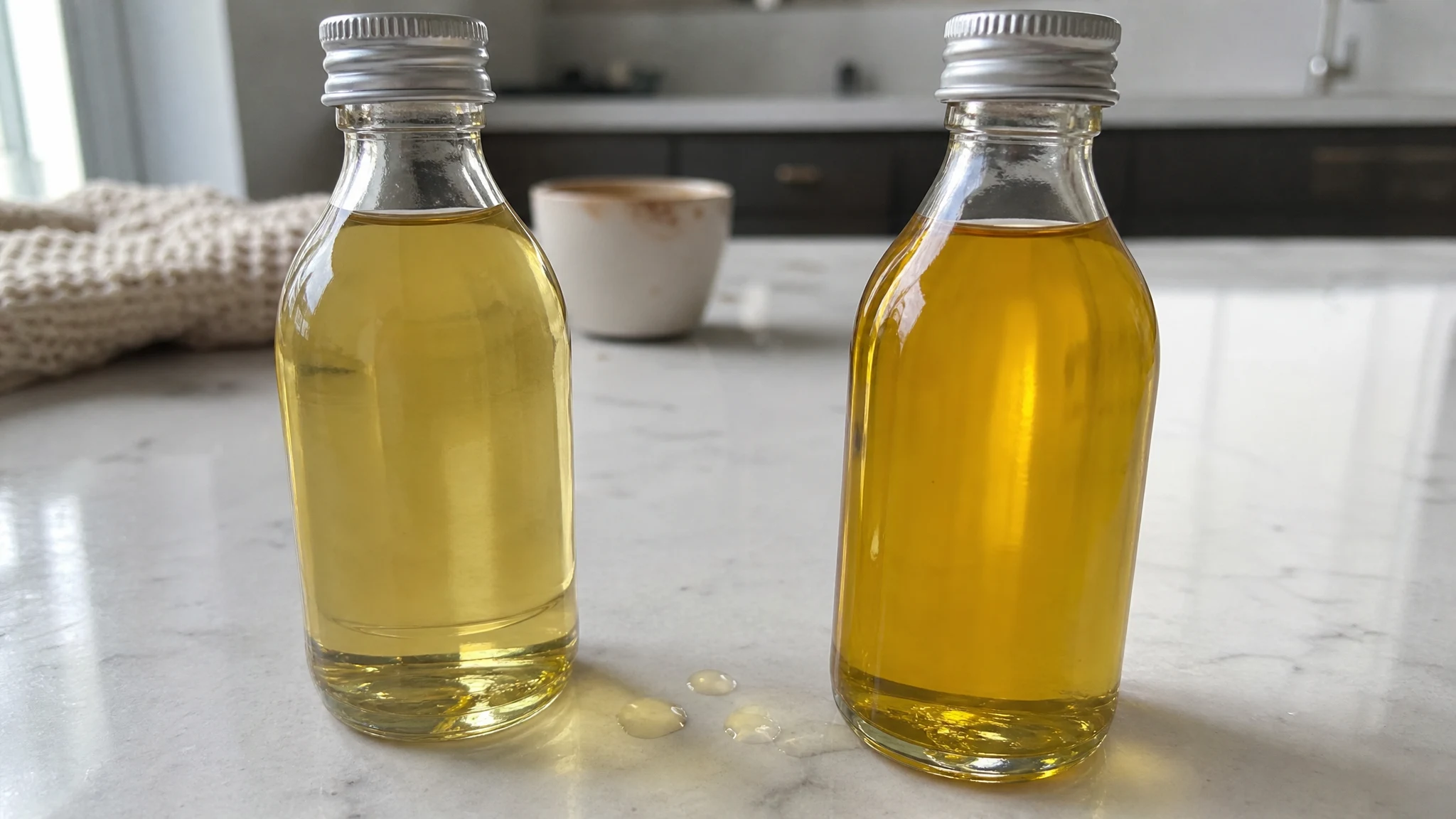
One detail from that study is useful if you ever buy baobab oil. The palmitic share moved from about 23% to 30% depending only on how the oil was extracted, while oleic and linoleic barely changed. So two baobab oils can feel a little different on your skin even when both are genuine. Our advice is the same for any oil: ask the supplier how it was pressed and for the fatty acid breakdown, and compare like with like. Our guide to questions to ask any Abyssinian oil supplier is written for ours, and most of it works for baobab too.
Which one for which shelf
If you like a fuller cushion on dry-feeling hands, elbows or ends, a palmitic-rich oil like baobab is a sensible thing to look at, and you will find it at a craft supply or aromatherapy shop. If you want a finish that slips on and does not weigh anything down, we would point you to Abyssinian oil. They can also share a shelf, since one is a body oil and the other a finishing oil.
For the other pairing, read our comparison with marula oil. The plain chart of carrier oils covers the wider field, and moringa oil is another light African-grown oil worth knowing. As with any oil, patch test first and avoid eye contact.
The takeaway is simple: where an oil grows is the postcard, and its fatty acids are the actual feel. Choose by the finish you want and the rest follows.
Abyssinian Oil
Cold-pressed Abyssinian oil, from a small bottle to bulk sizes.
From $11.99
Shop Abyssinian Oil →Sources & Further Reading
- RSC Advances (2025), A sustainable approach to extracting baobab oil: neat supercritical CO2 optimization
- Purdue NewCROP, Crambe abyssinica Hochst. ex R.E.Fries
- Molecules (2024), Chemical Profile and Potential Applications of Sclerocarya birrea (A.Rich.) Hochst. subsp. caffra (Sond.) Kokwaro Kernel Oils: Analysis of Volatile Compounds and Fatty Acids