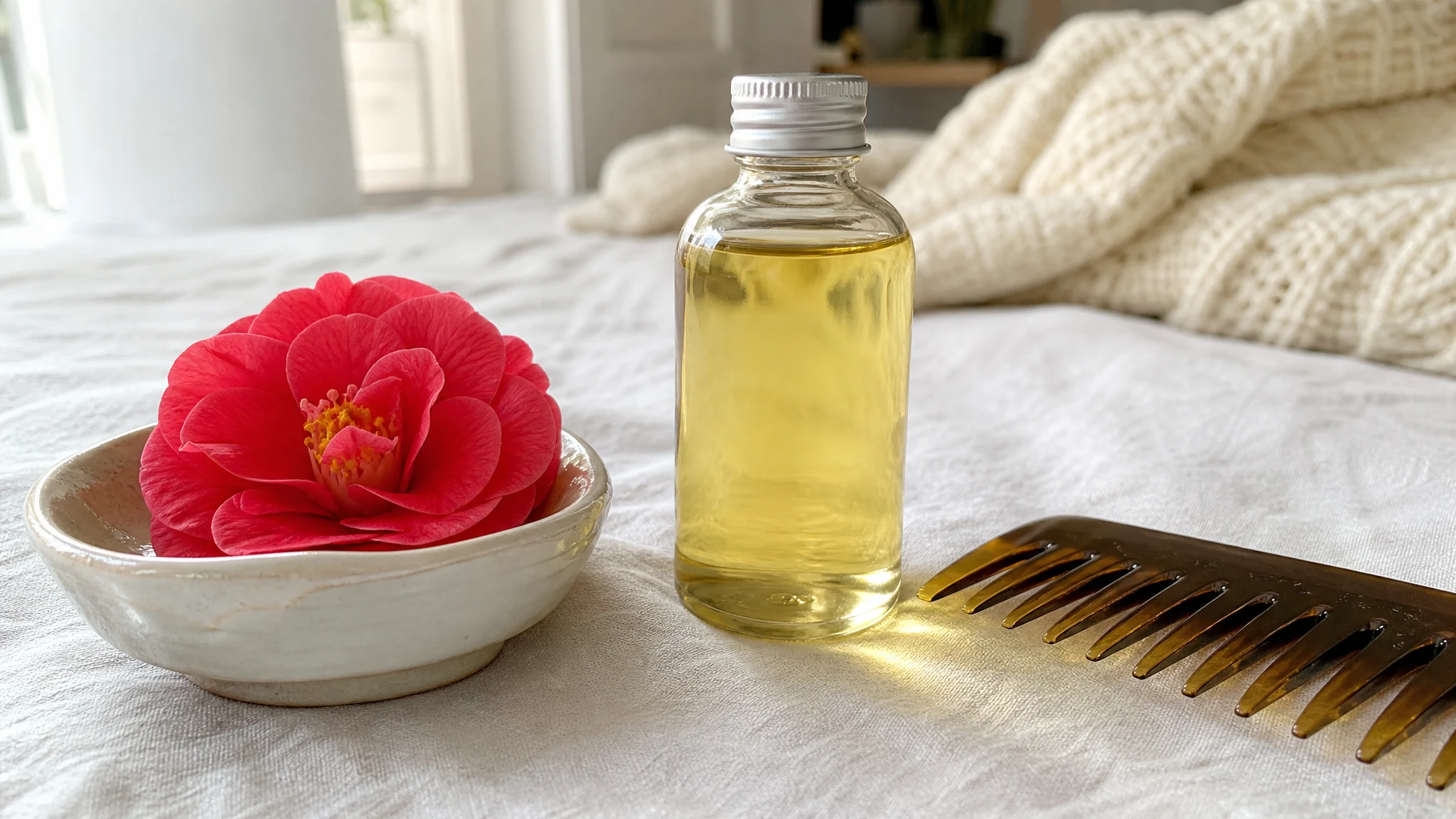
Abyssinian Oil vs Camellia (Tsubaki) Oil for Hair Shine
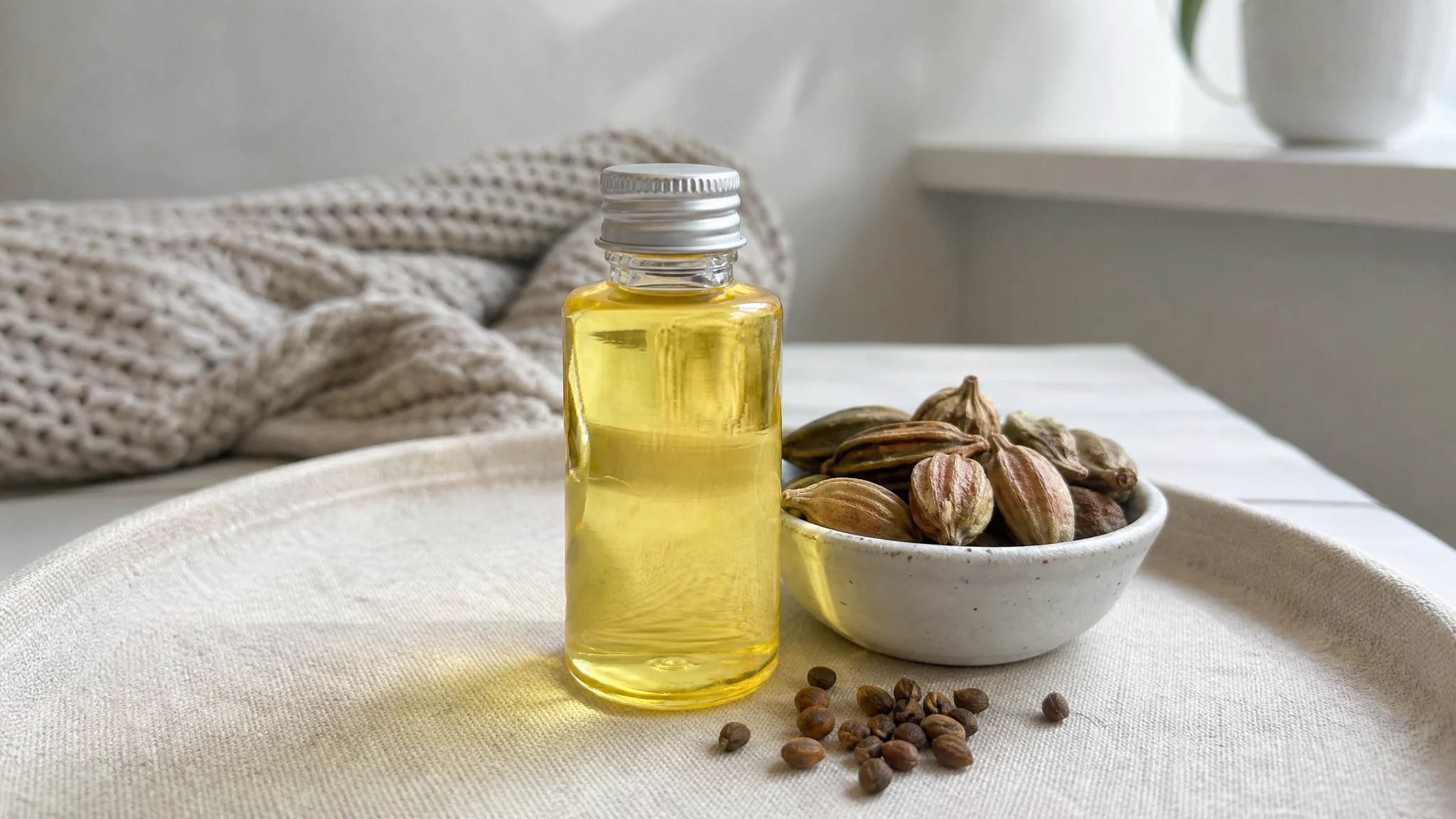
Long before anyone sold hair serums, women in Japan were smoothing a little camellia seed oil into their hair. Tsubaki oil, pressed from the seeds of Camellia japonica, is one of the world's best-known hair finishing oils, and Abyssinian oil is a lighter newcomer with a similar goal. These are two lightweight oils from opposite sides of the world, and they have more in common than you might expect.
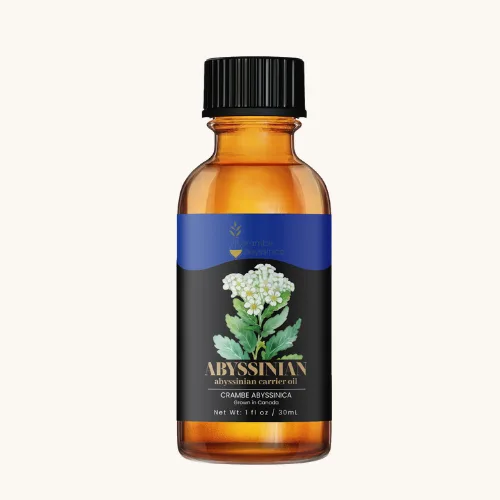
Abyssinian Oil
Cold-pressed Abyssinian oil, in sizes from 0.5 oz to bulk.
From $11.99
Shop Abyssinian Oil →A tradition worth knowing
A Japan travel magazine, writing about traditional Tokyo haircare, traces camellia oil back to the Heian era and describes Edo-period women applying it before gathering their hair into buns; it also notes how well the rigid comb of that period worked with oil. That account leans on unnamed old documents, so we would treat the exact dates with care. The oil's connection with the islands is easier to confirm: the Oshima office of the Tokyo Metropolitan Government says the camellias of Izu Oshima have long been grown to press oil from their seeds. Tradition tells us the oil is well loved. It does not, on its own, tell us what it does for your hair, and we would not claim more.
Same idea, different molecules
Here is the interesting part. Analysis of cold-pressed Camellia japonica oil, in a 2012 study in Molecules, reported oleic acid at about 76 to 81 percent depending on which part of the paper you read, with only around 6 percent linoleic. So tsubaki is mostly one monounsaturated fatty acid. Published analyses of crambe oil in general are also mostly monounsaturated, but the main fatty acid is erucic acid at 55 to 60 percent, a longer chain than oleic. We do not publish figures for our own bottle. In short, both are mostly monounsaturated oils, built from molecules of different lengths.
That also helps with storage. In a 2024 comparison of seven camellia species' oils, Camellia japonica oil had an oxidative stability time of 10.4 hours when fresh and 7.5 after six months, meaning even a stable oil slowly changes. Whichever oil you choose, keep it capped and out of heat; our guide to storage and the smell test shows how.
Shine and weight
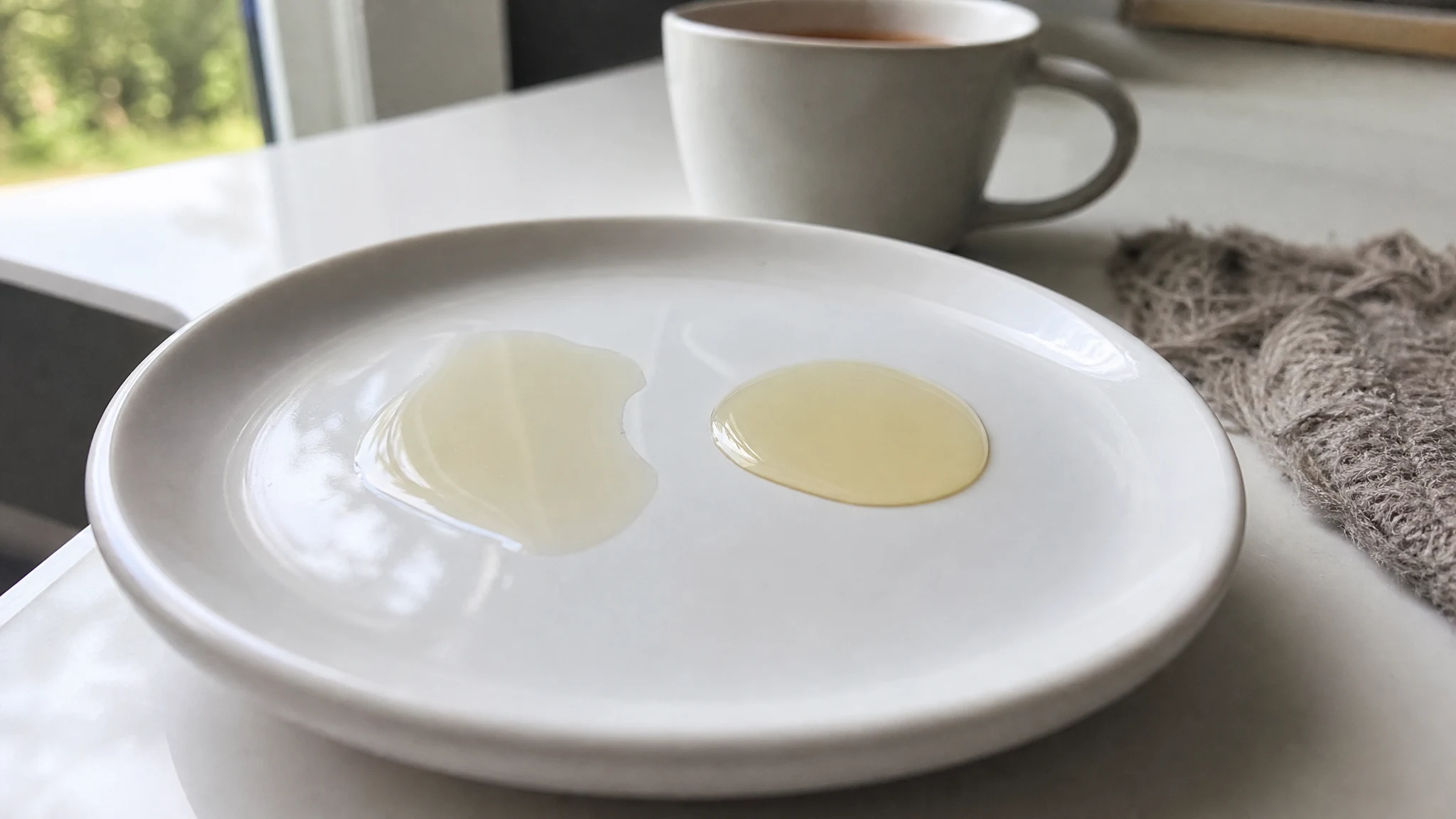
Both oils are used for the same job: a few drops on dry ends or smoothed over a style to add shine and tame flyaways. We describe our Abyssinian oil as lightweight and non-greasy with a mild nutty aroma. One formulator monograph says a few drops give a glossy look that then absorbs to a matte finish. We have no comparable source on how tsubaki settles, so we will not guess. A review of hair cosmetics also notes that fine, straight hair spreads its own sebum well while curly hair spreads it poorly, so the same drop can feel different on different heads. Fine hair usually does best with the lightest touch; our guide to Abyssinian oil for fine hair shows how to apply it.
How we would choose
If you love the tradition, the ritual of a bottle of tsubaki, and its specific scent, buy it at a good beauty or Japanese grocery shop; we do not sell camellia oil. If you want a light, quick finish and a mild nutty aroma, we would reach for Abyssinian oil. Both are silicone-free ways to add a glossy look, and our piece on going silicone-free in hair care explains what that means in practice. Our comparison of argan oil and Abyssinian oil covers a third finisher.
Skin and hair vary from person to person, so patch test before first use and avoid eye contact. Whichever one you pick, the same rule holds: start with a drop or two, because you can always add more.
Abyssinian Oil
Cold-pressed Abyssinian oil, from a small bottle to bulk sizes.
From $11.99
Shop Abyssinian Oil →Sources & Further Reading
- Japanese Haircare in the Old Days! Finding Traditional Beauty Products in Tokyo (THE GATE)
- コラム「カメリア」~伊豆大島の椿~ (Tokyo Metropolitan Government, Oshima Subprefectural Office)
- 1H-Nuclear Magnetic Resonance Analysis of the Triacylglyceride Composition of Cold-Pressed Oil from Camellia japonica (Molecules, 2012)
- Characterization of Seven Species of Camellia Oil: Oil Content, Volatile Compounds, and Oxidative Stability (Foods, 2024)
- Crambe abyssinica Hochst. ex R.E.Fries (Purdue NewCROP)
- Abyssinian (Crambe) Seed Oil (Botanical Formulations)
- Hair cosmetics: an overview (International Journal of Trichology, 2015)