Abyssinian Oil vs Castor Oil: Thin, Thick, or Both?
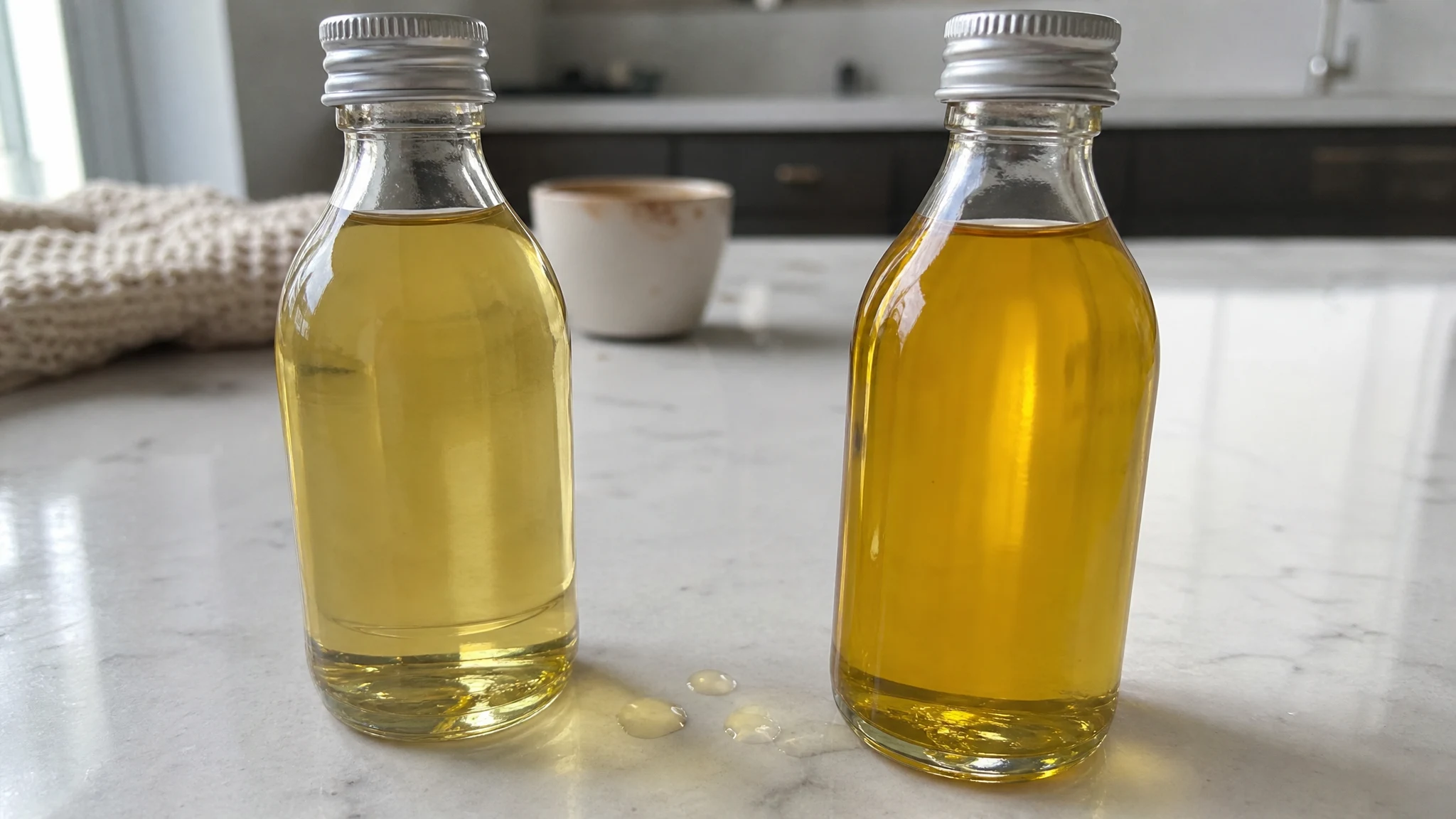
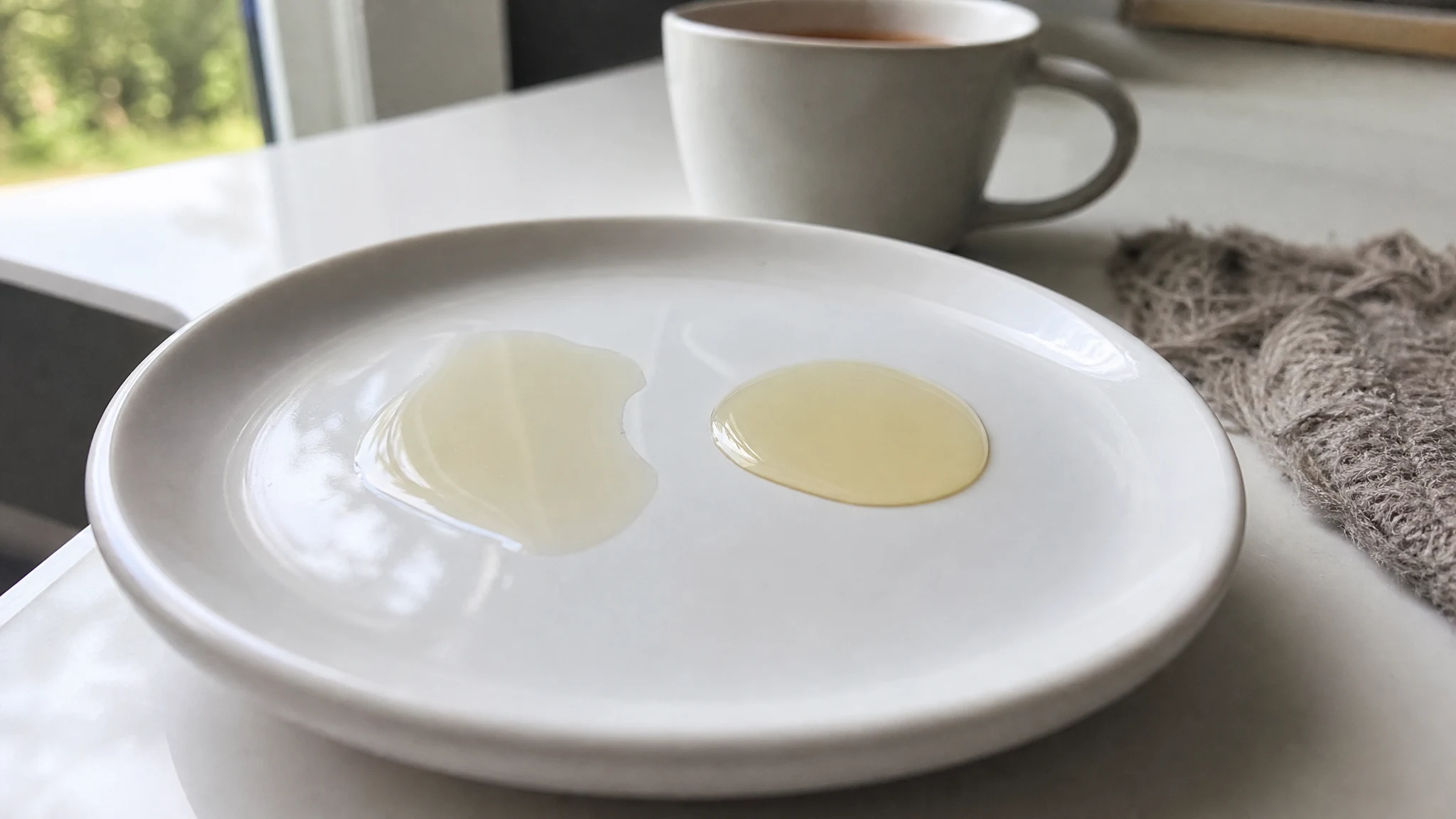
Tip a bottle of castor oil and it crawls toward the lip like cold honey. Tip a bottle of Abyssinian oil and it runs. Same shelf, same job title (carrier oil), completely different behaviour, and the reason is written in the molecules.
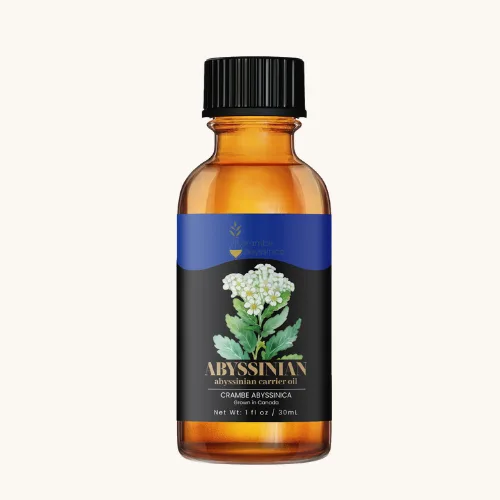
Abyssinian Oil
Cold-pressed Abyssinian oil, in sizes from 0.5 oz to bulk.
From $11.99
Shop Abyssinian Oil →A hydroxyl group changes everything
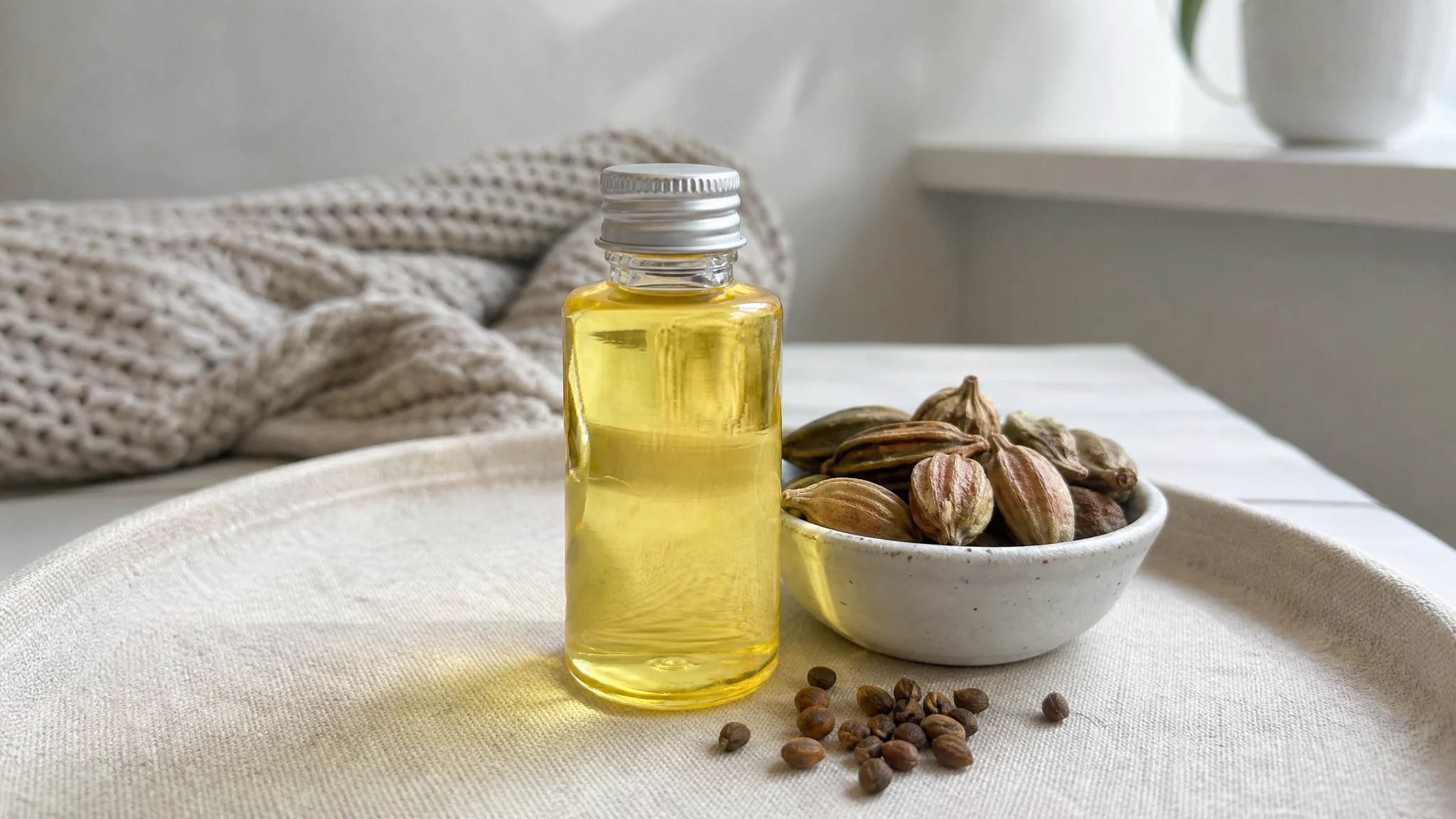
About 90 percent of the fatty acid in castor oil is ricinoleic acid, according to a 2026 review of castor oil in dermatology. Ricinoleic acid carries a hydroxyl group partway along its chain, which is unusual among common plant oils. Hydroxyl groups tend to hold neighbouring molecules together through hydrogen bonds, which is the usual explanation for a thicker, slower oil, and reviews of castor oil describe it as viscous. That is our reasoning from the chemistry, not a measurement, but it matches what your hands tell you.
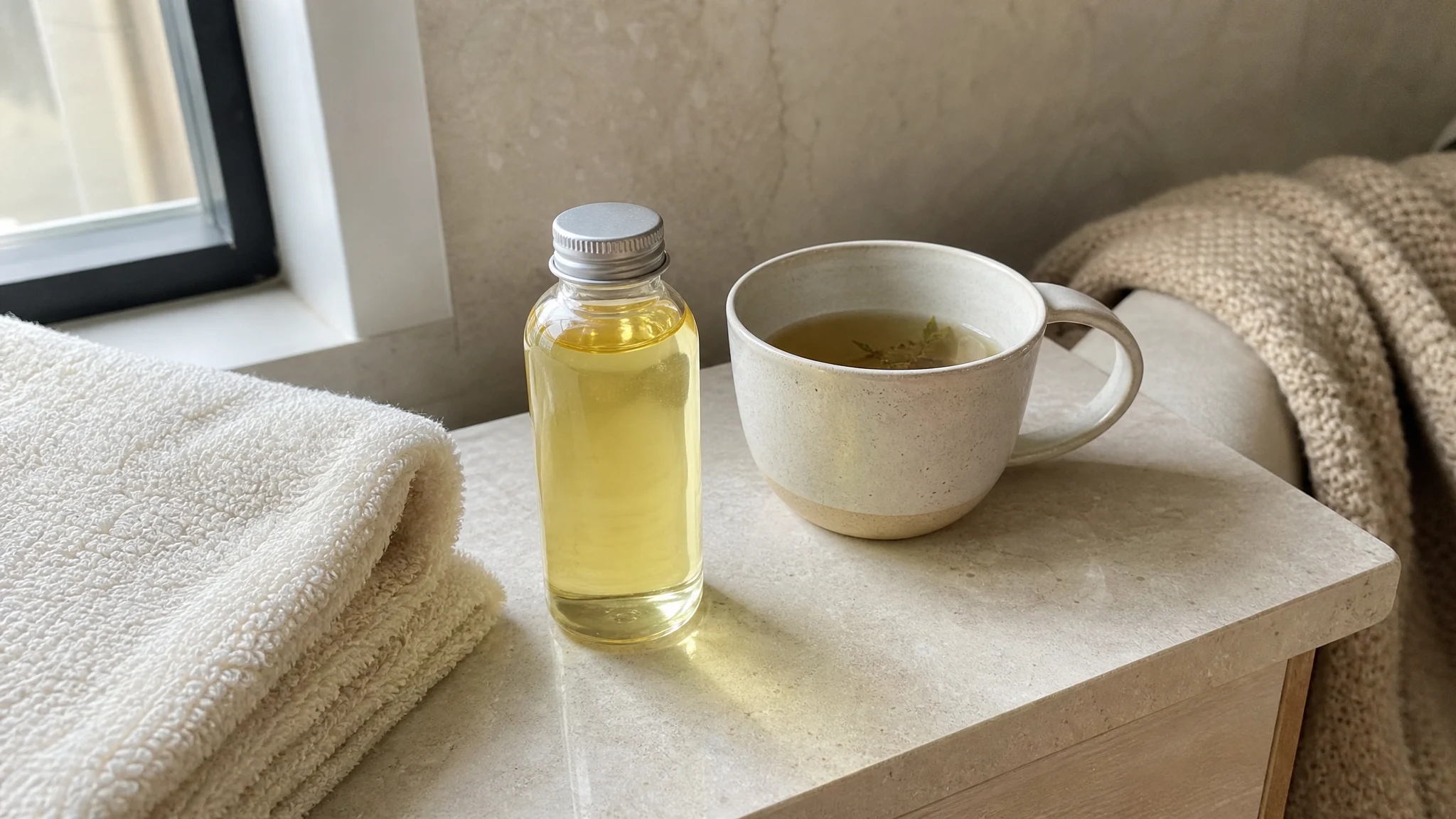
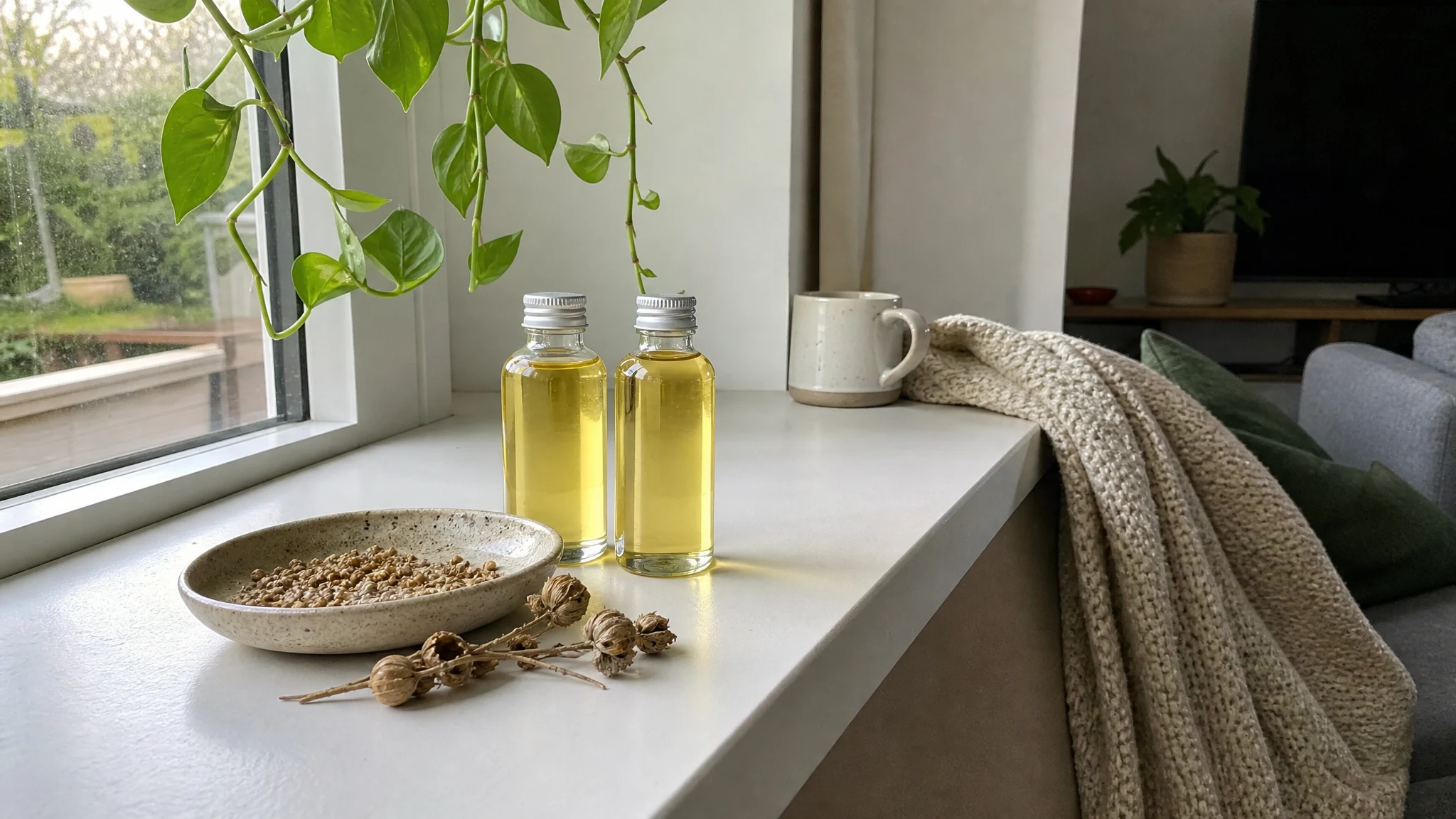
Published analyses of crambe oil in general describe something else: long, straight fatty acid chains, mostly erucic acid at 55 to 60 percent, and a supplier datasheet describing a clear, pale yellow oil of low viscosity. We do not publish figures for our own bottle, but we describe our Abyssinian oil as lightweight and non-greasy, with a light golden colour and a mild nutty aroma.
Castor oil's real strengths
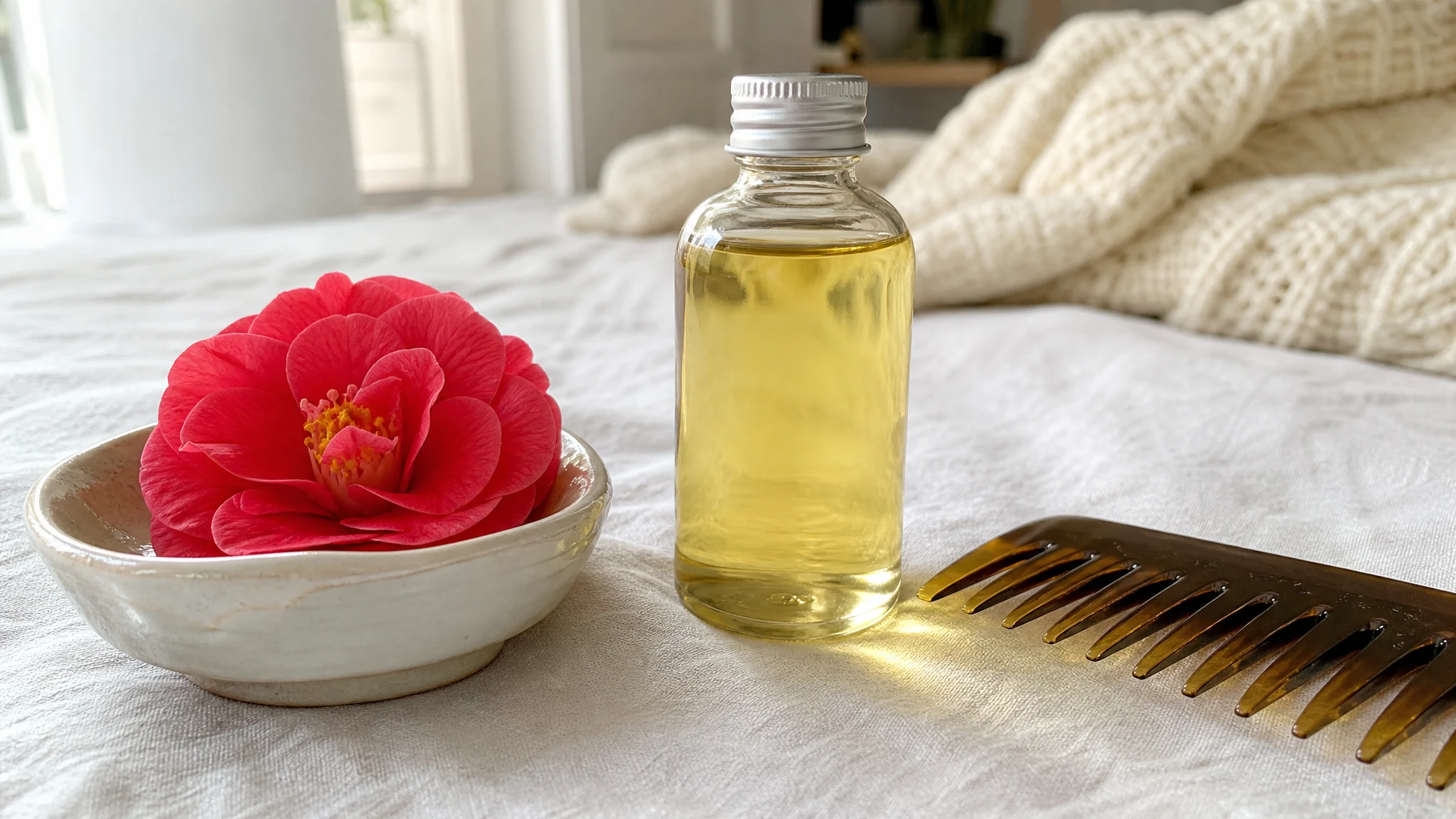
Castor deserves respect. It has a long history in hair and scalp care in African, Caribbean and Indigenous American traditions, per the same review, and one study using light-scattering analysis found it increased contrast between hair strands, which the authors read as extra shine. The review is also frank that most hair claims have not been studied in clinical trials, so we would take castor oil as a rich, tacky, glossy finishing oil for ends and edges, and leave it there.
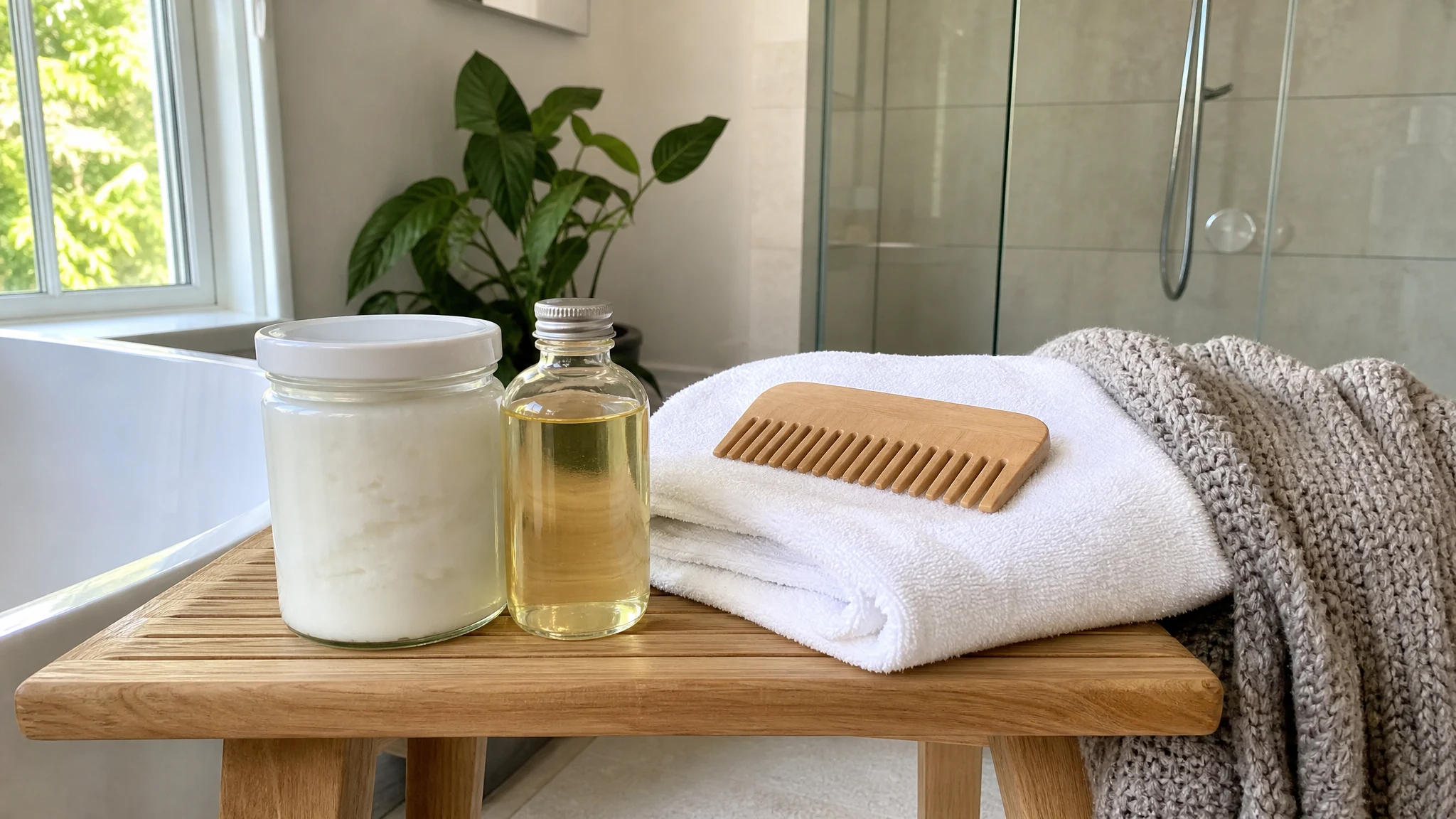
That thickness is its own appeal. On a coarse, dry-feeling length it can feel like a sealant. On fine hair it can feel like a weight. Because it clings, a little goes a long way, and it takes patience to wash out; our note on washing oil out of hair helps if you overdo it. Contact dermatitis is the most commonly reported reaction, according to the review, though adverse reactions are described as rare, and in one case patch testing reacted to undiluted castor oil but not a diluted one. Patch testing first is good practice with any oil.
What Abyssinian oil does instead
Abyssinian oil is a finishing oil. A few drops add a glossy look that settles to a soft finish, and leave room for the rest of your routine. It will not give you castor's heavy cling, and we would not pretend it does. If your goal is the cushiony coating, castor is the better tool; if your goal is shine without a weighed-down feel, ours is.
When to put them in the same bottle
You do not have to choose. A light oil with a little of the heavy one stirred in is the simplest way to get some of each. The arithmetic is simple: if you want a 10 percent castor blend in a 30 ml bottle, that is 3 ml castor oil and 27 ml Abyssinian oil. Start small, because castor's weight shows up quickly, and raise the share only if your hair asks for it. Our full walk-through, a castor oil and Abyssinian oil blend by the numbers, covers the ratios, and usage rates by product shows where each share fits. Castor oil is sold at pharmacies and craft supply shops; we sell only Abyssinian oil.
Think of the two as a thick paintbrush and a fine one: neither is better, and most people end up wanting both for different jobs. If a medical concern like scalp trouble is behind your question, a dermatologist is the right person to ask, because we sell a cosmetic oil. For comparing Abyssinian oil with other carriers, our carrier oil chart is the place to start.
Abyssinian Oil
Cold-pressed Abyssinian oil, from a small bottle to bulk sizes.
From $11.99
Shop Abyssinian Oil →Sources & Further Reading
- Use of Castor Oil in Dermatology: A Narrative Review (Cureus, 2026)
- Castor oil (Ricinus communis): a review on the chemical composition and physicochemical properties (Food Science and Technology, 2021)
- Crambe abyssinica Hochst. ex R.E.Fries (Purdue NewCROP)
- ABYSSINIAN SEED OIL Also known as Crambe Seed Oil (Natural Sourcing datasheet)