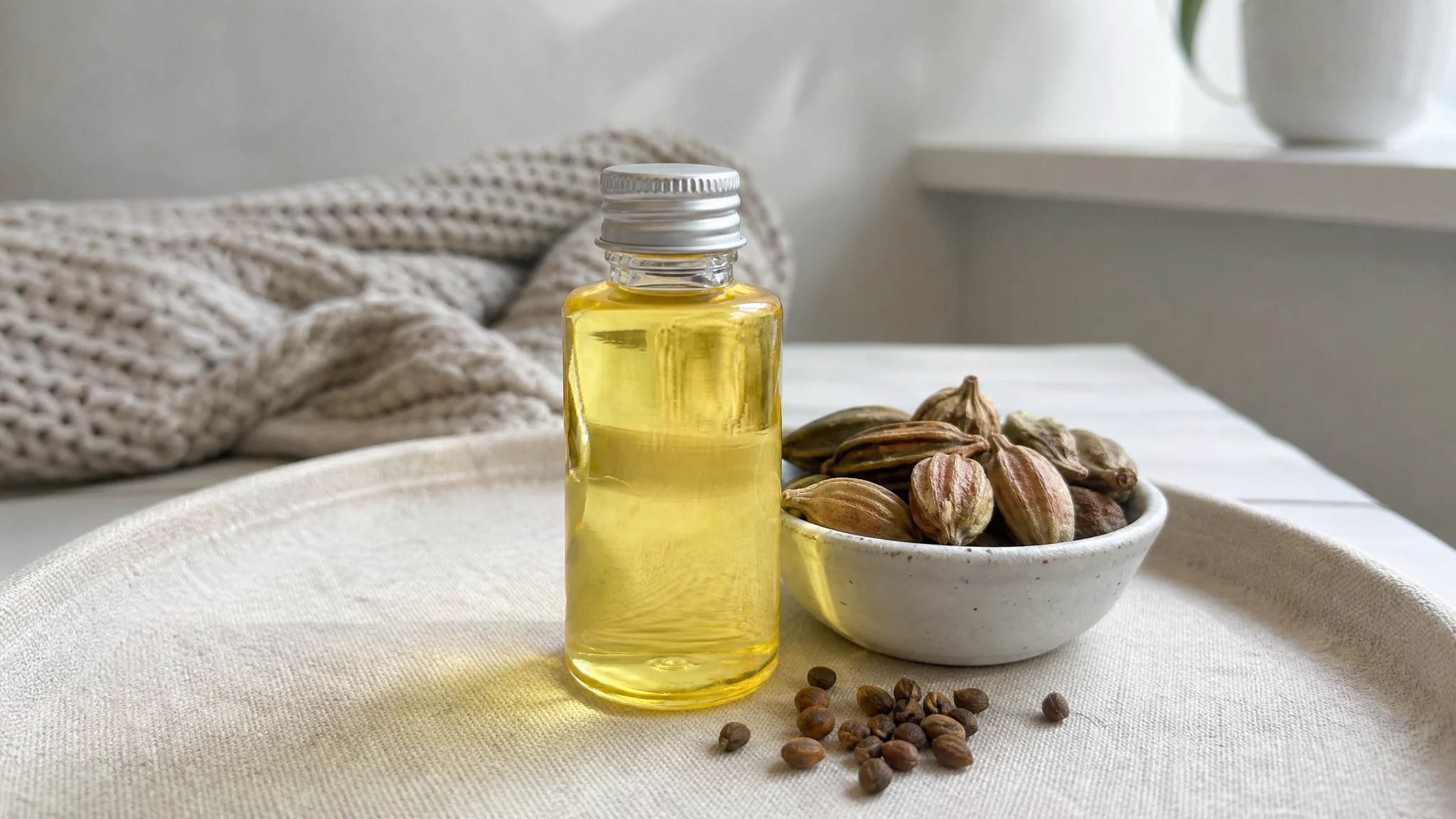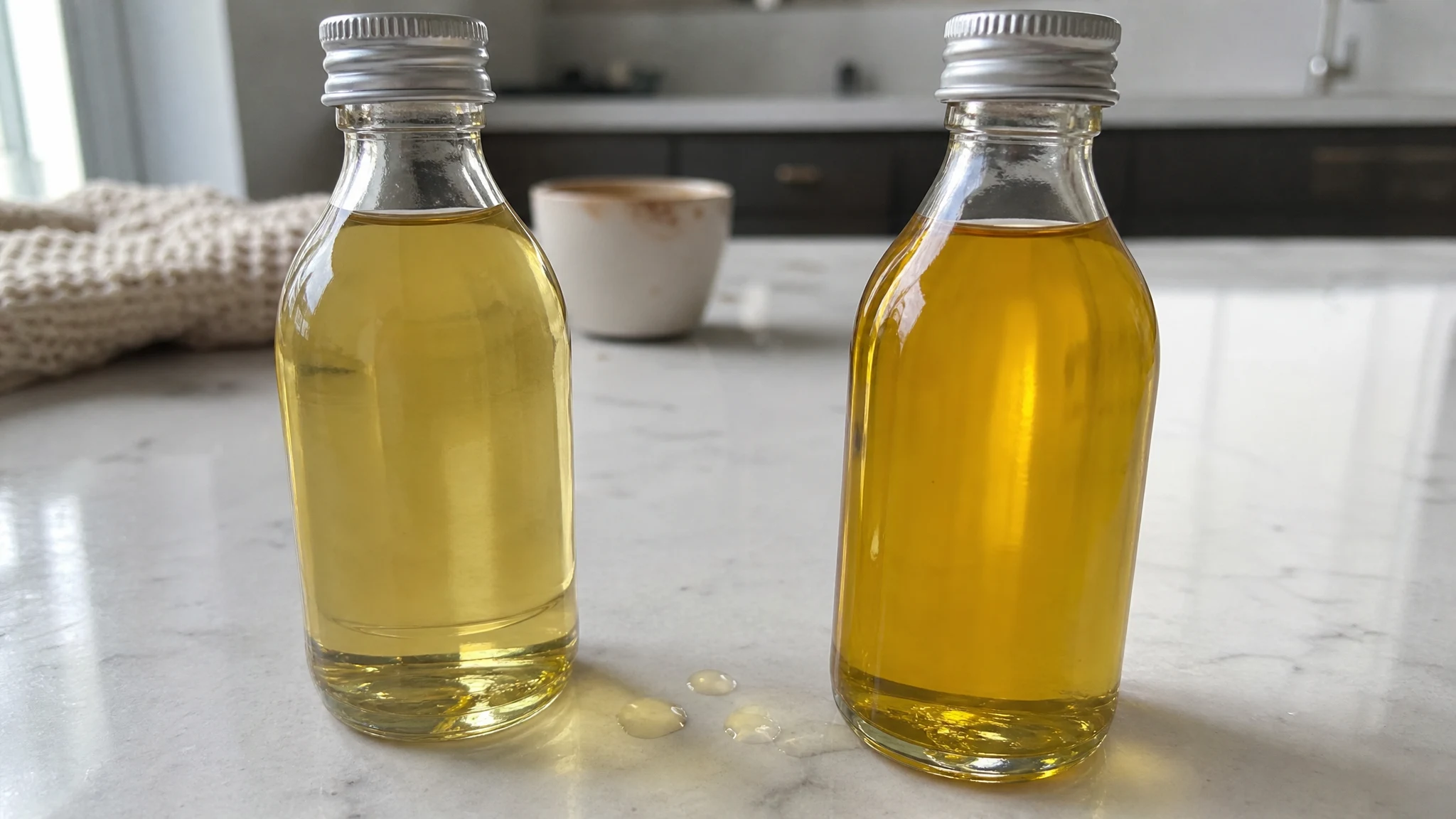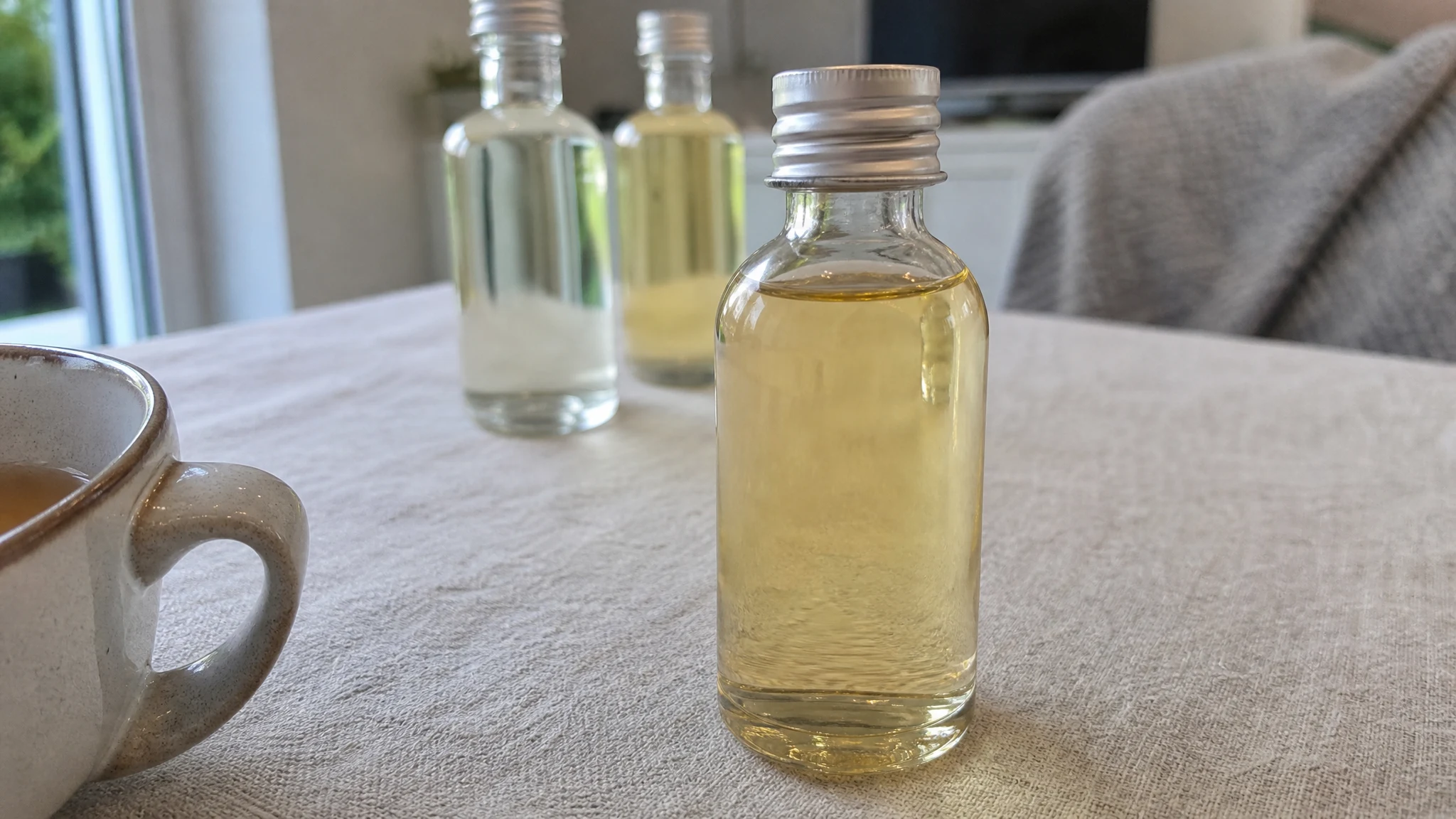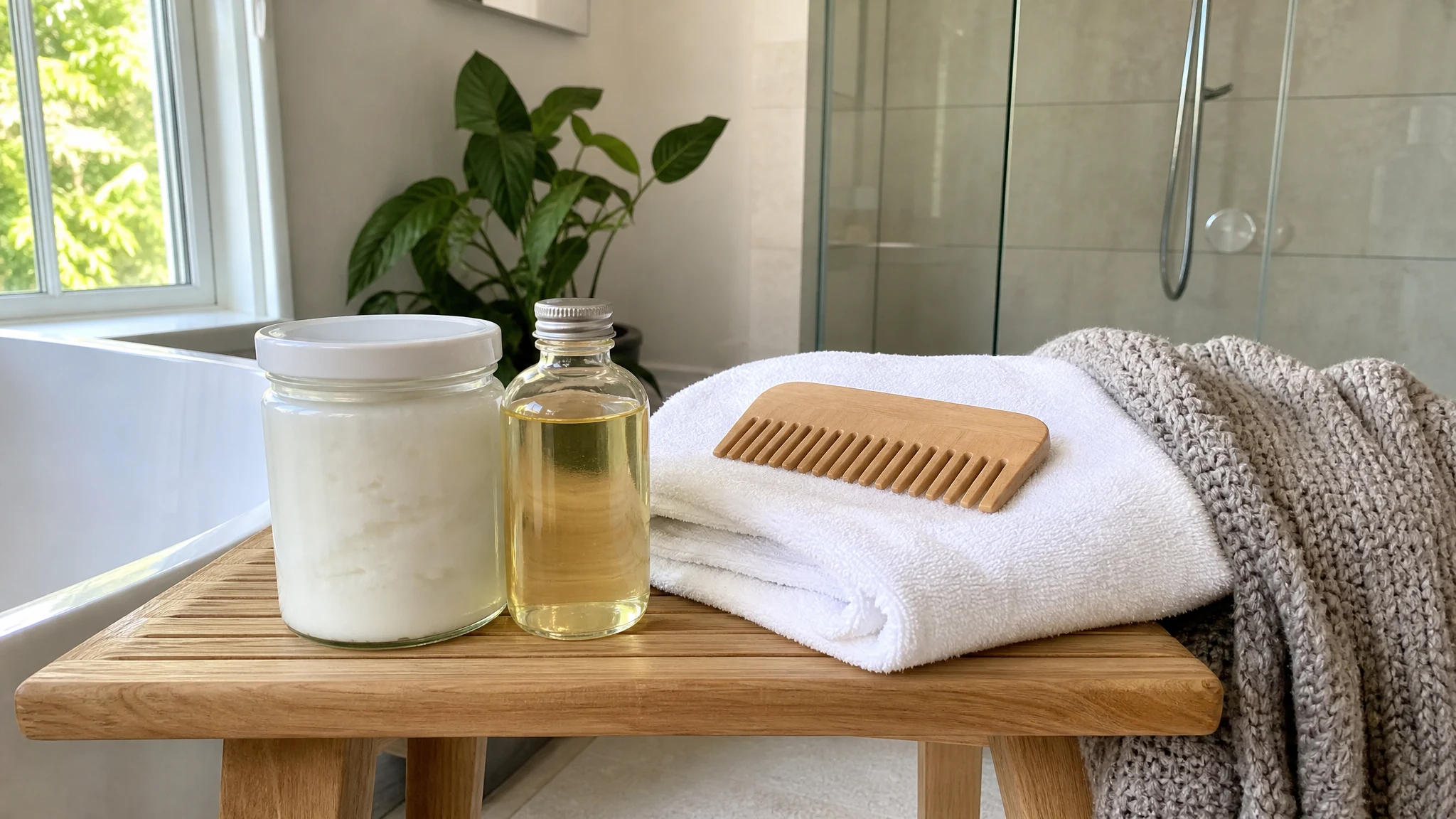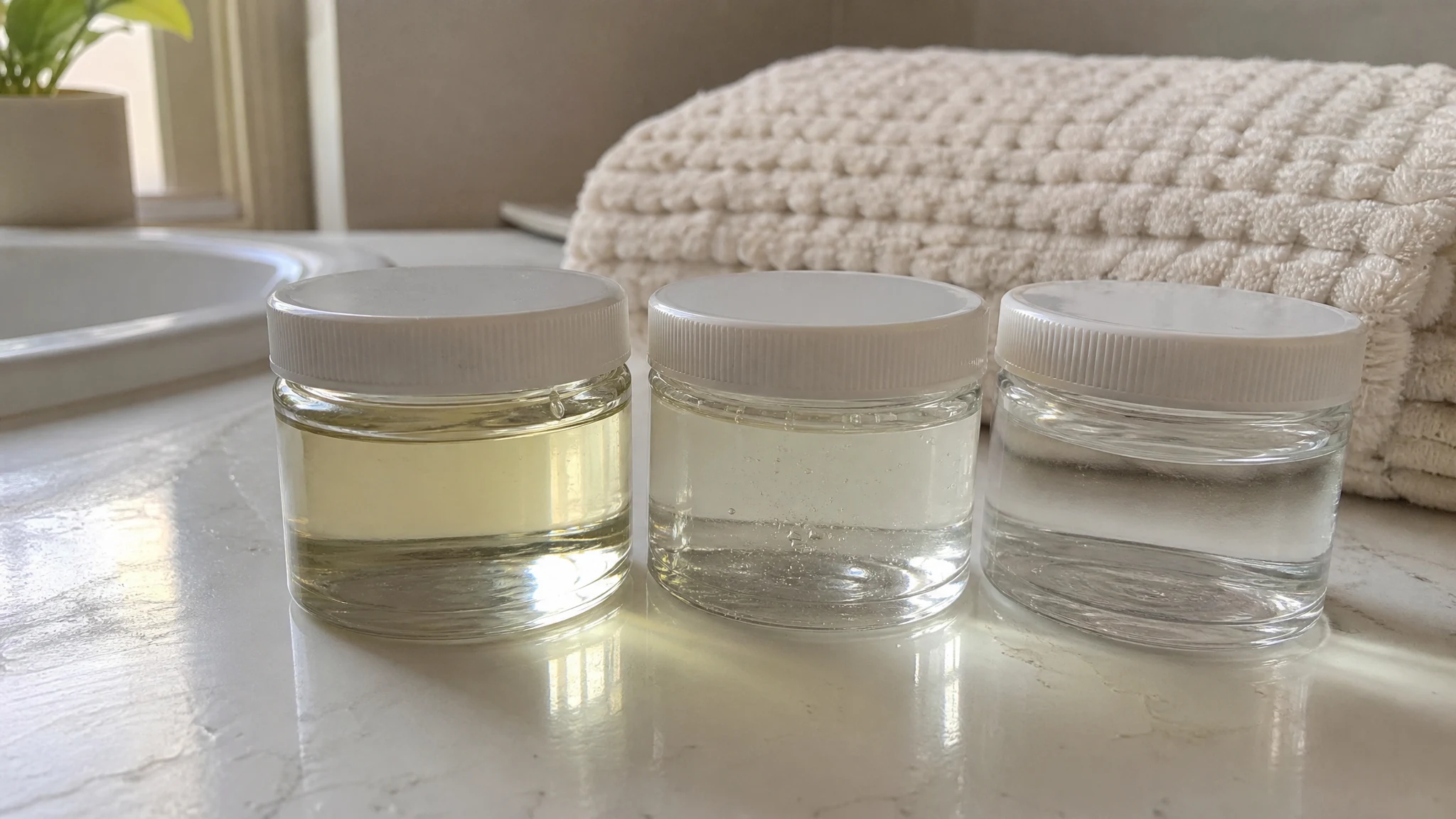
Abyssinian Oil vs Mineral Oil and Dimethicone: Slip and Shine
Mineral oil, dimethicone and a plant oil like ours can all make hair glide and catch the light, which is why they end up compared so often. They get there in different ways, and none of them is a villain. Here is a fair look at what each one is, how it feels, and where Abyssinian oil fits beside them.
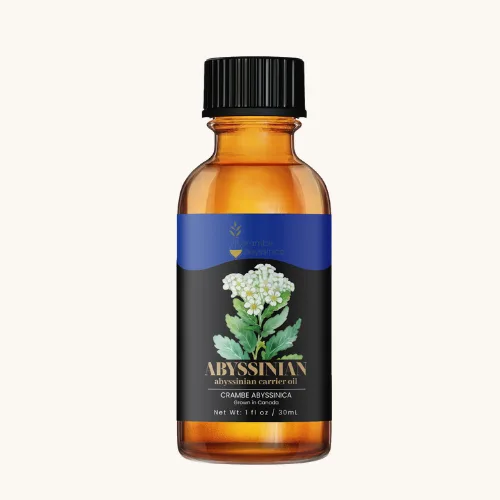
Abyssinian Oil
Cold-pressed Abyssinian oil, in sizes from 0.5 oz to bulk.
From $11.99
Shop Abyssinian Oil →Three materials, three origins
Mineral oil is a mixture of saturated hydrocarbons, long chains of carbon and hydrogen refined to cosmetic purity standards. A European review of mineral oils and waxes in cosmetics describes them as long used in skin and lip care for their skin tolerance, stable and not prone to oxidation or rancidity, and, being highly lipophilic, not penetrating human skin.
Dimethicone is a silicone: a linear polymer built from silicon, oxygen and methyl groups. It is the most widely used silicone in hair care, and the Cosmetic Ingredient Review Expert Panel concluded that dimethicone and related polymers are safe at the concentrations used in cosmetics, noting that they are unlikely to be significantly absorbed into skin because of their large molecular size.
Abyssinian oil is neither. It is a plant oil, made of triglycerides, cold-pressed from crambe seeds. Where mineral oil and dimethicone are man-made or refined materials chosen for their consistency, a plant oil carries the fatty acids of its seed. We describe it as lightweight and non-greasy, and it is vegan friendly.
What they feel like on hair
Dimethicone is the shine specialist. A review of hair cosmetics explains that some silicones enhance shine by reflecting light, and that dimethicones are hydrophobic and heat-resistant polymers; silicones also differ in how they deposit and wash out, which matters for leave-in products. Mineral oil is a similar surface-coating story: a clear film that adds gloss and glide.
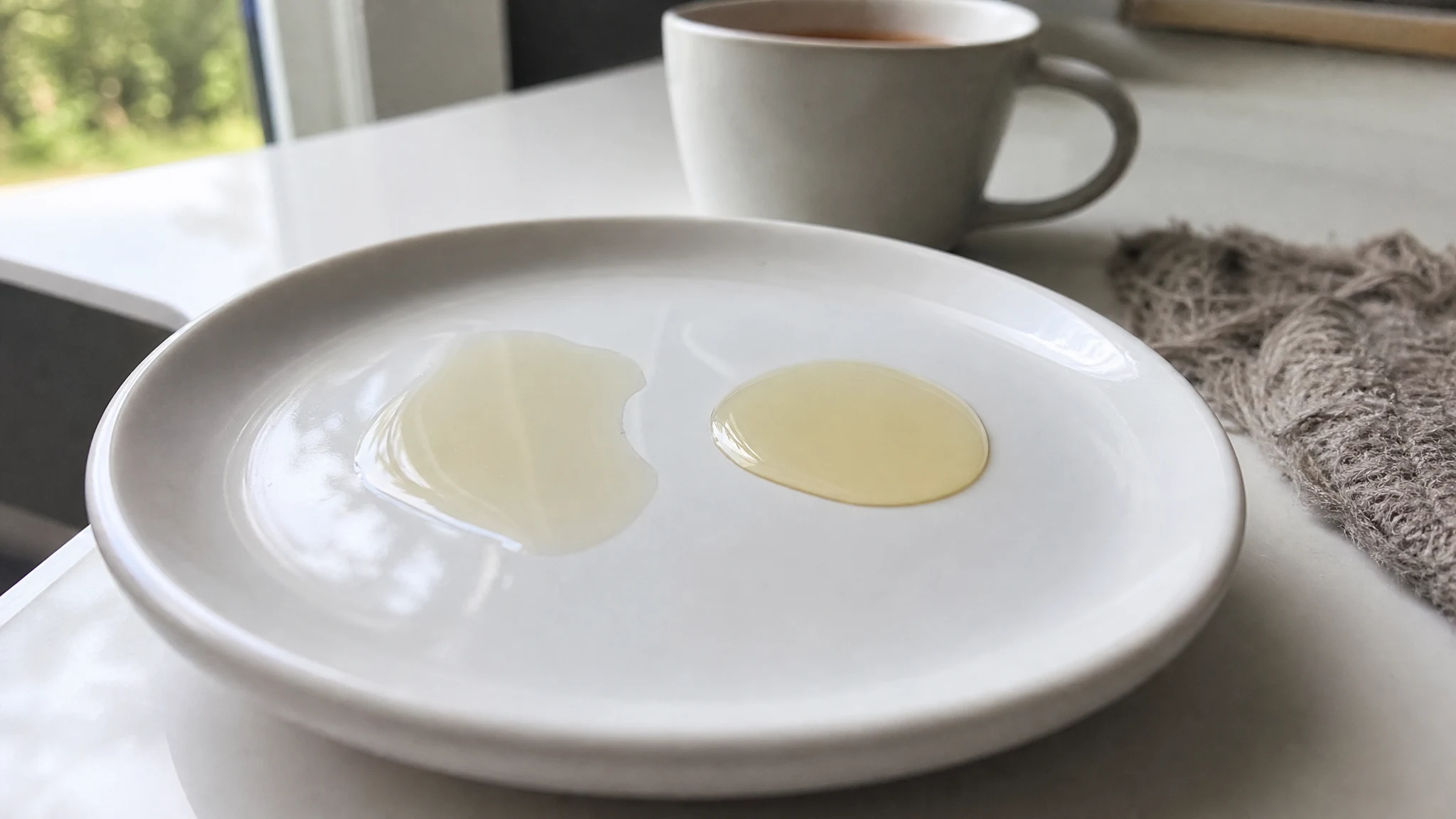
A plant oil also lays down a film, and film-forming oils can add shine and lower friction in the same way. What differs is the character of the finish. A supplier's monograph for Abyssinian seed oil describes a few drops giving an instantly glossy appearance that then settles to a matte finish as it absorbs. That is a supplier's description, not a measurement of ours, but it matches how many people look for a light plant oil: shine first, then a soft finish that fades. For hair-specific ideas, see silicone-free shine with a plant oil.
The honest differences
- Source. Mineral oil is a refined mineral product, dimethicone is synthesized, and Abyssinian oil is pressed from a seed. If you prefer an ingredient list that reads as plants, that is the clearest dividing line.
- Keeping. Mineral oil is stable and not prone to rancidity, and dimethicone is a heat-resistant polymer. A plant oil can oxidize over time, so store it cool, dark and closed; our post on storage and the smell test covers it.
- Hair science. In a well-known comparison of coconut, sunflower and mineral oil on hair, only coconut oil reduced protein loss, and the authors tied that to coconut's lauric acid. Abyssinian oil was not part of that study, so it tells us about the oils tested, not about ours.
Which should you pick?
Mineral oil and dimethicone are well-reviewed, dependable materials, and many good products use them. If your priority is the longest possible stability, they are strong choices, and you will find them at any pharmacy or grocery store. If you would like a plant-based finish with a light feel and a gentle, nutty aroma, that is where we come in. Formulators swapping one for the other should read the notes in going silicone-free and the formulation walk-through, since a plant oil is a different material, not a one-for-one substitute.
The right oil is the one that suits your hair, your routine and your preferences. Slip and shine come in more than one form, and it is fine to choose the one you like.
Abyssinian Oil
Cold-pressed Abyssinian oil, from a small bottle to bulk sizes.
From $11.99
Shop Abyssinian Oil →Sources & Further Reading
- Mineral oils and waxes in cosmetics: an overview mainly based on the current European regulations and the safety profile of these compounds (J Eur Acad Dermatol Venereol 2019)
- Final report on the safety assessment of stearoxy dimethicone, dimethicone, methicone, amino bispropyl dimethicone, aminopropyl dimethicone, amodimethicone, amodimethicone hydroxystearate, behenoxy dimethicone, C24-28 alkyl methicone, C30-45 alkyl methicone, C30-45 alkyl dimethicone, cetearyl methicone, cetyl dimethicone, dimethoxysilyl ethylenediaminopropyl dimethicone, hexyl methicone, hydroxypropyldimethicone, stearamidopropyl dimethicone, stearyl dimethicone, stearyl methicone, and vinyldimethicone (Int J Toxicol 2003)
- Hair Cosmetics: An Overview (Int J Trichology 2015)
- Effect of mineral oil, sunflower oil, and coconut oil on prevention of hair damage (J Cosmet Sci 2003)
- Abyssinian (Crambe) Seed Oil (Botanical Formulations)