Abyssinian Oil vs Moringa Oil: Two Light Oils, Compared
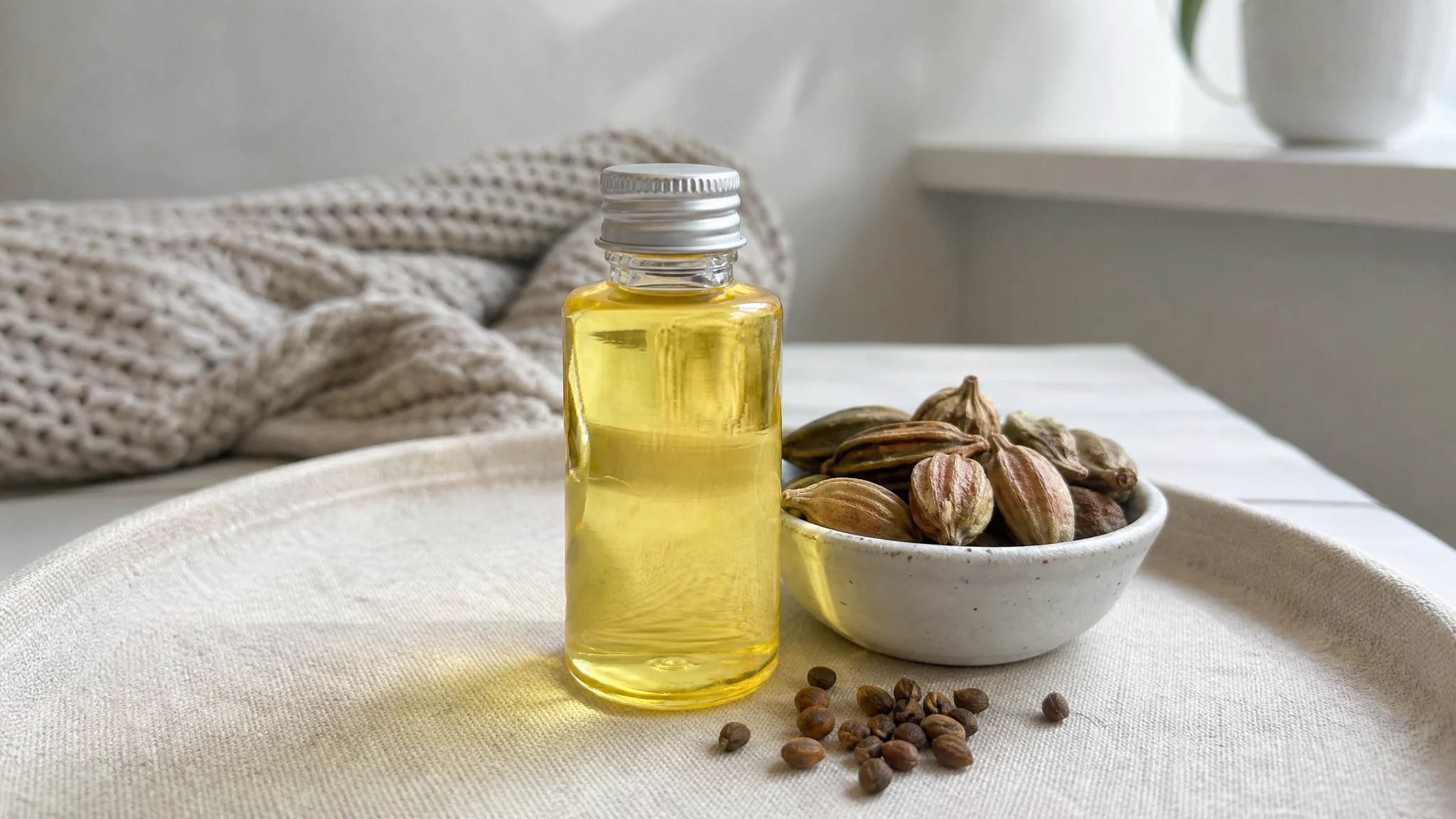
Moringa oil has a second name that tells you almost everything about it: behen oil, after the behenic acid that gives it a quiet signature. Abyssinian oil has a signature of its own, a very long fatty acid called erucic acid. Both are light, pale and silky, and both sit comfortably in a skincare line. They get there by different roads, and that is what makes the comparison worth having.
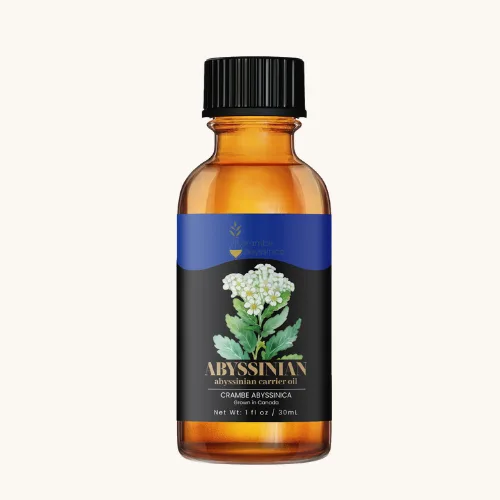
Abyssinian Oil
Cold-pressed Abyssinian oil, in sizes from 0.5 oz to bulk.
From $11.99
Shop Abyssinian Oil →Two 22-carbon stories
Here is the neat coincidence. Behenic acid and erucic acid both have a 22-carbon chain. Behenic acid is saturated and makes up about 7% of moringa seed oil in a screw-press study, alongside 6% palmitic and 5% stearic acid. Erucic acid has one double bond, and general analyses of crambe oil put it at 55 to 60% of the oil. So the long-chain character is a minor note in moringa and the lead voice in ours.
The main act in moringa oil is oleic acid, up to 77.8% in that same study, which the authors compare to olive oil. Published crambe figures run the other way: erucic first, then oleic around 15%, linoleic around 10% and linolenic around 7%, with supplier datasheets quoting somewhat wider ranges. If you picture a pie chart, moringa is one big slice of oleic and crambe is one big slice of erucic. That is reasoning from the published numbers, not a measurement of any particular bottle, but it explains why the two oils read as cousins on the skin and as strangers on the ingredient list.
How each one behaves
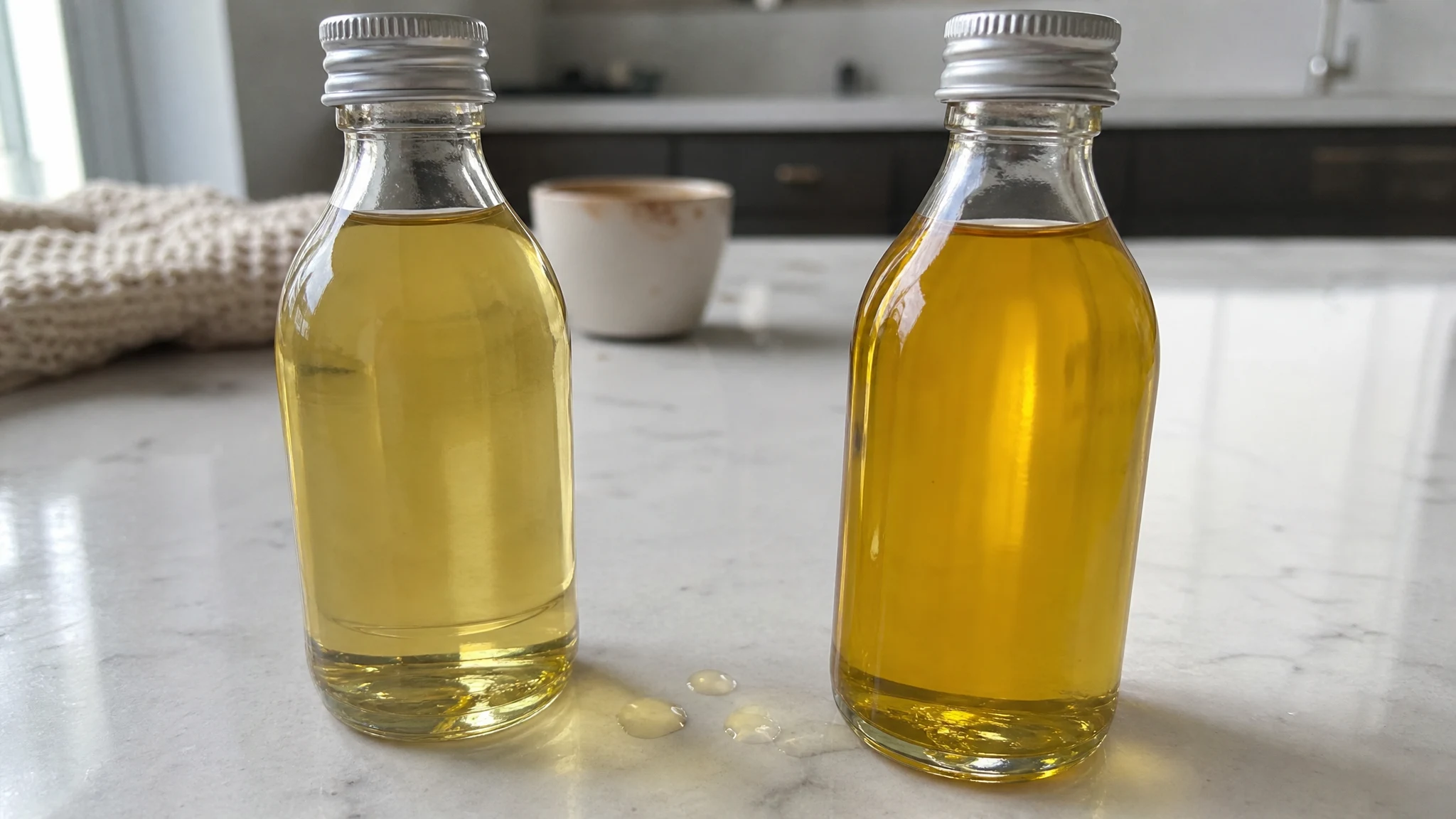
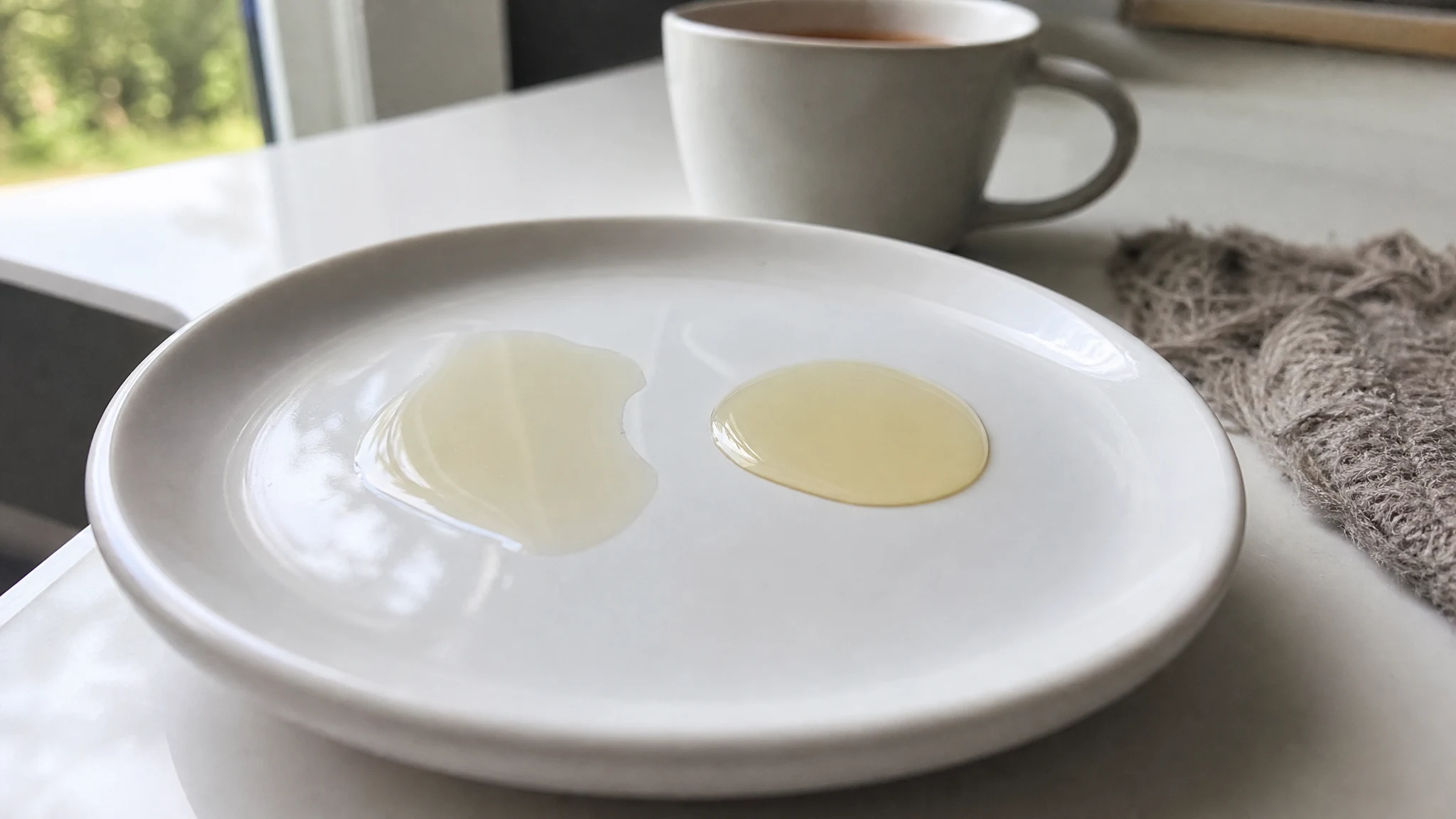
Moringa pressed gently comes out translucent with light yellow tones; the researchers saw it stay that way below 190 °C and called the oil oxidatively stable. Abyssinian oil is a light golden oil with a mild, nutty aroma, and we describe ours as lightweight and non-greasy. One supplier monograph adds that a few drops give a glossy look at first and then settle to a matte finish, and that the oil is highly resistant to oxidation. Take both descriptions as typical of each oil, and remember that colour and keeping time vary with how an oil is pressed and handled.
On the safety side, the Cosmetic Ingredient Review panel concluded that a large group of plant-derived fatty acid oils, crambe among them, is safe as used in cosmetics. As with any oil, skin and hair vary from person to person, so patch test before first use and avoid eye contact.
Choosing for a skincare shelf
If you are formulating or simply stocking your own shelf, we would sort the choice by the finish you want to hand someone.
- You want an oleic-rich, olive-like body in a pale oil: moringa is a natural fit, and you will find it at an aromatherapy or craft supply shop.
- You want a silky, lightweight slip that does not sit heavy: that is the job Abyssinian oil was made for in our eyes, and it is the one we sell.
- You want a single-oil serum with one clear story on the ingredient list: either works, and the story is simply different.
Positioning matters too. Moringa oil is a familiar name that customers may already have an opinion about. Crambe oil is newer to most shelves, so a line built around it gets to explain itself from scratch. Our comparison of Abyssinian oil and marula oil walks through another oleic-led African oil, and the plain chart of carrier oils places moringa's cousins side by side. If keeping quality is your deciding factor, start with why Abyssinian oil holds up.
In the end, these are two good light oils with different personalities. Pick the one whose finish matches the thing you are making, and let your nose make the final call on any bottle you open.
Abyssinian Oil
Cold-pressed Abyssinian oil, from a small bottle to bulk sizes.
From $11.99
Shop Abyssinian Oil →Sources & Further Reading
- Foods (2024), Fatty Acid Profile and Physicochemical Properties of Moringa oleifera Seed Oil Extracted at Different Temperatures
- Purdue NewCROP, Crambe abyssinica Hochst. ex R.E.Fries
- Botanical Formulations, Abyssinian (Crambe) Seed Oil
- International Journal of Toxicology (2017), Safety Assessment of Plant-Derived Fatty Acid Oils