Abyssinian Oil vs Sweet Almond Oil: Which Suits You?
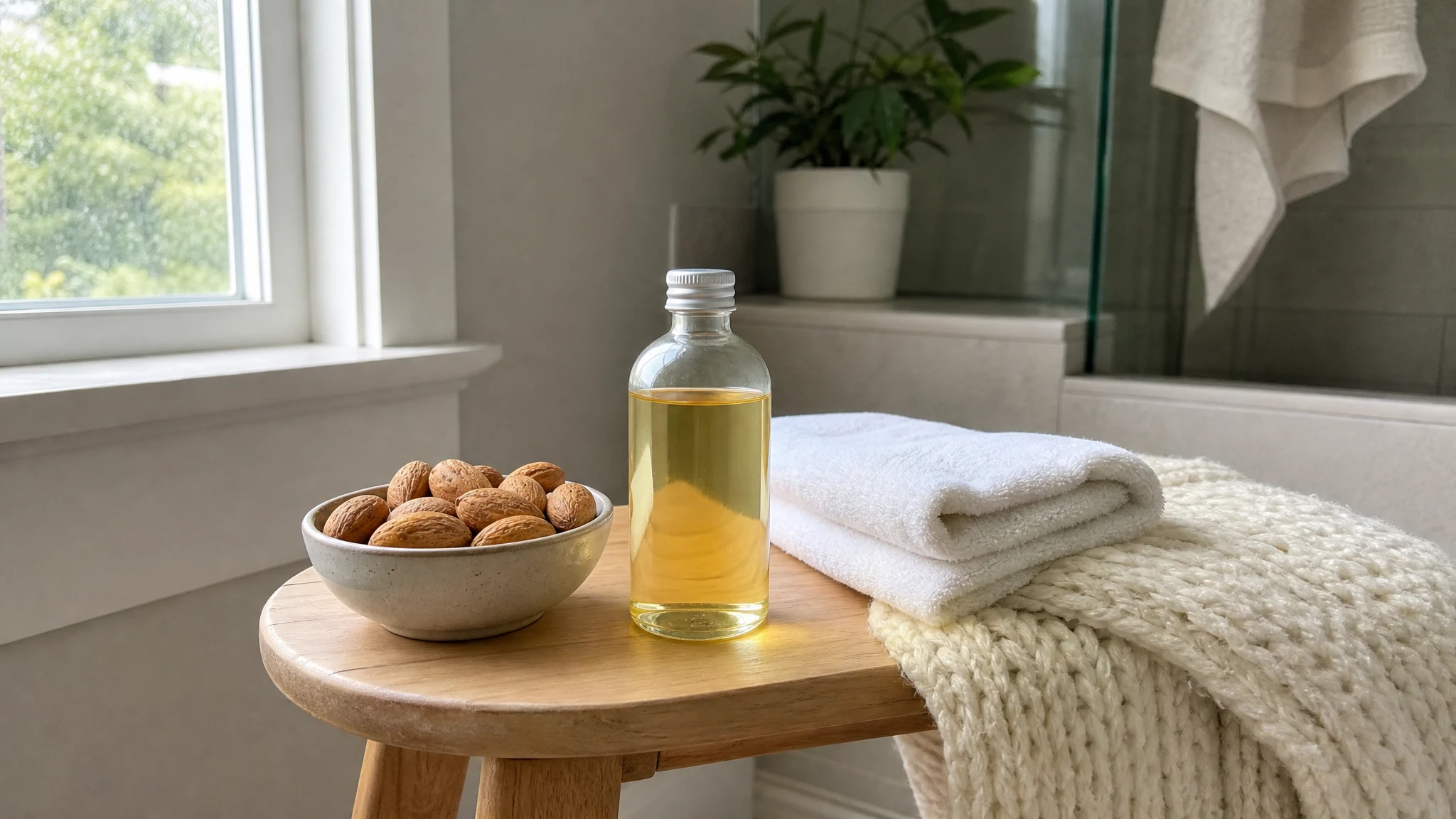
Sweet almond oil is probably the carrier oil already sitting in your cupboard, and for plenty of people it does a perfectly good job. So why look at Abyssinian oil at all? Because the two feel different on the skin, age differently on a shelf, and come with one question that has nothing to do with texture: whether you or someone you love has a tree nut allergy. We will start there, because that answer settles everything else.
Abyssinian Oil
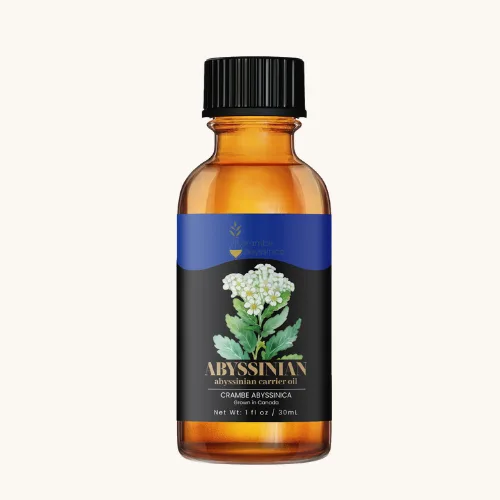
Cold-pressed Abyssinian oil, in sizes from 0.5 oz to bulk.
From $11.99
Shop Abyssinian Oil →The allergy question comes first
Food Allergy Research and Education lists almond oil, alongside walnut oil, among the tree nut products that people with a tree nut allergy are advised to avoid. It also points out that tree nut oils such as almond are sometimes used in lotions, hair care products and soaps, and are often not highly refined. An allergist answering questions for the American Academy of Allergy, Asthma and Immunology explains why refining matters: refined oils are made with chemical agents or high heat and generally do not contain protein, while unrefined, cold-pressed nut oils do. The answer adds that topical exposure to food proteins in this kind of product has not been well studied, and her advice is to ask the manufacturer whether a nut oil is refined.
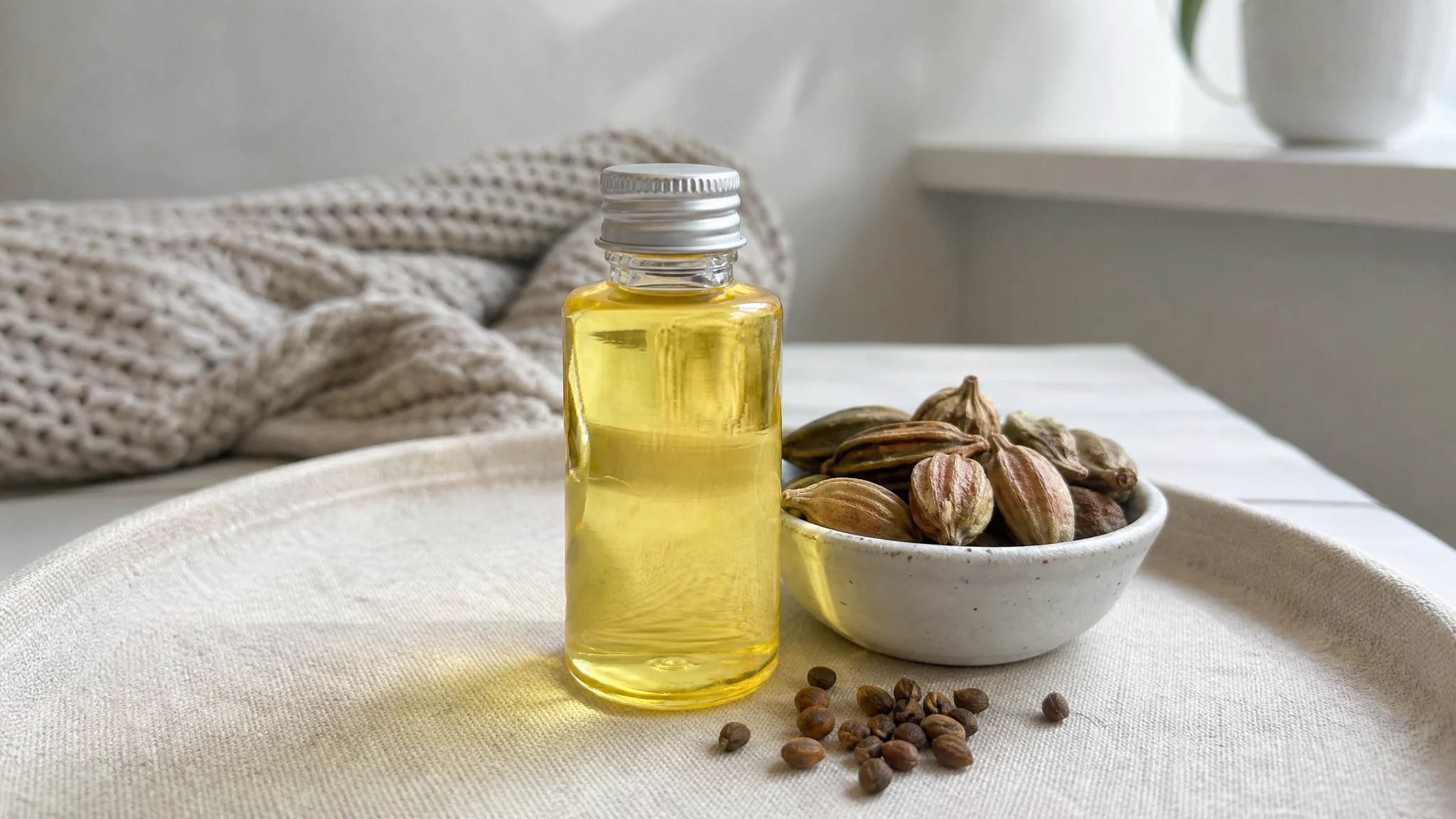
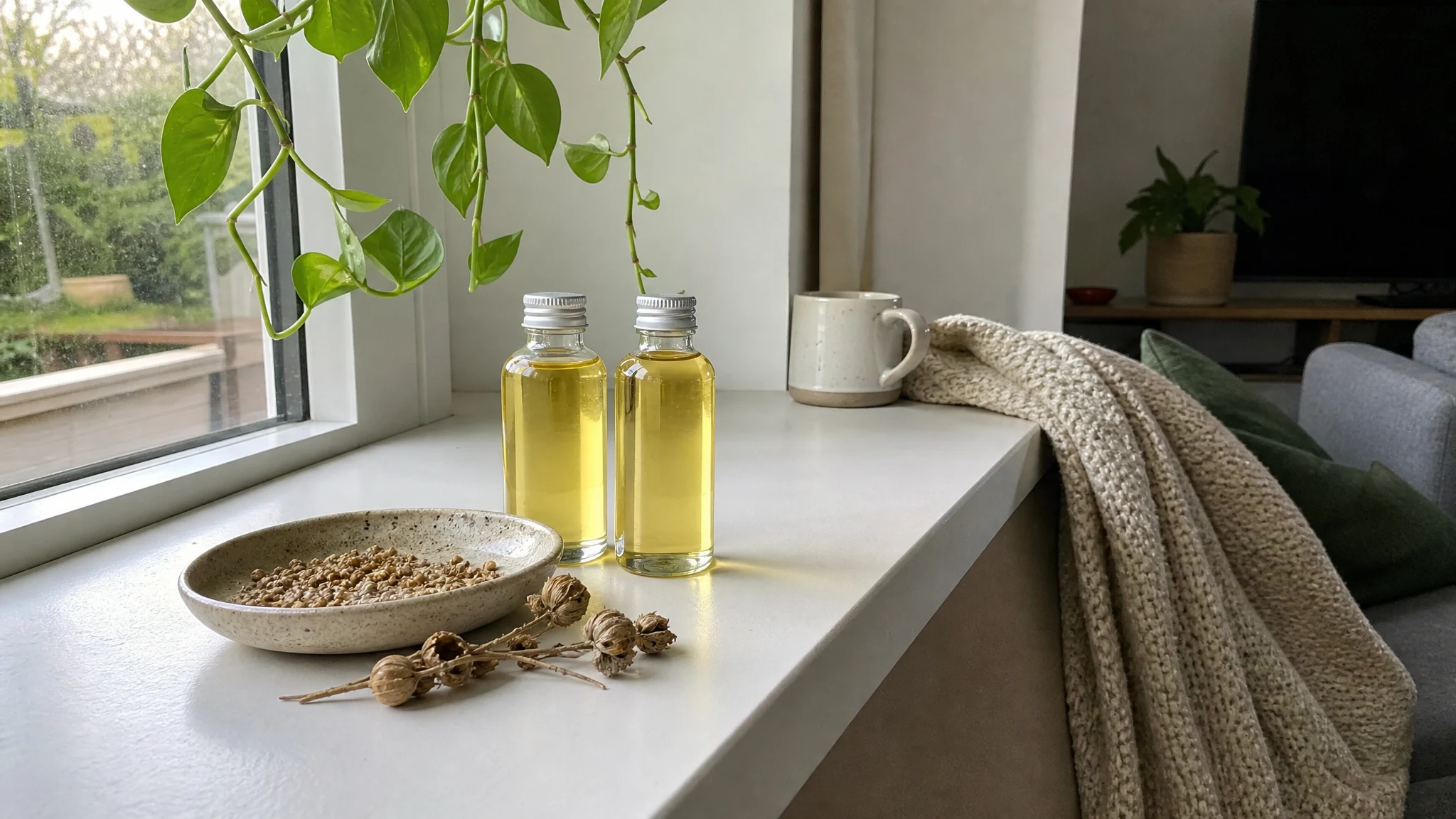
So if anyone in your home has a diagnosed tree nut allergy, almond oil is a conversation for their allergist, not a shelf decision. Abyssinian oil comes from a different plant altogether. Crambe belongs to the mustard family, Brassicaceae, and is not a tree nut. We still make no promise that any oil suits a particular allergic person, and we do not call ours allergen-free. If you have a known allergy to any nut, seed or mustard-family food, ask your allergist before you patch test a new oil.
Two kinds of smooth
For everyone else, the difference is mostly about fatty acids. In a 2025 comparison of almond oils, the main fatty acid was oleic acid at roughly 61 to 70 percent, with linoleic acid next at about 20 to 28 percent. Published analyses of crambe oil in general look quite different: a long-chain fatty acid called erucic acid makes up around 55 to 60 percent, with much smaller shares of oleic and linoleic. Supplier datasheets quote wider ranges than that, and we do not publish figures for our own bottle, so take these as the general picture of the oil.
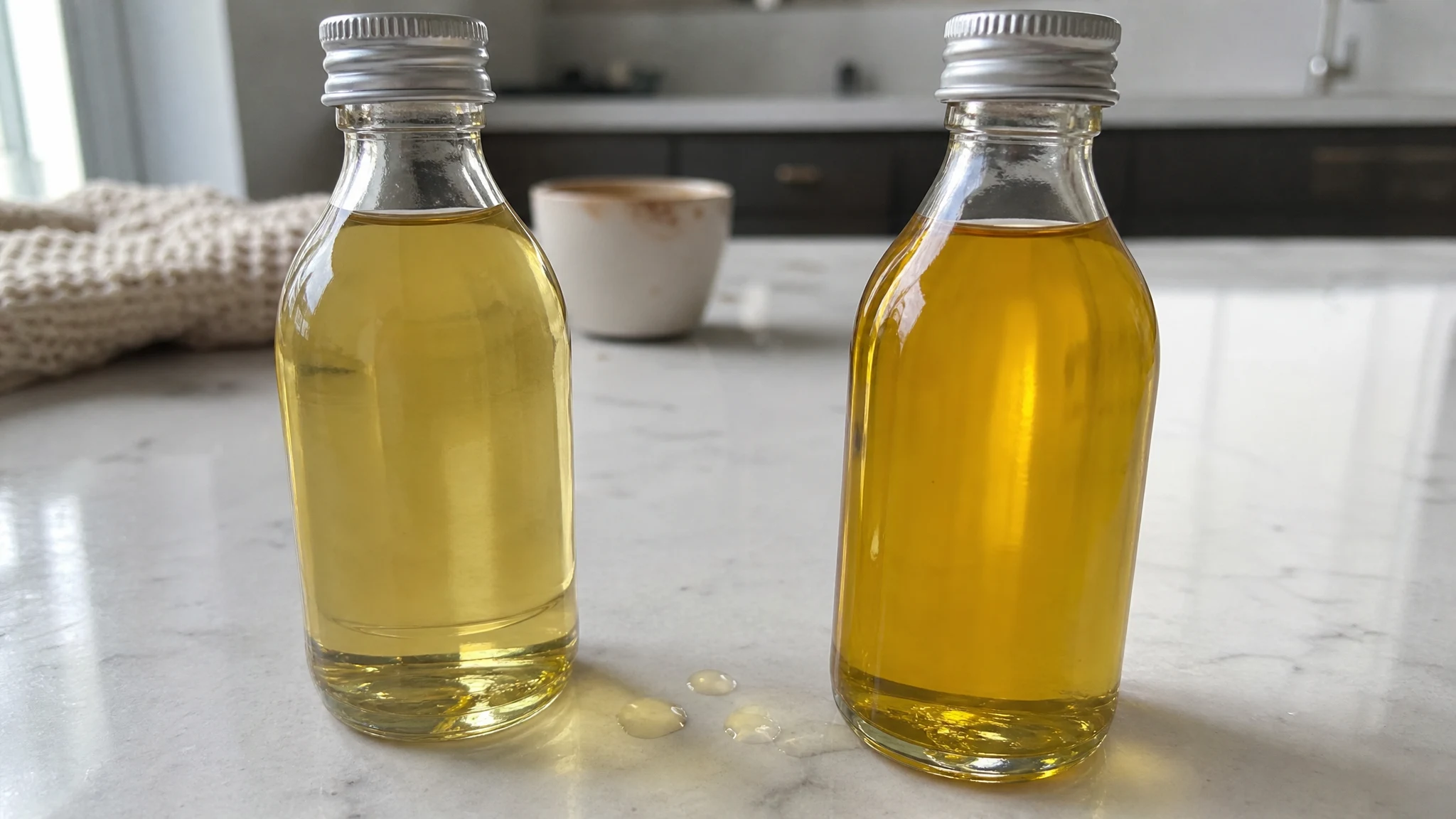
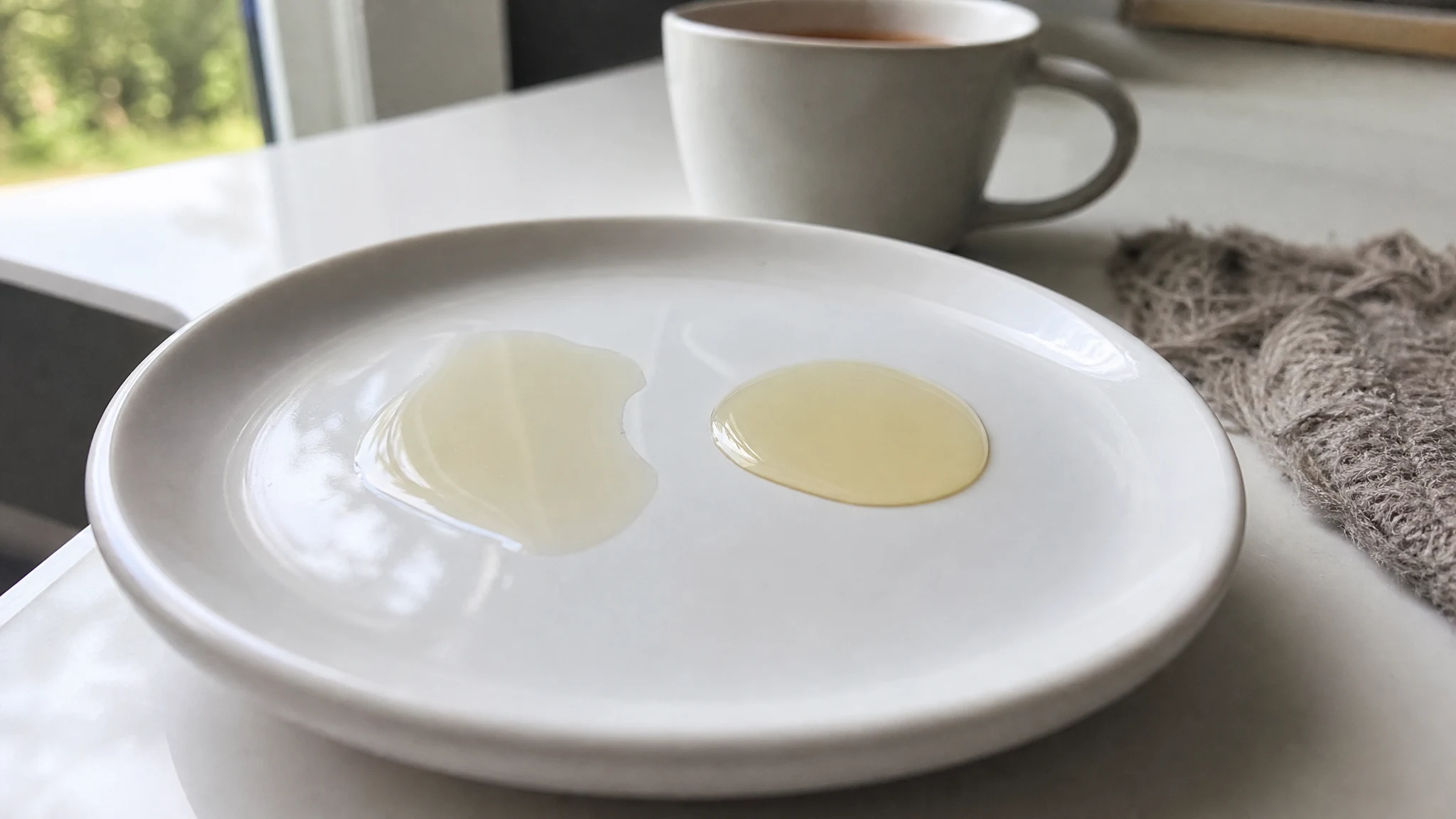
What does that mean in your hands? Reasoning from the chemistry, long chains are one plausible reason crambe oil is described as low in viscosity, and one formulator monograph says a few drops give a glossy look before the oil absorbs to a matte finish. We describe our Abyssinian oil as lightweight and non-greasy, with a mild nutty aroma. Almond oil is the familiar all-rounder; Abyssinian is the lighter finish. If a rounder oil sometimes feels like more than you wanted, that is the gap Abyssinian fills.
What a year on the shelf does
Almond oil is not one fixed thing. The same 2025 study found that how the oil was extracted and refined changed its oxidation markers noticeably: the commercial refined oil had a peroxide value of 9.65, against roughly 2 to 4 for several of the laboratory-extracted oils. In practice, that is a reason to smell your almond oil and to buy it with a date on it.
A broader rule from oil research is that more polyunsaturated fat tends to mean shorter oxidation times: a 2026 Rancimat study of four oils found induction times tracked their polyunsaturated levels. Almond carries a fair share of linoleic acid, while the same formulator monograph describes crambe oil as highly resistant to oxidation. Suppliers disagree on how long it keeps, from two years to more than three, so we would treat storage habits as the thing that matters. Our guides to storage and the smell test and oxidative stability go through it.
Which one we would reach for
If you already have almond oil, are not allergic to nuts, and like it, keep using it. We would reach for Abyssinian oil when the job is a light finish: smoothing the ends of fine hair without weighing it down, or a thin layer over moisturizer. Our plain chart of carrier oils puts the neighbours side by side, our note on low-scent carrier oils covers aroma, and the grapeseed comparison looks at another light option. Skin and hair vary from person to person, so patch test before first use and avoid eye contact.
The best carrier oil is the one that suits your skin, your hair and your household, and it is fine for that to be almond in one home and something lighter in another.
Abyssinian Oil
Cold-pressed Abyssinian oil, from a small bottle to bulk sizes.
From $11.99
Shop Abyssinian Oil →Sources & Further Reading
- Tree Nut Allergy (Food Allergy Research and Education)
- Food allergy: nut oils in topical products (AAAAI)
- Influence of Extraction Techniques on Almond Oil Quality: A Comparative Study of Solvent-Extracted and Commercial Products (Molecules, 2025)
- Crambe abyssinica Hochst. ex R.E.Fries (Purdue NewCROP)
- Abyssinian (Crambe) Seed Oil (Botanical Formulations)
- Oxidative Stability and Kinetics of Oxidation of Rosehip, Sunflower, Olive and Jojoba Oils (Antioxidants, 2026)